
DOJ Division That Should Have Handled Trump IRS Lawsuit Has No Record of It
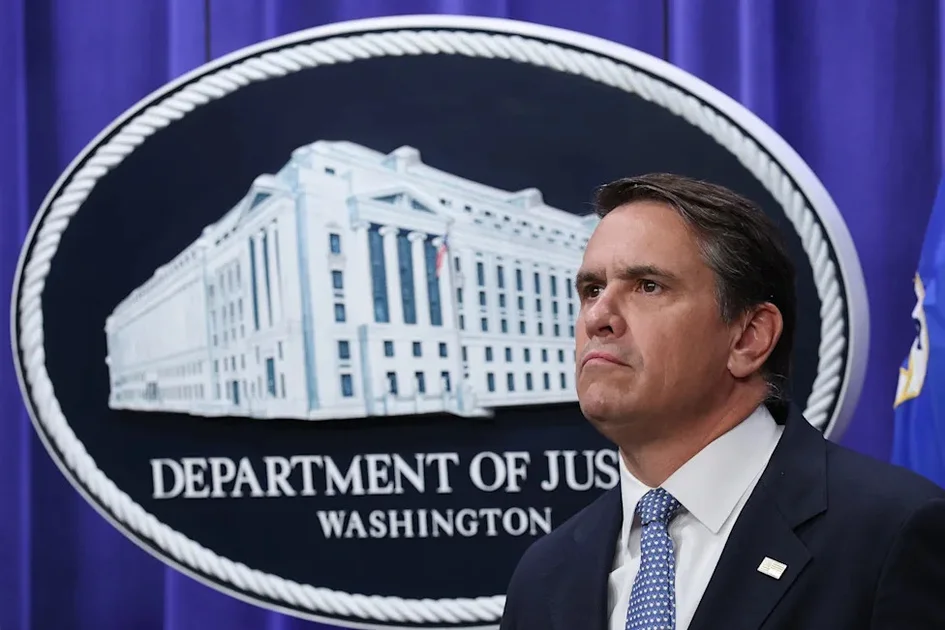
The Department of Justice’s Civil Division—the very unit that would typically defend the federal government in litigation—has told a watchdog group that it has no records related to President Donald Trump’s lawsuit against the Internal Revenue Service or the subsequent $1.8 billion settlement. The revelation, made in response to a Freedom of Information Act request filed by Citizens for Responsibility and Ethics in Washington, raises fresh questions about the legality and transparency of a controversial deal struck between Trump and his own administration.
In a letter dated June 8, Brian Flannigan, the division counsel for records and information at the DOJ, stated that a search of the Civil Division’s case management system “did not locate the case you have cited.” Flannigan added that staff in the Office of the Assistant Attorney General “are not aware of any responsive records within the Civil Division pertaining to the case.” The response suggests that neither the career attorneys normally assigned to defend federal agencies nor the division’s leadership were looped into the negotiations that led to the settlement, which was finalized on May 18.
CREW, which has been challenging the settlement in court, called the absence of records a “striking confirmation of the irregular, collusive process.” The organization is currently asking a federal judge to determine whether the court was the “victim of a fraud” and whether the case should be reopened. The DOJ’s claim of no records, CREW argues, indicates that either the agency is concealing communications or that the talks were conducted entirely outside normal legal channels—an extraordinary move for a case involving a sitting president suing a department within his own executive branch.
What the Lawsuit and Settlement Entailed
Trump, his sons Donald Jr. and Eric, and the Trump Organization sued the IRS and the Treasury Department in January, seeking $10 billion in damages over the leak of their tax returns by former IRS contractor Charles Littlejohn. Littlejohn, who also leaked the returns of other wealthy individuals, was prosecuted and sentenced to prison. The lawsuit was unusual from the start: Trump brought the case in his personal capacity while simultaneously overseeing the very agencies he was suing.
The settlement, reached in May, created a $1.776 billion “anti-weaponization” fund designed to compensate individuals who believe they were unfairly prosecuted for their political beliefs. Critics have characterized the fund as a “slush fund” for Trump to hand out taxpayer money to his allies—particularly those prosecuted under the Biden administration. As part of the deal, the IRS also pledged not to audit Trump, his family members, or his businesses in the future, effectively shielding the president from any further tax scrutiny.
Why the Missing Records Matter
The absence of DOJ records is not merely a bureaucratic oversight; it cuts to the heart of whether the settlement was legally valid. In normal circumstances, when an individual sues a federal agency, the DOJ’s Civil Division assigns attorneys to represent the government. Those attorneys file appearances, engage in discovery, and negotiate any resolution. In this case, no DOJ attorney ever formally entered an appearance in the case. The settlement was instead executed directly by Trump’s political appointees at the DOJ and the Treasury Department, bypassing the career staff who would have flagged potential conflicts of interest.
Potential Conflict of Interest
The settlement effectively allowed Trump to sue himself—and win. Because he holds ultimate authority over the IRS and the DOJ through his appointees, he was able to approve a deal that not only created a massive fund he can control but also granted him and his family permanent immunity from tax audits. Legal experts have noted that this arrangement appears to violate the Anti-Deficiency Act, which bars the government from spending money without proper congressional authorization. CREW has argued in court filings that the settlement is unlawful and that the judge who approved it should vacate the dismissal.
The Broader Transparency Gap
The DOJ’s response to CREW’s FOIA request also underscores a broader transparency problem. If no records exist, then no public accountability exists for how the settlement was negotiated or why the terms were so favorable to the president. The case has already attracted bipartisan criticism. Some Republican lawmakers have voiced concerns about the precedent it sets, while Democrats have called for investigations by the House Oversight Committee. The lack of documentation makes it nearly impossible for Congress or the public to determine whether the deal followed legal and procedural rules.
Judicial Scrutiny Intensifies
Meanwhile, the federal judge overseeing the case, who initially approved the settlement, has since ordered both sides to file briefs on whether the court had jurisdiction to hear the case in the first place. The judge also asked for explanations on whether the dismissal “was premised on deception by the Parties” and whether the case should be reopened because the court was misled. This unusual step suggests that even the judiciary has doubts about the legitimacy of the process.
Legal Challenges Mount
CREW has intervened in the case, seeking to have the settlement set aside. The watchdog group argues that the fund violates the Appropriations Clause because Congress never authorized the spending, and that the no-audit pledge undermines the IRS’s ability to enforce tax laws uniformly. In a related development, a separate judge has temporarily blocked the disbursement of funds from the $1.8 billion settlement, pending further review. The AP reported that the block was issued after a group of taxpayers and transparency advocates challenged the legality of the fund.
Broader Implications for the Presidency
The Trump IRS settlement and the lack of DOJ records are part of a larger pattern of the president using executive power for personal and political gain. The deal echoes other controversies, such as the Trump administration’s push to stage UFC fights on the South Lawn of the White House—an event from which Trump financially benefits due to his stake in the parent company of the mixed martial arts league. Another example is the ongoing dispute over the Kennedy Center, where a judge recently ruled that Trump’s name can be removed from the building, after the administration tried to retain it through last-minute legal maneuvers.
Setting a Dangerous Precedent
If a sitting president can sue his own government and then direct his appointees to settle on terms that enrich himself and protect him from accountability, the traditional checks and balances of the executive branch are effectively nullified. The DOJ’s claim of having no records may be an attempt to avoid documenting an embarrassing or legally dubious process. But if true, it means that the most consequential settlement of the modern presidency was negotiated in the shadows, without the involvement of career lawyers bound by ethics rules.
What Comes Next
The court is expected to rule in the coming weeks on whether to reopen the case. If it does, the settlement could be voided, and the $1.8 billion fund could be rescinded. Congress may also launch its own investigation, particularly if the lack of DOJ records suggests a failure to comply with federal recordkeeping laws. For now, the absence of any paper trail on such a high-profile case leaves the American public in the dark about how their tax dollars are being spent—and whether their president is above the law.
Perspective: A Crisis of Institutional Integrity
The missing DOJ records are not an isolated incident; they reflect a deeper erosion of institutional norms. In recent years, the executive branch has increasingly bypassed career civil servants in favor of political loyalists, leading to decisions that serve the president’s interests rather than the public’s. The Trump IRS settlement is a textbook example of this trend, but it fits within a broader context that includes everything from trade policy to environmental regulation. For instance, a trade court judge recently pushed back on the Trump administration’s tariff policies, requiring the government to issue refunds on duties collected unlawfully—a case that similarly raised questions about executive overreach.
Restoring Checks and Balances
To prevent such abuses in the future, Congress may need to pass legislation requiring that any lawsuit brought by a sitting president against a federal agency be handled by an independent counsel outside the DOJ. Alternatively, the courts could establish a precedent that settlements involving the president require judicial approval that specifically examines conflicts of interest. Without such safeguards, the line between personal grievance and public policy will continue to blur. The DOJ’s inability—or unwillingness—to produce records on the Trump IRS settlement is a warning sign that the system designed to hold the powerful accountable is itself under threat.
As the legal battles continue, one question remains central: If the DOJ can’t find the records of a $1.8 billion deal, what else might be missing from the official record?
Comments