
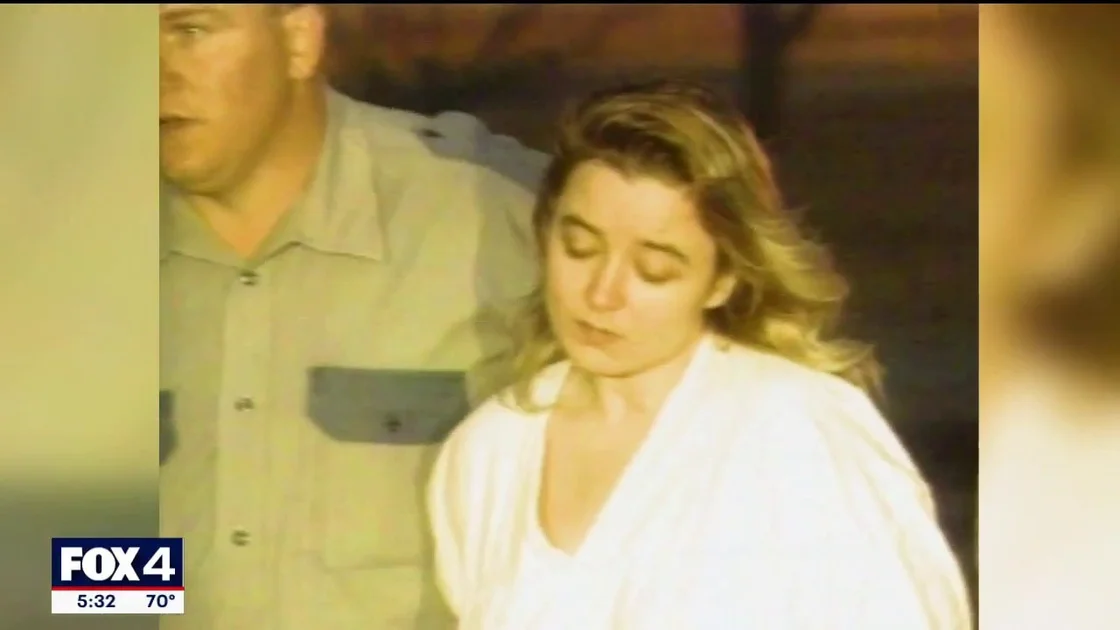
New Appeal Filed in Darlie Routier Case
Attorneys for Darlie Routier, the Rowlett mother on Texas death row for the 1996 murder of her 5-year-old son, filed a new appeal Thursday seeking to overturn her conviction and death sentence. The filing, submitted by the Innocence Project and the Austin-based Office of Capital and Forensic Writs, argues that advanced DNA testing and new fingerprint analysis point to an unknown male intruder as the perpetrator of the killings.
According to court documents, new DNA testing on a bloody sock found in an alley behind the Routier home revealed the presence of an unidentified man's genetic material—technology that was unavailable at the time of the original trial. Additionally, fingerprint tests on the murder weapon and a door inside the home did not match Routier, her husband Darin, or any known individual, according to the filing.
The defense also challenges the prosecution's contention that microscopic fiberglass strands found on the knife came from Routier staging the attack. The new appeal suggests those strands may have originated from an investigator's fingerprint brush, undermining a key piece of circumstantial evidence used to convict her.
"Darlie Routier has spent nearly 30 years on Texas death row for a crime someone else committed, and of which she was a victim," said defense attorney Vanessa Potkin in a statement. "There's a wealth of newly available forensic evidence that supports Ms. Routier's innocence and dismantles the false narrative the state used to wrongfully convict Ms. Routier."
The Court of Criminal Appeals has not yet ruled on whether to remand the case to a lower court for further review.
Background of the High-Profile Case
Routier was convicted in February 1997 of capital murder for the stabbing death of her son Damon. His 6-year-old brother, Devon, was also killed in the same attack, though prosecutors kept the two cases separate and did not pursue a second trial after her conviction. The state argued that Routier killed her sons and then slashed her own neck in a staged attack to cover the crime. She has consistently maintained her innocence, claiming an intruder broke into their home, killed both boys, and injured her before fleeing.
This is Routier's third appeal. Her previous two appeals, which focused on trial records and legal procedure, were rejected. The current filing represents a significant shift because it relies on physical evidence that was either not available or not properly analyzed three decades ago.
The case has drawn national attention since the murders, spawning documentaries, books, and widespread debate about forensic evidence and the death penalty. Routier's supporters have long pointed to inconsistencies in the prosecution's timeline and the lack of a clear motive.
New Forensic Evidence and Legal Implications
The appeal hinges on what Routier's legal team describes as "newly available forensic evidence" that was not accessible in 1996. DNA testing has advanced significantly in the intervening decades, allowing for more sensitive analysis of small or degraded samples. Similarly, fingerprint comparison techniques have improved.
The filing also alleges that the state suppressed exculpatory evidence and presented false testimony at trial—serious claims that, if proven, could bolster the case for a new trial. The Innocence Project has been involved in numerous exonerations across the country based on similar post-conviction DNA testing.
Rowlett Police have not commented on the new filing. CBS News Texas reached out to the department but did not receive an immediate response.
What This Means for the Case
The appeal is now before the Court of Criminal Appeals, which will decide whether to send the case back to a district court for an evidentiary hearing. If the court remands the case, Routier's legal team would have the opportunity to present the new evidence in full. If the court denies the request, Routier could potentially seek federal review.
For now, Routier remains on death row. Her case is one of several high-profile capital convictions in Texas that have come under renewed scrutiny as forensic science advances. The outcome could have broader implications for how courts handle post-conviction DNA evidence and allegations of prosecutorial misconduct in decades-old cases.
As the legal process unfolds, the families of the victims and Routier's supporters continue to await clarity on a case that has haunted North Texas for nearly 30 years.
Comments