
Radcliffe Breaks Down His Harry Potter Ranking for the First Time
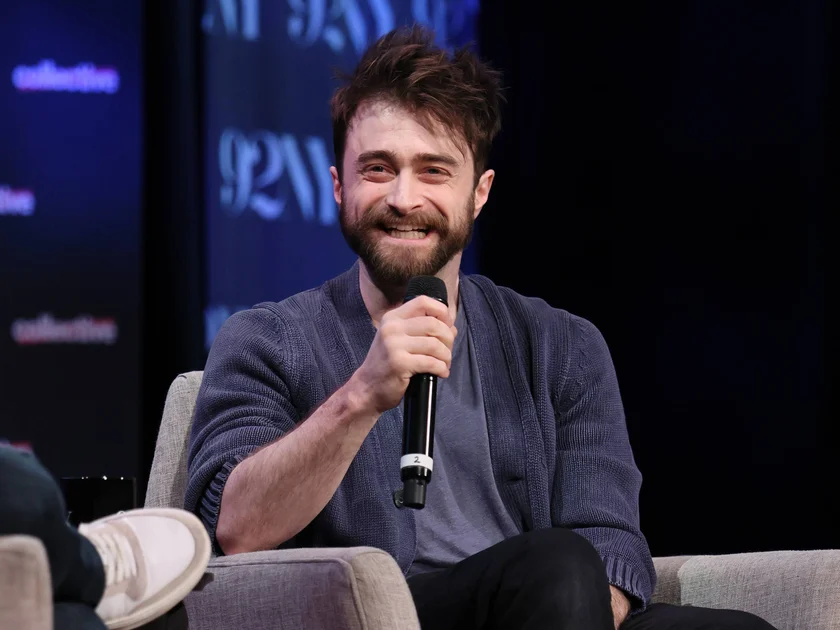
After years of deflecting the question, Daniel Radcliffe has finally gone on record with his personal ranking of the eight Harry Potter films — and some of his choices are already stirring debate among the franchise's devoted fanbase. The 36-year-old British actor appeared in a wide-ranging conversation with Josh Horowitz on the Happy Sad Confused podcast, filmed live at New York's 92NY on April 9, 2026. The full interview, which has been generating buzz across entertainment media this week, covered everything from his Broadway career to his current television work, but it is his candid Potter rankings that have dominated the headlines.
The Full Ranking, From Favorite to Least Favorite
Radcliffe structured his ranking as a bracket-style tournament, working through the eight films head-to-head. Between the first two entries, he gave the edge to Harry Potter and the Chamber of Secrets (2002) over Harry Potter and the Sorcerer's Stone (2001), citing his affection for the Basilisk, the massive serpentine creature that serves as the film's central threat. "I would take Chamber of Secrets out of those two 'cause I love the Basilisk," he explained.
The more polarizing choice came when he placed Harry Potter and the Goblet of Fire (2005) above Harry Potter and the Prisoner of Azkaban (2004) — a ranking that cuts against the grain of critical consensus, as Azkaban is widely regarded by fans and critics alike as the artistic high point of the series. Radcliffe acknowledged the pushback he expected: "I know everyone wants me to say Azkaban. I know that's how everyone else feels, but I love the stuff I got to do on the fourth movie, it was awesome." His personal experience on set, rather than the film's overall reputation, clearly drove the choice.
At the top of his ranking sits Harry Potter and the Deathly Hallows Part 2 (2011), the franchise's climactic finale, with Goblet of Fire in second place. At the other end of the spectrum, Radcliffe placed Harry Potter and the Half-Blood Prince (2009) at the very bottom — though he was careful to clarify that his dissatisfaction is directed at his own performance, not the film itself. "Half-Blood Prince is probably the bottom of the bracket for me. And that's my own stuff. That's not the film," he said.
Why This Moment Matters Beyond the Rankings
The podcast appearance is notable not just for the rankings themselves, but for what Radcliffe revealed about his complicated relationship with watching his own work. He admitted he has not revisited any of the Harry Potter films in quite some time, and described how his self-critical perspective has shifted with age. As a teenager, he found it painful to watch the earliest films; now, looking back on those younger performances, he finds them charming. The cringe has migrated forward in time. "When I was 18, I would cringe watching the earlier films. Now, I think the early films are sweet and now I cringe watching myself when I was 18 or 19," he said, adding that he expects this pattern to keep evolving.
This kind of candid self-reflection is relatively rare from actors who became famous as children, and it speaks to the psychological complexity of growing up in one of the most scrutinized film franchises in cinema history. Radcliffe has long been praised for his willingness to engage openly with the Potter legacy rather than distancing himself from it — while simultaneously carving out a career defined by deliberate creative risk-taking.
A Career Built on Autonomy
The ranking conversation was just one thread in a much broader interview that touched on Radcliffe's philosophy about his post-Potter career. He reflected on the rare financial security that the franchise afforded him, allowing him to pursue unconventional projects without the commercial pressures that constrain most working actors. He even extended this advice to the cast of Stranger Things, whom he has met in recent years. "Do whatever the f--- you want," he told them, framing the platform that comes with a globally beloved franchise as an opportunity for creative freedom rather than a trap.
That freedom has manifested in an eclectic body of work that spans theater, independent film, and now network television. Radcliffe is currently starring in The Fall and Rise of Reggie Dinkins, an NBC sitcom alongside Tracy Morgan that premiered in January 2026. He also recently contributed voice work to Pizza Movie, which arrived on Hulu and Disney+ in early April and features Stranger Things alum Gaten Matarazzo. Much like Jensen Ackles and Jared Padalecki's reunion on The Rookie, Radcliffe's career moves reflect a broader trend of franchise alumni leveraging their built-in audiences to explore unexpected new genres.
On the stage side, Radcliffe is currently appearing in Every Brilliant Thing at the Hudson Theatre in New York, a production that opened officially on March 12, 2026, and runs through May 24. It is his sixth Broadway credit, and follows his Tony Award-winning role in Merrily We Roll Along.
The Broader Trend: Franchise Stars Reclaiming Their Narratives
Radcliffe's willingness to publicly rank, critique, and contextualize his own work within the Harry Potter series is part of a wider cultural moment in which franchise actors are increasingly expected — and willing — to engage with their legacies in a more personal and unfiltered way. Long-form podcast formats like Happy Sad Confused, which allow for extended, unscripted conversations, have become one of the primary venues for this kind of disclosure. What might once have been confined to a memoir or a carefully managed press junket now surfaces in real time, in front of live audiences, and spreads across entertainment media within hours.
For Radcliffe specifically, the interview underscores a performer who is unusually self-aware about the industry he works in and the unusual position he occupies within it. He is not simply a former child star reflecting nostalgically on past success — he is an active, working artist who uses that past as a springboard rather than a ceiling. His ranking of the Potter films is, in the end, less about the films themselves than about the person who made them and the one he has become since.
Comments