
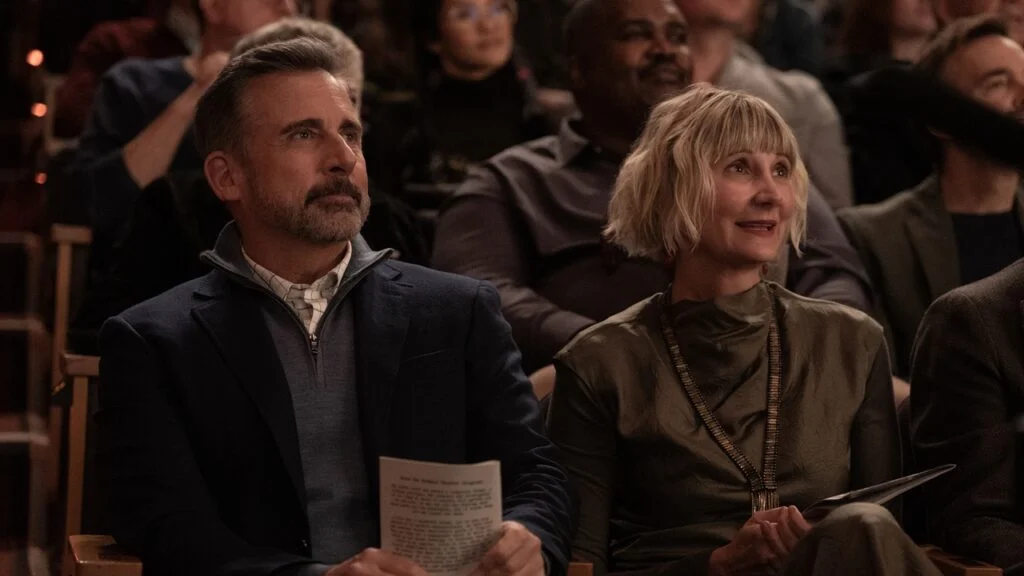
Steve Carell's Absence Liberates 'The Four Seasons' in Season 2
Netflix's dramedy "The Four Seasons" returned for its second season on May 28, 2026, and critics are celebrating a surprising twist: the show is better off without its biggest star. After a shocking Season 1 finale killed off Steve Carell's character Nick, the new batch of episodes has earned an 89% approval rating on Rotten Tomatoes, a significant improvement over the first season's mixed reception. USA TODAY's review declares the series "fresher, faster, brighter and more complex" without Carell, calling the show "liberated by his absence."
Created by Tina Fey, Lang Fisher, and Tracey Wigfield, the series follows three couples who take quarterly vacations together. Season 1 centered heavily on Nick's decision to leave his wife Anne (Kerri Kenney-Silver) for a much younger woman, Ginny (Erika Henningsen). That narrative dominated the storylines and, according to critics, bogged down the comedy with a "tinge of negativity and odiousness." The Season 2 premiere picks up nine months after Nick's death, with the group gathering to spread his ashes at a scenic mountain summit.
A Cast Empowered by New Dynamics
Without Carell's character as the plot's engine, the ensemble — including Fey, Will Forte, Colman Domingo, Marco Calvani, Kenney-Silver, and Henningsen — gets to explore fresher conflicts. USA TODAY notes that the arguments now feel "less bitter and fatigued," allowing the show to mine its dark comedy from more nuanced territory. The second season focuses on Anne and Ginny's complex co-existence, the group's grief, and the arrival of Ginny's baby.
In interviews promoting the new season, the cast emphasized how Nick's shadow still looms — even if his physical presence is gone. Speaking to ScreenRant, Kenney-Silver joked that the group is "fine" and that Nick's death "is not even mentioned this season," before acknowledging that her character Anne is "reeling from the double whammy" of being left for a younger woman and then losing her husband. Meanwhile, Calvani revealed that Nick's death has pushed his character Claude toward existential questioning: “What is our next chapter? Am I here to become a father and to leave someone behind? What’s the legacy we leave behind?”
Why the Shift Matters for the Series
The creative decision to kill off a major star like Carell — and then lean into the aftermath — is a gamble that appears to have paid off. Season 1 suffered from a "lethargy," according to USA TODAY, as episodes spent excessive time on Nick's messy divorce. Season 2 avoids that trap by spreading the dramatic weight across the entire ensemble. Fey's Kate and Forte's Jack navigate cynicism and domestic comfort; Domingo's Danny and Calvani's Claude confront new questions about identity and purpose; Kenney-Silver's Anne and Henningsen's Ginny are forced into an unlikely, evolving friendship.
Henningsen, who joined the show in Season 1 as the young girlfriend, told TheWrap that working with Carell taught her an important lesson about TV acting. “When I worked with Steve in Season 1, and then when Tina directed me, things started to kind of emerge where I’m realizing the great freedom of TV is that I’m not the editor,” she said. “All I have to do is give them as many options as possible, and there’s a lot of freedom in that.”
Critical and Audience Reception
The improved critical reception suggests that audiences are embracing the show's new direction. The first season premiered with an A-list cast but failed to sustain momentum; the second season has been praised for its tighter writing and more balanced character arcs. USA TODAY awarded the season three out of four stars, calling it a worthwhile watch for anyone who enjoys dark comedies about long-term relationships. The show draws inspiration from the 1981 Alan Alda and Carol Burnett film of the same name.
For comparison, other recent Netflix dramedies have struggled to maintain quality across seasons. The success of "The Four Seasons" Season 2 could signal a trend: sometimes, the boldest creative choice — removing a central character — can rejuvenate a series. That said, the show still depends on its core concept: forcing couples to confront their baggage while on vacation. As USA TODAY puts it, "If the couples aren’t fighting, we’re just watching an Instagram reel of Gen Xers on expensive trips." Season 2 manages to keep the fighting meaningful.
Broader Implications for TV Dramedies
The reinvention of "The Four Seasons" offers a case study in how streaming series can evolve after losing a marquee name. Carell is one of the most recognizable comedic actors in Hollywood, known for "The Office" and "The 40-Year-Old Virgin." Replacing him was never an option; instead, the creators chose to let his absence reshape the story. It is a strategy that other shows, from "Game of Thrones" to "This Is Us," have used to varying degrees of success.
For fans of the genre, Season 2 proves that a show can survive — and even thrive — after a shocking death, provided the remaining characters are compelling enough to carry the load. The addition of Steven Pasquale in a recurring role also signals that the show is not afraid to introduce new dynamics.
Looking ahead, the series could explore even more territory with Ginny's baby and Anne's new romantic interests. In a television landscape crowded with reboots and adaptations, "The Four Seasons" has carved out a niche as a honest, sometimes uncomfortable look at middle-aged relationships. Its second season suggests that grief — and the freedom that comes after it — can be fertile ground for both comedy and drama.
Meanwhile, in the world of sports, teams like the Mariners Finally Breach .500, Sweep Diamondbacks to Solidify AL West Lead prove that turning points can come from unexpected places. Similarly, "The Four Seasons" has found its stride after losing its star. Whether the show can maintain this momentum for a potential Season 3 remains to be seen, but for now, critics agree: the vacation is finally worth taking.
Comments