
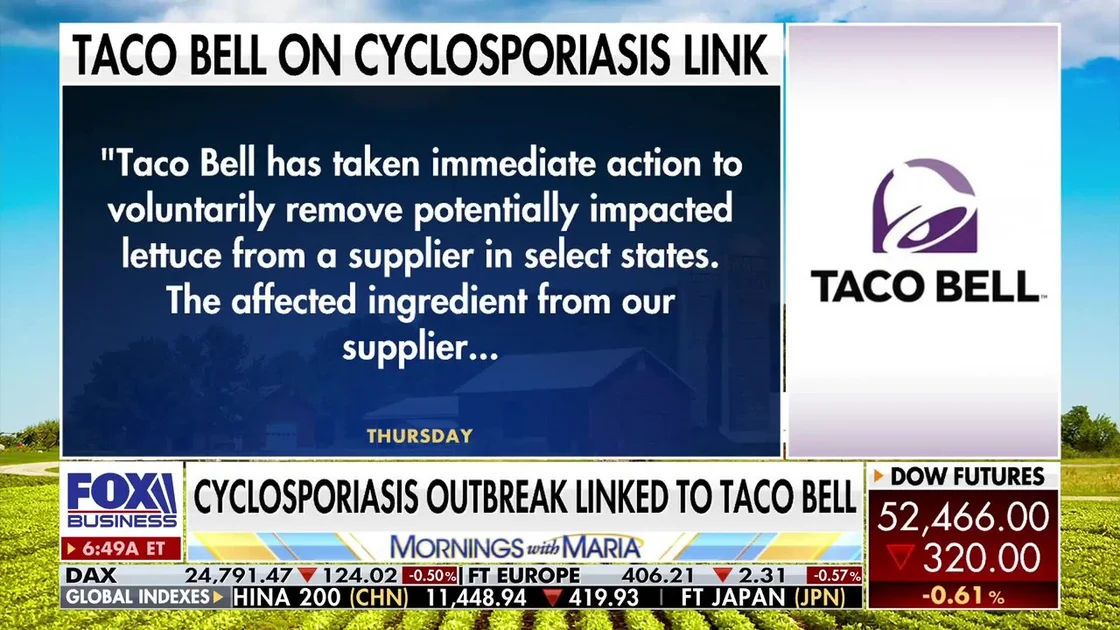
Cyclospora Outbreak Surpasses 10,900 Cases, Prompts Produce Safety Reckoning
The largest Cyclospora outbreak in recent U.S. history continues to expand, with nearly 11,000 confirmed cases tied to contaminated iceberg lettuce from Taylor Farms de Mexico, according to the Centers for Disease Control and Prevention (CDC). As of August 27, the agency reports 10,948 infections across 17 states, including two fatalities in Michigan. The U.S. Food and Drug Administration (FDA) has linked the outbreak to the company's central Mexico facility, which initiated a voluntary recall of all possibly affected products on July 17.
Current Status: Multiple Outbreaks Under Investigation
The CDC and FDA are actively monitoring four distinct Cyclospora outbreaks. While the Taylor Farms lettuce strain accounts for the majority of illnesses, three additional outbreaks remain under investigation with no confirmed source. In New York alone, 939 cases have been reported since May 1, with Suffolk County recording 75 infections and five hospitalizations as of August 24. Illinois has seen 1,437 confirmed and probable cases, and other Midwestern states are reporting significant numbers as well.
All recalled Taylor Farms lettuce expired by August 3, and experts agree that contaminated products are likely already off store shelves. However, health officials warn that additional recalls may surface as traceback investigations continue.
Why the Outbreak Matters: Economic and Health Impacts
The Cyclospora outbreak has not only caused widespread illness but has also disrupted the fresh produce market. According to Nielsen IQ data, dollar sales of prepacked salads plunged 14% in the weeks following the recall announcement, compared with the same period last year. The Grower Shipper Association reports that demand is beginning to rebound, driven in part by the reopening of schools and increased institutional purchasing, but many growers remain anxious about long-term consumer confidence.
“I think things are rebounding right now,” said Christopher Valdez, president and CEO of the Grower Shipper Association. “Many factors, one of which is schools back in session, naturally lead to more institutional purchases of produce items.” Still, the association acknowledges that some consumers remain wary.
The Invisible Threat
Cyclospora cayetanensis is a microscopic parasite that causes cyclosporiasis, an intestinal illness characterized by watery diarrhea, cramps, and fatigue. Unlike many foodborne pathogens, Cyclospora does not respond to common sanitizers and can survive on produce for extended periods. JP Dundore-Arias, an associate professor of plant pathology at CSU Monterey Bay, describes it as a “silent, invisible threat,” noting that scientists still lack a full understanding of how the parasite persists in agricultural environments.
“It is unclear what exactly are the factors or environments that drive survival outside of a human host,” Dundore-Arias told KSBW. “Whether soil depositions or specific crop tissues are more conducive for the pathogen to survive remains an open question.”
Perspective: Shifting Consumer Trust Toward Local Produce
In response to the outbreak, many consumers are changing where they buy lettuce. Local farmers, such as Big Rock Organics in Illinois, report a surge in demand at farmers' markets and through direct delivery services. Jonathan Lewis, co-owner of Big Rock Organics, says customers are buying all the lettuce he can grow.
“People are buying all the lettuce we had,” Lewis said. “Keeping it local, knowing where it’s coming from, really lowers your risk. The fresher the vegetable and the less time it sits in packaging, the better.”
Lewis and other small-scale growers emphasize that their irrigation practices—often using well water rather than canal water—reduce the risk of contamination. However, food safety experts caution that local produce is not inherently safer than commercially grown items. Donald Schaffner, chair of the Department of Food Science at Rutgers University, advises consumers to support local farms for economic reasons, but not necessarily for health reasons. “If you want to shop locally, that’s great,” he said, “but do that because you believe in shopping locally, not because you believe it’s going to make you safe.”
The Road to Recovery
U.S. growers, particularly those in California’s Salinas Valley, are hopeful that sales will rebound fully. The lettuce implicated in this outbreak was not grown in the United States; Taylor Farms sourced it from Mexico. Still, the negative publicity has affected all producers. Valdez noted, “The product from the Salinas Valley and the United States was not, is not, and has not been implicated in the cyclospora outbreak.”
As the growing season transitions, uncertainty remains. “What recovery looks like is not crystal clear,” Valdez admitted. “But what is certain is that the public needs to know the safety and origin of their produce.”
Practical Guidance for Consumers
The CDC recommends that consumers thoroughly rinse all fresh fruits and vegetables under running water before eating, even if they plan to peel them. While Cyclospora is resistant to many common disinfectants, washing can reduce the parasite load. Consumers should also pay attention to recall announcements and check the FDA website regularly. For most healthy individuals, cyclosporiasis resolves without treatment, but those with severe symptoms should seek medical care; the antibiotic trimethoprim-sulfamethoxazole is the standard treatment.
As investigations continue, public health officials emphasize that the risk from the current outbreak is low because the contaminated lettuce is no longer in distribution. However, the broader lesson is clear: food safety remains a shared responsibility between growers, regulators, and consumers. For ongoing updates on this outbreak and other health alerts, follow trusted sources like the CDC and FDA.
Note: This article provides an update based on the latest available data as of August 28, 2026. For more on how other crises are affecting communities, see our coverage of the Manchester Airport Data Breach and Severe Thunderstorm Watches Sweep US.
Comments