
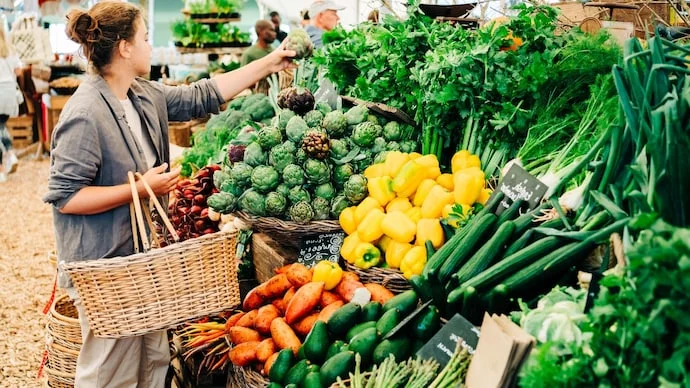
U.S. Cyclospora Outbreak Escalates: Nearly 7,000 Cases, Salad Greens Under Scrutiny
Federal health officials are racing to contain one of the largest foodborne illness outbreaks in recent memory as the number of suspected cyclosporiasis cases across the United States approaches 7,000. The U.S. Centers for Disease Control and Prevention (CDC) reported on July 14 that at least 1,645 laboratory-confirmed infections have been identified across 34 states since May 1, with an additional 5,100 probable cases under active investigation. The bulk of the outbreak is concentrated in Michigan, which has logged 3,309 confirmed cases alone, though infections have been reported in at least 30 other states, including Ohio, Kentucky, and West Virginia.
The illness, caused by the microscopic parasite Cyclospora cayetanensis, triggers prolonged bouts of watery, explosive diarrhea, along with bloating, nausea, and severe fatigue. According to the CDC, 141 people have been hospitalized since symptoms first emerged in late May, though no deaths have been reported. The agency urged clinicians nationwide to remain vigilant, especially for patients presenting with gastrointestinal distress that persists for weeks.
“We’re seeing an unusually high number of cyclosporiasis cases this season,” said Gwen Biggerstaff, deputy director of the CDC’s Division of Foodborne, Waterborne, and Environmental Diseases, during a media briefing on Tuesday. By comparison, the U.S. typically records around 2,700 cyclosporiasis cases annually, most during the summer months. The current wave has already far exceeded that baseline.
Michigan health officials have flagged lettuce and salad greens as a potential source based on interviews with more than 1,000 infected individuals. However, no specific product, restaurant, grocery chain, or distributor has been definitively linked, and no recalls have been issued. The CDC believes at least 400 of the cases across four states—Michigan, Ohio, Kentucky, and West Virginia—are part of a single multistate outbreak, though it concedes that multiple independent outbreaks may be occurring simultaneously.
Why the Cyclospora Outbreak Matters: Symptoms, Spread, and Stakes
Cyclosporiasis is not a household name, but its impact on public health can be severe. The infection is caused by ingesting food or water contaminated with feces from an infected person—a transmission route known as fecal-oral. Person-to-person spread is highly unlikely, the CDC notes, because the parasite requires days to weeks outside the host to become infectious. In the United States, outbreaks are most commonly linked to fresh produce imported from tropical and subtropical regions.
Once ingested, the parasite invades the small intestine, triggering inflammation that leads to watery diarrhea. Symptoms typically appear about seven days after exposure, though incubation can range from two to 14 days. Left untreated, the illness can persist for weeks or even months, cycling through periods of remission and relapse. Severe dehydration is a primary concern, particularly for young children, older adults, and immunocompromised individuals.
What Cyclospora does to the body
“The episodes of explosive diarrhea can be debilitating,” said Dr. John Torres, an emergency physician and NBC News medical contributor, in a July 14 segment on TODAY. “It’s not just an inconvenience—it can put people in the hospital.” Indeed, the CDC reports that hospitalized patients have ranged in age from 2 to 95, with 56% of confirmed cases in women.
The CDC’s national tally, which lags behind state-level data because cases must be laboratory-confirmed, underestimates the true burden. Many people with mild symptoms never seek medical care or get tested. The agency estimates that the actual number of infections could be significantly higher.
The potential link to lettuce and salad greens
“Current results point to lettuce or salad greens as a potential source for this outbreak, although other food items cannot be completely ruled out,” the Michigan Department of Health and Human Services said in a July 13 advisory. The guidance urged consumers to consider purchasing whole heads of lettuce rather than pre-washed bagged greens, a recommendation that has drawn mixed reactions from food safety experts.
Taco Bell, the fast-food chain, has voluntarily and temporarily removed limited ingredients at select restaurants as a precautionary measure, the company told CBS News on Tuesday. However, public health officials have not confirmed a connection between the chain and the broader outbreak. “Until the culprit is found, we really can’t put the blame on a certain farm or processing company,” said Dr. Nuwan Gunawardhana, an infectious disease expert at Columbia University Irving Medical Center, during a CBS News interview.
The nationwide spread: Which states are hit hardest?
As of July 14, the CDC has received reports of cyclosporiasis in at least 34 states, with confirmed cases stretching from coast to coast. While Michigan remains the epicenter, other states have reported significant clusters. Ohio, Kentucky, and West Virginia have recorded at least 400 cases linked to the multistate outbreak, though individual investigations are ongoing.
The agency noted that the pace of new cases has accelerated sharply over the past two weeks. “Cases are simply exploding across the country,” Torres said. The CDC expects additional infections to be reported through August, as the parasite’s incubation period and the summer produce season converge.
The challenge of identifying the source
Investigators face an uphill battle in pinpointing the contaminated food. Cyclospora outbreaks are often tied to imported produce such as cilantro, raspberries, basil, and snow peas. But because the current outbreak involves multiple states, age groups, and consumption patterns, tracing the contamination to a single farm or distributor is time-consuming.
“This isn’t a problem consumers can solve,” said Dr. Céline Gounder, CBS News medical correspondent and editor-at-large for public health at KFF Health News. “We basically have to revert to what you’d tell someone traveling to a developing country: Don’t eat fresh produce that isn’t cooked and can’t be peeled.”
The absence of a confirmed source has fueled speculation on social media, with users naming specific grocery stores and restaurants. Experts caution against drawing conclusions prematurely. “A lot of the viral content treats this as gross-out material, explosive diarrhea, played for shock value,” Gounder said, adding that no recall has been issued.
What consumers need to know about cyclospora prevention
In the absence of a definitive source, health officials are advising the public to adopt general food safety practices. The CDC recommends thoroughly washing all fruits and vegetables under running water before eating, cutting, or cooking. However, because Cyclospora parasites can adhere firmly to produce surfaces, washing alone may not remove all contamination.
Cooking kills the parasite, and the CDC recommends that individuals—especially those at high risk—opt for cooked produce when possible. Peeling fruits and vegetables can also reduce risk. Hand hygiene is critical, particularly after using the bathroom, changing diapers, or handling raw produce.
For clinicians: Testing and treatment
The CDC has urged doctors to consider cyclosporiasis in patients with prolonged diarrhea, especially those who have not traveled abroad. The infection is diagnosed through a stool test, and treatment typically involves a course of the antibiotic trimethoprim-sulfamethoxazole (TMP-SMX). People who are allergic to sulfa drugs may require alternative therapies.
“Clinicians should be aware that cyclospora is not detected by routine stool cultures,” Biggerstaff said. “Specific testing is required.”
Broader implications: What this outbreak reveals about food safety
The 2026 cyclospora outbreak underscores persistent vulnerabilities in the U.S. food supply chain, particularly regarding imported fresh produce. While domestic growers are subject to FDA oversight under the Food Safety Modernization Act, imported products often pass through multiple intermediaries, making traceability difficult.
The outbreak also highlights the challenge of communicating risk to the public when official guidance is incomplete. With no recall in place and no specific product named, consumers are left to navigate conflicting advice from social media and news outlets. Public health experts worry that the information vacuum may lead to misplaced blame and ineffective precautions.
“Trust in public health agencies is essential, but it’s hard to maintain when the public is left in the dark,” said Dr. Gounder.
A growing political dimension
The outbreak has drawn attention from political figures as well. Notably, RFK Jr. Battles Cyclospora Outbreak as Fmr Aide Slams NYC Vaccine Mandate, illustrating how foodborne illness can become a flashpoint in broader debates about government oversight and individual choice. The intersection of public health and politics may shape how the outbreak is managed and remembered.
For those seeking a quick overview of the outbreak’s scale, our earlier coverage, Cyclospora Outbreak: Over 3,000 Cases of Explosive Diarrhea Reported Across US, provides a snapshot of the situation as it evolved in late June.
What’s next: Monitoring, investigation, and potential recalls
The CDC and state health departments are continuing to interview patients, analyze food histories, and collect samples from suspected foods for laboratory testing. Genetic fingerprinting of the parasite may help connect cases to a common source. The FDA is also assisting in traceback investigations to identify farms and distributors.
Biggerstaff warned that the outbreak is far from over. “It’s likely more cases will be reported through August,” she said. The summer produce season, coupled with the parasite’s long incubation period, suggests that new infections may continue to surface for weeks.
In the meantime, health officials are walking a tightrope: providing enough information to protect public health without prompting unnecessary panic or economic harm to growers. The absence of a recall, while frustrating for consumers, reflects the cautious, evidence-based approach regulators must take before implicating a specific product.
For now, the safest bet is to follow the CDC’s general guidance: wash produce thoroughly, cook when possible, and seek medical care if diarrhea persists beyond a few days. As Dr. Gounder put it, “We may not know the exact culprit yet, but that doesn’t mean there’s nothing we can do to protect ourselves.”
Comments