
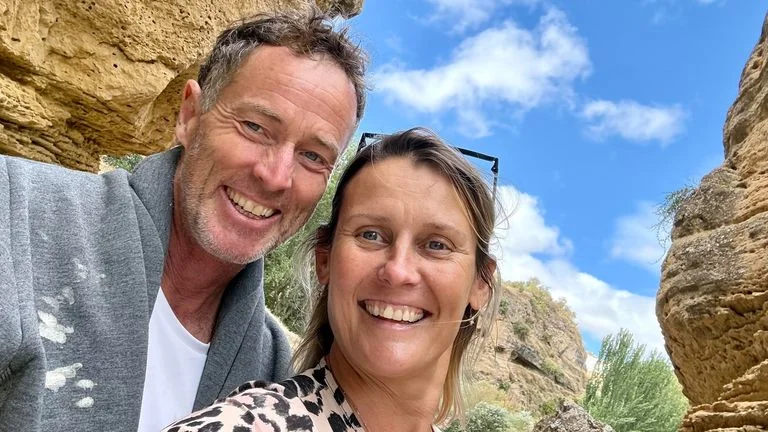
New Diplomatic Push for Foremans' Release
The UK government's newly appointed Envoy for Complex Consular Cases, Alistair Burt, has held his first substantive meeting with the Member of Parliament representing the son of detained British nationals Craig and Lindsay Foreman. The meeting, confirmed by Folkestone and Hythe MP Tony Vaughan KC, signals a renewed diplomatic effort to secure the release of the couple, who have been held in Tehran's Evin prison since January 2025.
Vaughan, who has been representing the Foremans' son, Joe Bennett, in Parliament, described last week's meeting as "very positive" and a "promise made and a promise kept" by the Labour Government, which had pledged to strengthen state support for British citizens detained abroad. The engagement with Burt, a former Foreign Office Minister, is focused on holding the Foreign Office accountable and exploring all possible solutions to bring the couple home.
The development comes as the Foremans approach the 19-month mark of their detention. The couple, who were arrested while travelling through Iran during a global motorcycle tour, were later charged with espionage and sentenced to 10 years in prison by the country's revolutionary court, a process that the UK, US, and EU have all condemned.
A Family's Fight Amplified in Parliament
The case has become a focal point for Vaughan, whose constituency includes Folkestone, where Bennett resides. In a public statement, Vaughan reiterated the family's stance on the couple's innocence and the injustice of their conviction. "Craig and Lindsay Foreman were arrested in Iran in January 2025, while travelling through the country during a global motorcycle tour. They were later charged with espionage and sentenced to 10 years in prison, despite being totally innocent," he said.
He drew parallels with the long-running case of Nazanin Zaghari-Ratcliffe, another British-Iranian dual national who was detained in Iran for six years, highlighting the complexity and the emotional toll these situations take on families. The creation of the envoy role is a direct response to cases like these, aiming to provide a dedicated channel for complex consular cases that often become entangled in geopolitical tensions.
The meetings between Vaughan and Burt are part of a broader strategy to ensure the Foreign Office is using all available levers, from diplomatic backchannels to multilateral pressure. The Foreign Office has not commented publicly on the specifics of the case since the envoy's appointment, but the proactive engagement with the family's MP suggests a shift towards a more hands-on approach.
The Wider Context of a Hardened Middle East
The Foremans' detention must be viewed against a backdrop of heightened regional tensions. The news of the envoy's engagement comes as the US and Iran are locked in a tense standoff over the Strait of Hormuz, with oil prices fluctuating on news of potential talks versus Iran's insistence on preconditions. President Donald Trump's recent assertion that the conflict could "end pretty soon" has been met with caution, as Iran's parliament is simultaneously considering legislation to restrict the transit of US and Israeli vessels.
In this volatile environment, the fate of foreign nationals becomes a leverage point. The UK has sanctioned the judge who presided over the Foremans' case, reflecting the diplomatic isolation Iran faces. However, that isolation also limits direct communication channels. The appointment of a dedicated envoy is a pragmatic recognition by the UK that resolving such cases requires sustained, focused negotiation, separate from the high-stakes military and economic diplomacy that often dominates the headlines.
The case also resonates with other instances of foreign nationals being detained in the region. While each situation is distinct, the trend of arbitrary detention for political leverage has been a growing concern for Western governments. The UK's new envoy role is designed to navigate this complex web, providing a point of contact for families who might otherwise feel lost in the bureaucratic machinery.
Echoes in Domestic Politics: The Immigration Debate
While the Foremans' case is rooted in international relations, it also intersects with domestic political debates in the UK and the US, particularly regarding how governments treat individuals in custody. In the United States, a parallel controversy is unfolding over the treatment of detainees within the US immigration system.
Recent reporting has revealed that US Homeland Security officials, under the Trump administration, attempted to force-feed at least 10 individuals on hunger strike in immigrant detention centers. The procedures included force-feeding, involuntary blood draws, and forced hydration, with some cases stretching over months. Human rights groups have condemned the practice as torture, drawing a sharp legal and ethical distinction between medical care and custodial enforcement.
These two stories, while geographically and legally distinct, touch upon the same core questions of due process, the treatment of individuals held by the state, and the limits of executive power. They highlight how governments, under pressure to demonstrate control in matters of national security or immigration, can sometimes cross lines that are in place to protect fundamental human rights.
The UK's approach to the Foremans' case, by contrast, has been to emphasize diplomatic engagement and consular support, a strategy that seeks to resolve the issue through negotiation rather than confrontation. The contrast underscores different national philosophies regarding international law and the protection of citizens abroad.
The Long Road Home: What Changes Now
The appointment of Alistair Burt as the Envoy for Complex Consular Cases is a significant procedural development, but it is not a guarantee of a swift resolution. The role is designed to provide sustained focus, which is crucial in cases that can drag on for years. For the Foremans and their family, the message is one of continued, structured support from the UK government.
For Tony Vaughan MP, the immediate priority is to ensure that the momentum generated by the envoy's appointment is maintained. The meetings with the Foreign Office are about more than just updates; they are about applying consistent pressure and exploring creative solutions, which may involve third-party mediators or humanitarian channels.
The broader implication is that the UK is acknowledging the unique nature of these complex consular cases. They no longer fit into standard embassy protocols. They require a specialized diplomat who can navigate the intersections of national security, international law, and raw human tragedy. The Foremans, like the Zaghari-Ratcliffes before them, are caught in a geopolitical web that extends far beyond their motorcycle journey.
As the world's attention remains fixed on the military and economic standoffs in the Middle East, the human cost is often borne by individuals like the Foremans. Their continued detention is a stark reminder of the fragility of international travel and the profound consequences of geopolitical crises. The new envoy's efforts, while a positive step, open a new chapter in a long and difficult story, and their release remains the only acceptable outcome.
Comments