
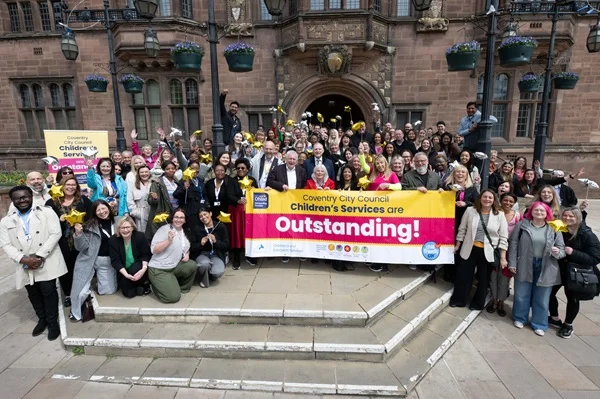
Coventry Children's Services Awarded 'Outstanding' Ofsted Rating After 12-Year Turnaround
From 'Inadequate' to 'Outstanding': A Landmark Achievement
In a striking endorsement of local government reform, Children's Services in Coventry have been awarded an 'outstanding' rating by Ofsted, the highest possible grade. The announcement, made on May 29, 2026, marks a dramatic reversal of fortune for the council-run department, which was rated 'inadequate' just 12 years ago. The inspection, which assessed the experiences and progress of children in need of help and protection, children in care, and care leavers, found that all areas except one were judged 'outstanding', with the experiences and progress of children needing help and protection rated as 'good'.
Inspectors praised the city's “relentless determination” to improve, noting that “political and corporate leaders, partners and local business leaders have been relentless in their determination for children in Coventry to succeed.” The report highlighted “impressive, outward-looking leaders” who have “demonstrated an unwavering ambition and commitment to children in Coventry,” managing to strengthen services despite “considerable external challenges” such as rising child poverty and a significant surge in demand.
The Long Road to Recovery
The journey from 'inadequate' to 'outstanding' has been a protracted one. The latest inspection comes nearly four years after the service was rated 'good', eight years after a 'needs improvement' finding, and a full 12 years after the lowest possible rating. This timeline underscores the sustained political and managerial focus required to overhaul a struggling department. Coventry City Council leader Coun George Duggins acknowledged the scale of the task, stating: “We knew we had to make great changes and that it would be a long journey, and to have come this far in 12 years is testament to the work of all involved.” He specifically credited former Cabinet Member for Children’s Services, Coun Patricia Seaman, for her tireless work in driving change.
The Ofsted report singled out several programmes for praise, including Family Hubs, the Fostering Service, the Virtual School, the Lifelong Links scheme, and the House Project, which supports care leavers transitioning to adulthood. The inspectors also highlighted the council’s work with unaccompanied asylum-seeking children, describing them as 'highly-valued', and the Safe Spaces scheme designed to protect children in public areas. Crucially, the report found that workforce morale was high, children's wishes were being “sensitively gathered,” and the vast majority of children were living in “loving, stable homes.” Julie Nugent, Chief Executive of Coventry City Council, called the achievement “wonderful” but stressed that the work is not over, pledging to continue improving services.
Why This Matters: The Broader Ofsted Landscape
The Enduring Challenge of School and Service Compliance
Coventry’s success story provides a counterpoint to a more challenging national picture regarding Ofsted compliance. While the inspection framework for children’s services focuses on social care, the spotlight on compliance is equally intense in the education sector. A recent analysis of school website compliance, based on audits conducted in 2025, reveals that many schools still struggle to meet the full requirements. According to data from Schudio, which reviewed 247 school website compliance audits, the average compliance score was around 80%. However, a striking finding was that only 6.5% of audits achieved full compliance.
The report noted that “most schools are close, but very few are complete.” This data highlights that for many institutions, keeping up with the granular requirements of publishing information—from safeguarding policies to financial details—remains a significant administrative burden. The challenge is compounded by separate guidance for maintained schools and academies, requiring constant vigilance. The Coventry example shows what can be achieved with long-term dedication, but the compliance data suggests this level of excellence is far from universal.
The Human Factor in Public Service Inspections
While the Coventry report focuses on institutional performance, the human element of public scrutiny was dramatically illustrated in another recent case involving a local authority figure. A woman was found guilty of harassing Hampshire Police and Crime Commissioner Donna Jones over a three-year period, with the judge describing her conduct as “vicious, targeted, unacceptable, malicious, abusive, unreasonable, and oppressive.” The case highlights the intense personal pressure that those in public-facing roles can face, a theme that resonates with the experience of school leaders and children’s services directors who are frequently under the microscope of Ofsted inspections. Commissioner Jones noted that the abuse had a “significant impact” on her professional and personal life, adding: “this is another example of the levels of abuse and intimidation people in public positions face on a daily basis.”
Comments