
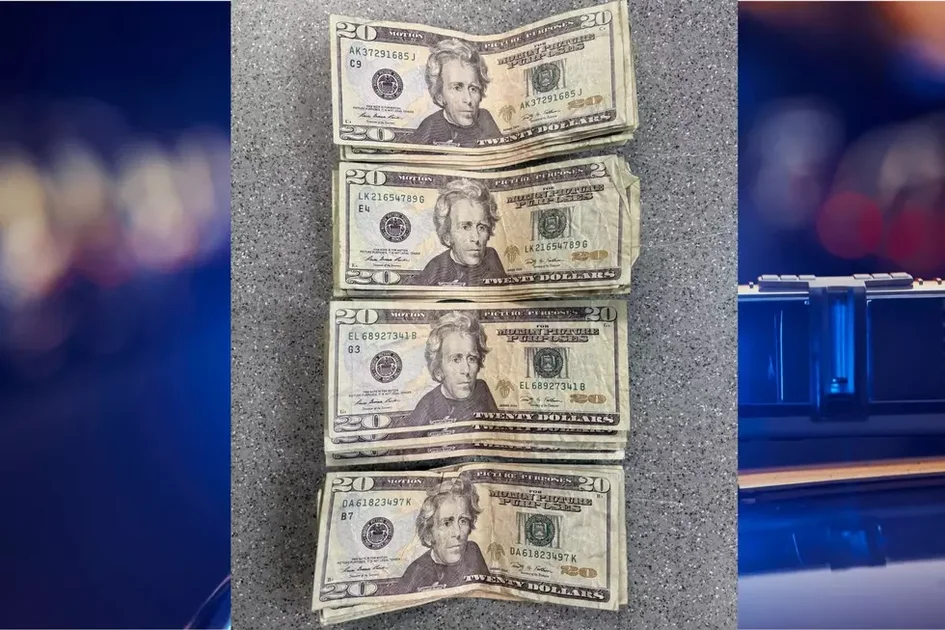
Counterfeit $20 Bills Used at New Jersey Wawa to Fund Sports Betting, Police Warn
Police in Washington Township, New Jersey, are searching for a suspect who allegedly used counterfeit $20 bills to purchase a $400 gift card at a local Wawa, then used the card to fund an online sports betting account. The incident, which occurred on November 1 at the Wawa on Egg Harbor Road in Turnersville, has prompted authorities to warn businesses across South Jersey to scrutinize cash transactions, especially those involving large gift card purchases.
How the Scheme Unfolded
According to police, the suspect entered the store at approximately 2:25 p.m. and completed the transaction in under four minutes, using 20 fake $20 bills to buy the gift card. He was last seen walking toward a nearby Burger King. The counterfeit money was not discovered until Wawa later deposited the cash at a bank, which flagged the bills as fake. Investigators say the gift card was activated within minutes of purchase and used to fund online sports betting activity.
A key giveaway, police say, was the phrase “For Motion Picture Purposes” printed directly on the bills—a common marker on prop money. The bills otherwise looked like real currency but felt different, according to the police chief. “If you’re at a checkout counter and you’re ringing somebody up fast, there is a line I could see how the person at the cash register could miss it,” the chief said. The suspect could face charges including theft by deception and forgery if apprehended.
Local Businesses on High Alert
The incident has rattled nearby businesses, many of which are now expanding the denominations they inspect. Damien Polizzi, owner of Polizzi’s Brick Oven just up the street from the Wawa, said his staff typically check $50s and $100s but will now also examine $20s and even $10s. “We don’t get a lot of cash anyway. I don’t think anyone really does, but now we have to be even more diligent for like I said even the small bills,” Polizzi told NBC10.
Washington Township police are urging business owners and employees to carefully inspect cash, particularly when customers make large gift card purchases. “We remind local businesses and their employees to carefully inspect cash transactions, particularly large purchases involving gift cards,” the department said in a press release. Authorities are asking anyone with information to contact Detective Lou DiAmbrosio at 856-589-0330 ext. 1169 or via email.
Why Counterfeit Cash Matters
The case highlights a persistent challenge for retailers: counterfeit currency remains a relatively low-risk, high-reward crime for offenders, especially when small bills are involved. Most counterfeit detection efforts focus on $50 and $100 notes, but criminals increasingly turn to $20s—the most commonly circulated denomination in the U.S.—precisely because they attract less scrutiny. According to the U.S. Secret Service, which investigates counterfeiting, the majority of fake bills passed in recent years have been $20 notes.
The rise of online gambling and gift card purchases adds another layer of complexity. Gift cards are attractive to fraudsters because they can be rapidly redeemed and are difficult to trace once used. In this case, the card was activated within minutes, suggesting a coordinated scheme rather than an isolated act. Police have not released a description of the suspect beyond surveillance images, and the investigation is ongoing.
Broader Implications for Retailers
The incident serves as a reminder that even as cash transactions decline, businesses cannot afford to relax their guard. For small retailers like Polizzi’s, the cost of accepting a single fake $20 can wipe out the profit margin on several sales. For larger chains like Wawa, which declined to comment citing the ongoing investigation, the reputational and financial risks are also significant.
As digital payments and gift cards become more integrated into retail, experts say employee training and simple verification tools—such as counterfeit detection pens and ultraviolet lights—remain essential. Police in Gloucester County say they are stepping up outreach to local businesses, but ultimately, vigilance at the register is the first line of defense. “It wasn’t until later that Wawa turned the money over to the bank and it discovered that it was counterfeit money,” the police chief said, underscoring the need for immediate checks.
The suspect remains at large. Anyone with information is urged to contact Washington Township police.
Comments