
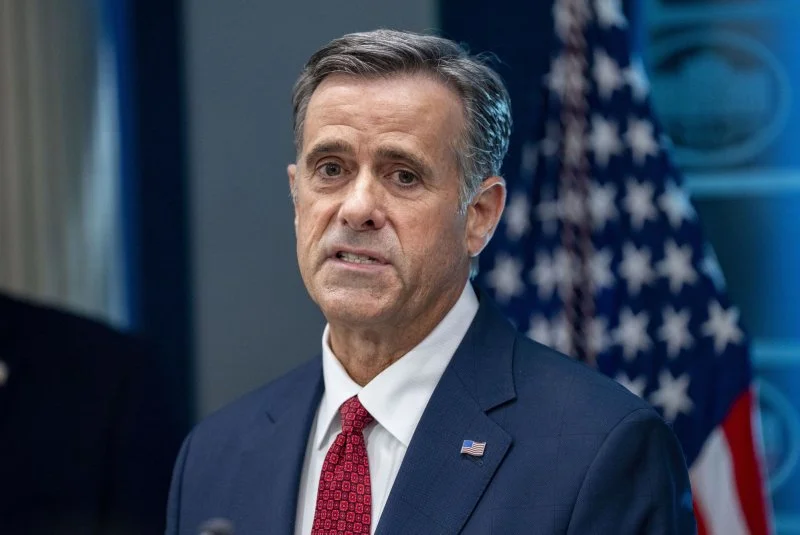
CIA Chief’s Unannounced Moscow Visit Highlights Fragile US-Russia Channel
CIA Director John Ratcliffe traveled to Moscow on Tuesday for unannounced talks with Russian intelligence officials, marking his first known visit to Russia since taking office in January 2025. The trip, confirmed by multiple sources to CBS News and Axios, was revealed after flight tracking data showed a US Air Force C-17A Globemaster III transport plane flying from Joint Base Andrews in Maryland to Riga, Latvia, and then on to Moscow’s Vnukovo Airport. A US diplomatic motorcade was subsequently spotted in the Russian capital.
Neither the CIA nor the White House has commented officially, but Kremlin spokesman Dmitry Peskov confirmed on Wednesday that Ratcliffe met with Russian intelligence counterparts. Peskov said President Vladimir Putin was briefed on the talks but did not meet Ratcliffe personally. He described US-Russian relations as being in a “deep crisis” more than four and a half years into Russia’s war on Ukraine, and said it was too early to predict whether the intelligence channel could help ease tensions.
The visit, first reported by CBS News, was kept deliberately quiet. Ahead of the trip, the US informed Ukrainian officials that a senior delegation would be traveling to Moscow and asked Kyiv to suspend long-range strikes until the delegation had departed, according to a senior Ukrainian official. The request underscores the sensitivity of the mission and the desire to avoid any incidents that could derail talks.
Rare High-Level Contact Signals Shift in Intelligence Diplomacy
In-person meetings between senior American and Russian officials have become extraordinary since Russia’s full-scale invasion of Ukraine began in February 2022. Diplomatic channels have been largely frozen, and direct communication has often been limited to occasional phone calls between defense chiefs or intelligence directors. Ratcliffe’s trip therefore represents a notable departure from the norm — a physical presence in Moscow that signals a willingness to engage directly, even as the broader relationship remains deeply adversarial.
The CIA has maintained a backchannel with Russian intelligence throughout Ratcliffe’s tenure, according to sources familiar with the matter. This is not the first time the agency has played a role in sensitive US-Russia exchanges. Ratcliffe personally negotiated the April 2025 release of Ksenia Karelina, a US-Russian dual national. The CIA was also involved in the 2024 prisoner swap that secured the freedom of Wall Street Journal reporter Evan Gershkovich and US Marine veteran Paul Whelan. Such exchanges have often been the only tangible evidence of cooperation between the two countries in recent years.
On the same day as Ratcliffe’s visit, a Russian official said that ten prisoners of war from each side were exchanged during a handover in Belarus. It was not clear whether the CIA played a role in that swap, but the timing suggests that backchannel negotiations may be more active than publicly known.
Stalled Peace Talks and Rising Tensions Provide Backdrop
The visit comes at a critical juncture. US-mediated peace talks between Ukraine and Russia have largely stalled, with the two sides far apart on core issues such as territorial control, security guarantees, and the status of occupied regions. The Trump administration has pushed for a negotiated settlement, but progress has been slow, and both sides continue to accuse each other of intransigence.
At the same time, recent US intelligence assessments indicate that Putin’s risk calculus may be shifting. Analysts believe the Russian leader could be increasingly willing to authorize provocative actions against NATO members, including hybrid operations and other deniable measures short of conventional military force. Such actions would be designed to test the resolve of the alliance and the Trump administration without triggering a direct military confrontation.
Speculation about the purpose of Ratcliffe’s trip has centered on “escalation management,” a term used by John Foreman, a former British military attaché to Moscow. Foreman noted that recent drone activity in Germany, which some have linked to Russia, could be part of a broader pattern of provocations. In this context, a direct intelligence channel could serve as a vital tool to signal red lines and prevent miscalculation.
What the Moscow Visit Means for US-Russia Relations
Ratcliffe’s unannounced trip is a reminder that even in the darkest periods of bilateral relations, governments find ways to communicate. The intelligence channel has historically been used to manage crises, exchange prisoners, and convey sensitive messages without the glare of public diplomacy. By dispatching the CIA director to Moscow, the Trump administration is signaling that it values this backchannel even as it continues to pressure Russia through sanctions and military support for Ukraine.
However, the visit does not indicate a thaw in relations. Peskov’s characterization of the relationship as being in a “deep crisis” is telling. The meeting appears to be focused on practical issues — possibly prisoners, operational deconfliction, or signals about escalation — rather than a broader political breakthrough. The request for Ukraine to pause strikes during the visit suggests that Washington is keen to avoid any incidents that could complicate the talks, but it also underscores the fragility of the situation.
Broader Implications for Global Security
The longer-term implications of Ratcliffe’s trip are significant. If the intelligence channel proves effective in reducing tensions, it could pave the way for more structured dialogue on arms control, cybersecurity, and other strategic issues. But if the visit fails to yield concrete results, it may be seen as another in a long line of symbolic gestures that do little to change the underlying dynamics of the conflict.
For Ukraine and its allies, the trip is likely to be viewed with caution. Any US-Russia engagement that does not involve Ukraine is inherently worrying to Kyiv, which fears being sidelined in negotiations that affect its sovereignty. The Trump administration’s request for Kyiv to suspend strikes during the visit will be scrutinized carefully, especially as Ukraine has relied on long-range drones and missiles to counter Russian aggression.
The timing of the visit also matters. Just days earlier, the US Treasury announced a new economic sanctions strategy aimed at isolating Iran, a key Russian ally. That move suggests the administration is willing to exert pressure on Moscow’s partners even as it engages with Moscow directly. The juxtaposition of pressure and dialogue is a classic diplomatic strategy, but it carries risks: mixed signals could confuse both adversaries and allies.
A Test of the Intelligence Channel’s Efficacy
The ultimate test of Ratcliffe’s visit will be whether it produces tangible outcomes. The CIA has a history of facilitating prisoner swaps, and it is possible that new exchanges are in the works. The prisoner exchange reported on Wednesday, involving ten prisoners per side, could be a precursor to further swaps. Ratcliffe’s personal involvement in previous cases highlights the importance of the intelligence channel for humanitarian issues.
Beyond prisoners, the meeting may have addressed the ongoing war in Ukraine. While the CIA does not negotiate peace deals, it can convey messages from the president to Russian counterparts, particularly on issues of escalation. Given the recent intelligence assessments about Putin’s risk calculus, the visit may have been an attempt to communicate US resolve and warn against provocative actions.
The visit also underscores the evolving role of intelligence agencies in modern diplomacy. As traditional diplomatic channels have narrowed, spy agencies have become crucial intermediaries in conflicts. The CIA’s role in the 2024 prisoner exchange and the 2025 Karelina release are examples of this trend. Ratcliffe’s trip to Moscow is another data point, suggesting that intelligence diplomacy will continue to be a primary means of communication between Washington and Moscow.
A Delicate Balance: Engagement Amid Crisis
For the Trump administration, the Moscow visit represents a delicate balancing act. On one hand, engaging with Russia is necessary to manage risks and pursue US interests. On the other hand, any appearance of appeasement could undermine US credibility with allies and at home. The administration’s decision to keep the trip secret until it was discovered by journalists suggests an awareness of the political sensitivities involved.
The reaction from Moscow is also telling. The Kremlin confirmed the visit but downplayed expectations, framing it as a technical meeting rather than a breakthrough. This cautious tone suggests that Russia is willing to maintain the channel but is not ready to make concessions. The mention of a “deep crisis” in relations serves as a reminder of the wide gulf between the two countries.
As the world watches for any signs of progress, the intelligence channel remains one of the few functioning links between Washington and Moscow. Whether it can evolve into a broader dialogue or remains a narrow backchannel for crisis management will depend on the outcomes of this visit and the willingness of both sides to take risks for peace.
What Comes Next
In the coming days, analysts will be looking for signs of follow-up meetings or announcements. The fact that Ratcliffe left Moscow shortly after the talks, according to flight data, suggests that this was a focused, short-term mission rather than the beginning of a prolonged engagement. However, the CIA’s continued contact with Russian intelligence indicates that the channel remains open.
For now, the visit serves as a reminder that even amid the worst crisis in decades, the United States and Russia are communicating. Whether that communication leads to a reduction in tensions or simply manages the conflict remains to be seen. What is clear is that intelligence diplomacy is now at the forefront of US-Russia relations, and Ratcliffe’s trip is a significant milestone in that ongoing effort.
As the war in Ukraine enters its fifth year, the stakes could not be higher. The international community will be watching closely to see whether this quiet diplomacy can produce tangible results, or whether it will become another footnote in the long history of US-Russia mistrust.
Comments