
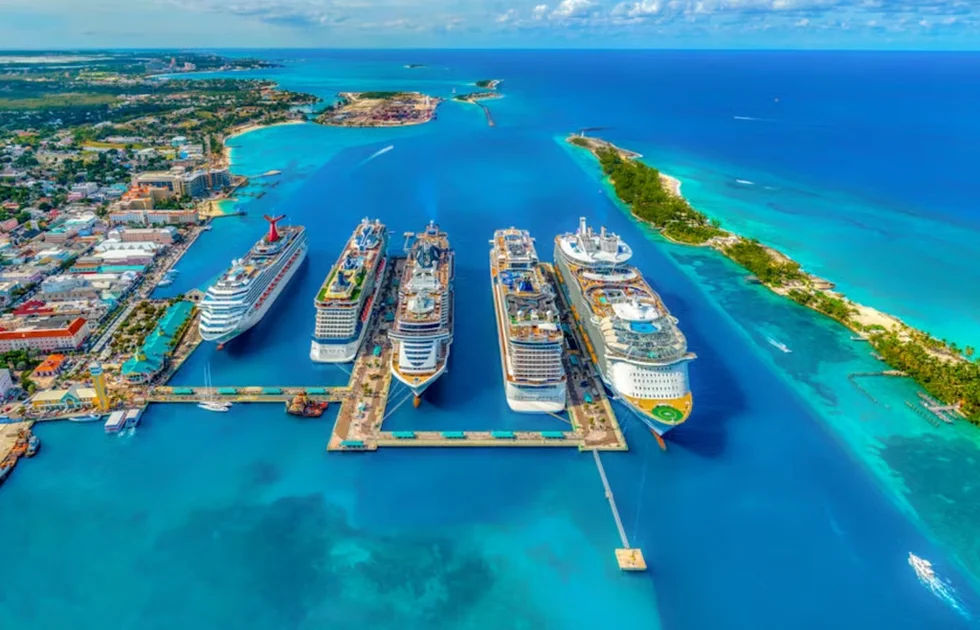
Carnival Corporation Confirms Breach Affecting Nearly 6 Million Customers
Carnival Corporation, the world's largest cruise line operator, has confirmed that approximately 5,995,277 customers were affected by a data breach that occurred in early April 2026. The company began notifying impacted individuals on Wednesday, May 27, 2026, according to a filing with the Maine Attorney General's Office.
The breach, which the company says involved a social engineering attack on an employee, was first detected by Carnival's IT security team on April 14. The attackers gained access to a limited portion of the company's IT systems and exfiltrated files containing personal information before the activity was blocked the same day.
"On April 14, 2026, the Company's IT security team identified unauthorized activity involving an employee's account. An unauthorized actor used social engineering to deceive an employee to gain access to a limited portion of the Company's IT system," Carnival stated in its data breach notification letters.
It was not until April 22 that Carnival confirmed the attacker had illegally copied personal data. The five-week gap between the breach and customer notifications has drawn criticism from affected passengers, many of whom expressed frustration on social media about the delayed disclosure.
What Data Was Stolen?
The stolen data varies by individual but broadly includes names, addresses, email addresses, phone numbers, dates of birth, and government-issued identification numbers such as driver's license and passport numbers. According to Have I Been Pwned, which analyzed leaked datasets, the breach exposed roughly 7.5 million accounts related to the Mariner Society loyalty program run by Carnival brand Holland America. That dataset included names, email addresses, dates of birth, gender, geographic locations, and loyalty program status details.
ShinyHunters Claims Responsibility
While Carnival has not officially attributed the attack, the ShinyHunters cybercrime group claimed responsibility in April shortly after the breach. The group stated it stole over 8.7 million records containing personally identifiable information along with terabytes of internal corporate data. ShinyHunters posted the stolen data on its leak site in late April, making it publicly available after the company allegedly declined to negotiate a ransom payment.
ShinyHunters has been responsible for several high-profile breaches in recent years, including attacks on AT&T, Charter Communications, and educational platform Canvas. The group has also been actively targeting Salesforce customers, claiming to have stolen billions of records in campaigns such as Salesloft Drift and Salesforce Aura.
The Stakes: A Cruise Giant's Recurring Cybersecurity Crisis
Carnival Corporation operates nine major cruise line brands including Carnival Cruise Line, Princess Cruises, Holland America Line, Costa, P&O Cruises, AIDA, Cunard, and Seabourn, along with the Holland America Princess Alaska Tours travel company. The Miami-based company employs over 160,000 people and served approximately 13.5 million guests in 2024, reporting revenues of over $26 billion last year.
The scale of this breach makes it one of the largest in the travel and hospitality sector. For affected customers, the exposure of passport numbers and driver's license information raises serious identity theft risks. Unlike credit card numbers, which can be reissued, government-issued IDs cannot be easily replaced, leaving victims vulnerable to long-term fraud.
One affected customer told AOL News: "The one piece of my data I had that had not been previously leaked was my passport number. Well, thanks Carnival! Personally I think the offer of free credit monitoring is crap. I have this many times over already from other sites data leaks."
Another Reddit user commented: "Not once do they apologize. I am so tired of these breaches. My kid is 13 and been involved in like 4 already."
Carnival's History of Security Incidents
This is not Carnival's first cybersecurity incident. The company has disclosed multiple breaches over the past several years. In 2019, Carnival suffered a hacking incident. In 2020, it was hit by a ransomware attack. Another breach occurred in March 2021. Each incident has eroded customer trust and raised questions about the company's commitment to data protection.
The recurring nature of these incidents suggests systemic cybersecurity weaknesses. SOCRadar CISO Ensar Seker emphasized that companies need to treat social engineering resilience as a core cybersecurity control: "That includes phishing-resistant MFA, stronger identity verification processes for internal requests, conditional access policies, privileged access segmentation, continuous behavioral monitoring, and regular red-team simulations focused specifically on human-centric attack paths."
Customer Compensation and Criticism
In response to the breach, Carnival is offering affected U.S. residents 24 months of free credit monitoring through TransUnion. Customers must enroll by August 31, 2026, to receive the service. However, many passengers have criticized the offer as insufficient given the severity of the data exposure.
Some customers reported receiving travel vouchers from Carnival, which they viewed as tone-deaf given the identity theft risks. The company's notification letters expressed regret but stopped short of a full apology: "We deeply regret this incident and any concern it may cause."
Broader Implications: What This Breach Signals for Cybersecurity
The Carnival breach is part of a larger trend of social engineering attacks targeting large enterprises. The method used — tricking an employee into granting access — remains one of the most effective vectors for cybercriminals, often bypassing technical defenses that are designed to stop automated threats rather than human deception.
The Rise of Extortion Groups
ShinyHunters' involvement highlights the growing threat of extortion-focused cybercrime groups. Unlike ransomware operators who encrypt data and demand payment for decryption, extortion groups like ShinyHunters steal data and threaten to publish it unless paid. This model has proven highly profitable, as the reputational damage from a public data leak can far exceed the cost of a ransom.
The group's claim of 8.7 million records stolen from Carnival — significantly higher than the 6 million confirmed by the company — suggests that the full scope of the breach may not yet be known. The discrepancy also raises questions about Carnival's detection capabilities and the thoroughness of its forensic investigation.
Regulatory and Legal Fallout
The breach will likely attract scrutiny from regulators, particularly in jurisdictions with strict data protection laws such as the European Union's GDPR and California's CCPA. Carnival could face fines and legal claims if it is found to have failed in its duty to protect customer data. The delayed notification period — more than six weeks from the date of the breach — could be a focal point for regulators.
In the United States, the Maine Attorney General's Office requires companies to notify affected residents and state officials of breaches involving personal data. Carnival's filing with Maine confirms it complied with this requirement, but the question of whether the company should have notified customers sooner remains open.
Lessons for Other Organizations
The Carnival breach offers several lessons for organizations of all sizes. First, social engineering attacks require a combination of technical controls and employee training. Phishing-resistant multi-factor authentication, strict access controls, and regular security awareness training can reduce the likelihood of successful attacks.
Second, incident response plans must account for the possibility of data exfiltration, not just ransomware. Organizations need the ability to detect unusual data transfers and respond quickly to limit exposure.
Third, transparency matters. Customers and regulators expect timely notification when personal data is compromised. Delays erode trust and can amplify reputational damage.
As the travel industry continues its post-pandemic recovery, cybersecurity will remain a critical competitive differentiator. Companies that fail to protect customer data risk not only regulatory penalties but also long-term brand damage that can affect bookings and revenue.
In an era where data breaches have become almost routine, the Carnival incident serves as a reminder that no organization is immune — and that the consequences of a breach extend far beyond the initial compromise.
Comments