
Canada's Retaliatory Tariffs Take Effect, Escalating Trade War With Trump
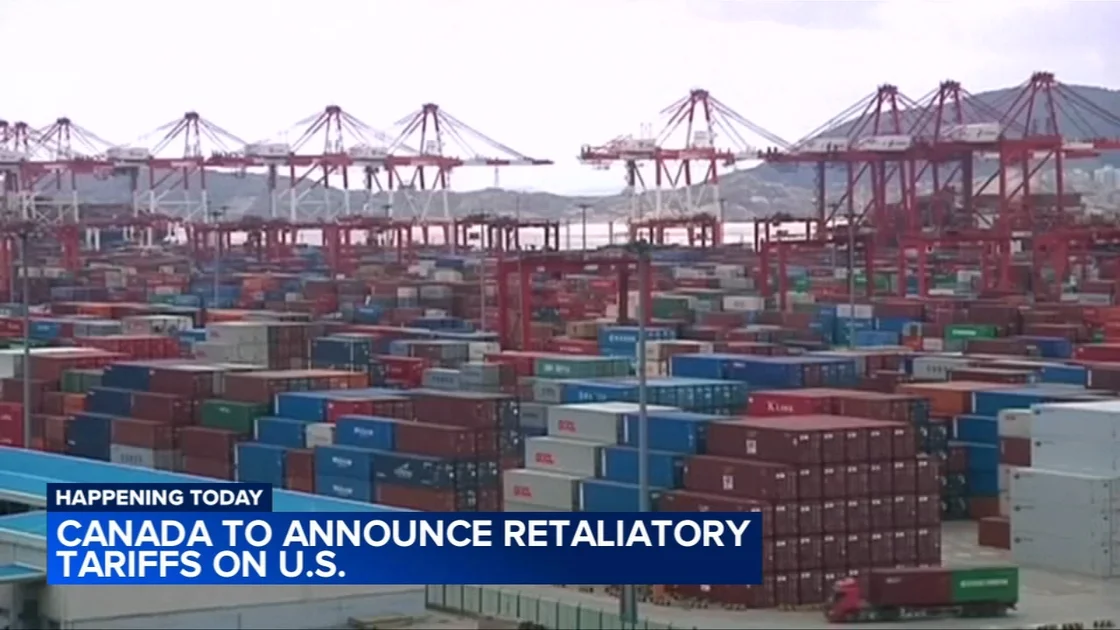
Canadian retaliatory tariffs on hundreds of U.S. products went into effect at 12:01 a.m. Eastern Time on Tuesday, September 8, 2026, hitting up to 50% on goods ranging from aluminum foil to cheese. The move intensifies a trade war between the United States and its northern neighbor, prompting President Donald Trump to warn of further escalation, including a potential ban on Bombardier aircraft sales and higher auto tariffs.
The Canadian measures target approximately $20 billion worth of U.S. exports, mirroring the size of recent U.S. levies on Canadian goods, according to officials in Ottawa. The targeted products represent nearly 6% of annual U.S. exports to Canada, based on U.S. Census Bureau data for 2025.
The Tariffs in Detail
Canada's list includes more than 700 American products, with tariffs as high as 50%. Among the affected goods are household items like raincoats and tongue depressors, as well as industrial inputs like aluminum foil and steel products. The Canadian government said the tariffs are a direct response to the latest round of U.S. levies imposed last month after trade negotiations collapsed.
U.S. officials had argued that the tariffs are necessary to protect American manufacturing and reduce trade deficits. However, the new Canadian countermeasures have drawn warnings from U.S. politicians in border states. Republican Senator Susan Collins of Maine said the trade dispute will hurt local businesses and consumers, echoing concerns from other lawmakers whose districts rely on cross-border trade.
Trump's Escalation Threats
On Monday afternoon, President Trump threatened to bar the sale of planes made by Canada-based aerospace company Bombardier unless the firm agreed to manufacture products in the U.S. This follows a late-August vow to increase tariffs on Canadian-made cars and auto parts from 25% to 50% beginning in January 2027.
Trump has repeatedly criticized Canada's trade practices. In a social media post, he wrote: "On Trade, and in other ways, also, they are among the worst Nations in the World to deal with. They feel entitled, and yet, WE DON’T NEED CANADA, THEY NEED US!"
The rhetoric has escalated beyond tariffs. Trump signed an executive order on August 27 changing the name of Lake Ontario to "Lake America," a move that Canadian Prime Minister Mark Carney dismissed, stating on X: "This lake is called Lake Ontario -- today and forever." Trump later posted an AI-generated video showing birds with his signature hairstyle marching with firearms to protect a body of water labeled "Lake America."
The Labor Day Contrast
The leaders' divergent approaches were on full display during Labor Day. Trump used the holiday to attack Democrats on Truth Social, writing: "Happy Labor Day to all, including the Radical Left Lunatics, Communists, and Dumocrats who will do anything possible to destroy our Country." He claimed his leadership would help Republicans win the upcoming midterms.
In contrast, Canadian Prime Minister Mark Carney issued a statement honoring organized labor. "On Labour Day, we honour the workers who have built our country and celebrate the proud history of organised labour in Canada," the statement read. Carney emphasized that unions have made the economy stronger and fairer, and he highlighted Canada's plans to build new infrastructure "in solidarity" with workers.
The split messaging underscores the stark difference in tone between the two leaders, with Trump focusing on political combat while Carney adopts a steady, worker-centric approach amid the trade crisis.
The Trade War's Broader Stakes
The trade dispute has fundamentally altered the traditionally cooperative U.S.-Canada relationship. Once close allies on trade, defense, and energy, the two nations are now embroiled in a tit-for-tat conflict that has disrupted supply chains and raised costs on both sides of the border.
For Canada, the stakes are existential. The U.S. is Canada's largest trading partner, absorbing roughly 75% of Canadian exports. The tariffs threaten key industries, including automotive manufacturing, aerospace, and agriculture. For the U.S., Canada remains a significant market, with over $400 billion in annual exports, making any disruption to trade feel the pinch in many border communities.
The conflict has also taken on symbolic dimensions. Trump has repeatedly floated the idea of making Canada the "51st state," a notion deeply offensive to Canadians and one that Carney has categorically rejected. The renaming of Lake Ontario, which sits on the U.S.-Canada border, is seen by many observers as a deliberate provocation designed to appeal to nationalist sentiments.
Economic Impact on U.S. Consumers and Workers
American consumers are already feeling the effects. Tariffs on Canadian goods—ranging from lumber to dairy—have increased prices for home construction and groceries. The new Canadian counter-tariffs on U.S. products will similarly hit U.S. manufacturers and exporters, potentially costing thousands of jobs in sectors reliant on cross-border value chains.
Senator Collins noted that Maine's lobster and agricultural industries are especially vulnerable to Canadian retaliation. Other northern border states, including Michigan, New York, and Washington, also face significant economic exposure. Local businesses that depend on Canadian tourists and exports could suffer as tensions remain high.
What This Means for the Future
The escalation suggests that a quick resolution is unlikely. Trade talks broke down in August, and neither side has signaled a willingness to back down. Trump's tariff policy is central to his economic agenda, while Carney faces domestic political pressure to protect Canadian sovereignty and economic interests.
Legal challenges are also mounting. Some U.S. companies have filed lawsuits arguing that Trump's tariff authority is unconstitutional, though courts have yet to rule definitively. Canada has hinted it may bring a dispute to the World Trade Organization, but such processes are lengthy and political.
A Shift in Global Relations
The U.S.-Canada trade war is not occurring in isolation. It is part of a broader pattern of Trump's protectionist trade policies, which have also targeted China, the European Union, and Mexico. This has caused global supply chains to shift, prompting many countries to seek alternative trade alliances.
For Canada, the tariff conflict has accelerated its efforts to diversify trade partners, particularly through the Comprehensive and Progressive Agreement for Trans-Pacific Partnership and new deals with the European Union. However, geographic proximity and economic integration mean that Canada cannot simply divorce itself from the U.S. market.
Over the long term, analysts warn that such tariffs could erode the economic competitiveness of both nations, as manufacturers face higher input costs and reduced access to critical markets. The automotive industry, which relies on highly integrated North American supply chains, is particularly vulnerable. Tariffs on cars and parts could lead to job losses on both sides of the border, undermining the very manufacturing jobs Trump has pledged to protect.
The Road Ahead
As the new tariffs take effect, the immediate focus will be on Trump's response. He has promised further retaliatory measures if Canada does not capitulate, but such a stance risks inflaming tensions further. Diplomats from both countries have engaged in quiet back-channel talks, but no formal negotiations are scheduled.
Prime Minister Carney has called for a balanced approach, blaming the U.S. for starting the conflict but leaving the door open for dialogue. "We are prepared to talk, but we will not be pushed around," he said in a recent address. Canadian officials emphasize that their tariffs match the U.S. dollar-for-dollar and target goods specifically chosen to maximize political pressure on American lawmakers in key districts.
The situation remains volatile. Any miscalculation from either side could trigger a broader trade war with global consequences. In the meantime, businesses and consumers in both countries are bracing for higher costs and greater uncertainty. The once-stable U.S.-Canada economic relationship now appears to be at its lowest point in decades, with no clear exit strategy in sight.
Conclusion: A New Era of Uncertainty
The implementation of Canada's retaliatory tariffs marks a critical juncture in U.S.-Canada relations. What began as a policy of tariffs to rebalance trade has evolved into a bitter personal confrontation between two leaders with opposing visions. As the economic and political costs mount, the question remains whether either side can find a path back to cooperation without losing face. The next few weeks will be crucial in determining whether this dispute spirals further or gives way to pragmatic negotiations.
Comments