
Opening
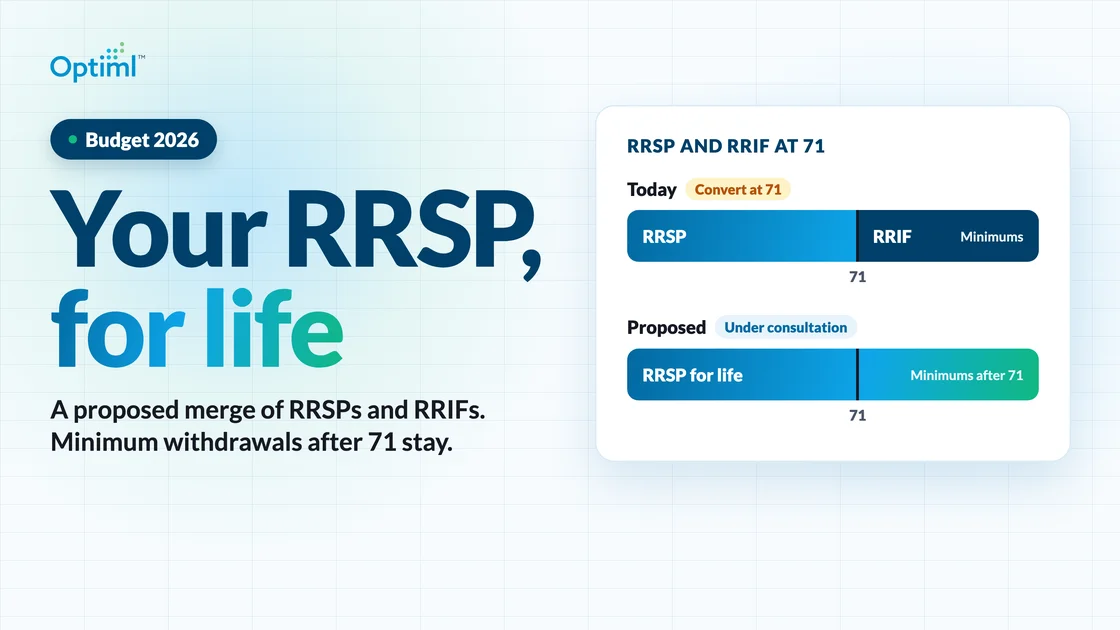
The Carney government’s 2026 federal budget, tabled on November 5, includes a significant proposal to overhaul how Canadians save for retirement: the introduction of an “RRSP-for-life.” The measure, still subject to consultations, would merge the tax rules for Registered Retirement Savings Plans (RRSPs) and Registered Retirement Income Funds (RRIFs), eliminating the requirement for seniors to convert their RRSPs into RRIFs by the end of the year they turn 71.
According to budget documents and analyses from RBC Wealth Management and The Globe and Mail, the reform aims to simplify retirement income planning and give Canadians more flexibility over when and how they draw down their savings. Under current rules, RRSP holders must convert their plans to RRIFs at age 71, after which they are subject to mandatory minimum annual withdrawals that are fully taxable. The proposed “RRSP-for-life” would remove that forced conversion, allowing individuals to keep their savings in an RRSP-like structure indefinitely.
However, the government has not yet specified whether the minimum withdrawal obligations themselves would be eliminated or merely reconfigured. The Globe and Mail notes that the reform “would not change the obligation to make those” minimum withdrawals, though details remain scarce. RBC Wealth Management confirms that the budget only launches consultations on merging the tax rules, meaning any legislative changes are likely years away.
Context
The proposal comes amid broader efforts by the Liberal government to simplify the tax system and ease financial pressures on Canadians. Budget 2026, titled “Masters of Our Destiny,” projects a deficit of $62.3 billion for 2026–27, declining to $52.9 billion by 2030–31, with day-to-day operating spending balanced by 2027–28. Despite the fiscal constraints, the government has avoided broad tax rate changes, instead focusing on targeted tweaks.
One of the most headline-grabbing measures is a new single tax filing deadline of May 15 for all individuals, including self-employed Canadians, starting with the 2028 tax season. Currently, most taxpayers face an April 30 deadline, while self-employed individuals have until June 15 to file (though taxes owing are due by April 30). The government argues the change will reduce reassessments and simplify interactions with the Canada Revenue Agency.
Other personal finance measures include a boost to the Canada Groceries and Essentials Benefit (formerly the GST/HST credit) and a revamped caregiver credit. For businesses, the budget introduces the “Canada Growth Incentive,” offering a tax exemption on up to $15 million in capital gains from the sale of qualifying shares of an eligible Canadian company.
The RRSP-for-life concept has been floated by policy experts for years as a way to address a common retirement planning headache: the tax shock that can occur when large RRSP balances are converted to RRIFs and subject to mandatory withdrawals. Under the current system, retirees who have saved diligently may be forced to withdraw more than they need, pushing them into higher tax brackets and potentially triggering clawbacks of income-tested benefits like Old Age Security.
Perspective
While the proposal has been met with cautious interest from financial professionals, it has also drawn skepticism. Some commentators question whether the change is more than a rebranding exercise. One reader comment on Global News encapsulated the sentiment: “Devil is in the details. This could be great – the RRIF system has mandatory minimum withdrawals and you can get a hell of a tax shock if you saved quite a bit, or have another pension. If RRSP rules apply, you can take out only what you want/need each year.”
Others worry about confusion. “At present, you can convert a RRSP to a RRIF before you reach the age you are required to. So, if you do so at a young age, how does your average financial Rep know this without reviewing transaction codes within an account they may not have access to for regulatory purposes?” asked another commenter. These concerns highlight the operational complexity of merging two distinct tax-deferred vehicles.
From a broader perspective, the RRSP-for-life proposal fits into a global trend of governments seeking to simplify retirement savings frameworks and encourage longer workforce participation. Canada’s aging population and low personal savings rates have made retirement adequacy a pressing policy issue. By removing the forced conversion at 71, the government may be betting that Canadians will voluntarily draw down their savings at a rate that suits their lifestyle, rather than being forced to liquidate assets on a government-mandated schedule.
Yet the lack of detail leaves many questions unanswered. Will the minimum withdrawal schedule be abolished entirely, or will it be applied to the new RRSP-for-life? How will financial institutions administer the merged rules? And will the change inadvertently create new tax-planning opportunities for wealthy Canadians to shelter assets indefinitely? The consultation process will likely address these issues, but for now, the proposal remains a blueprint rather than a reality.
For everyday Canadians, the most immediate change is the new May 15 tax deadline, which takes effect in 2028. The RRSP-for-life, by contrast, is a longer-term project that will require legislative amendments and coordination with financial institutions. As one Global News commenter bluntly put it: “I don’t have any extra money for an rrsp anyway. Over 40 percent of my income goes to taxes and life in general is unaffordable.” That sentiment underscores the challenge facing the government: while simplifying retirement rules is laudable, it may do little to help those struggling to save in the first place.
What’s Next for the RRSP-for-Life
The government has not set a timeline for the consultations, but budget documents suggest they will begin in early 2027. Stakeholders, including financial institutions, tax experts, and retiree advocacy groups, are expected to weigh in. Any legislative changes would likely not take effect before 2029 at the earliest. In the meantime, Canadians approaching age 71 should continue to follow existing RRIF conversion rules.
The budget also includes several other measures that may affect taxpayers’ wallets, such as a new tax deadline and changes to credits and benefits. As with any budget, the devil is in the details, and the RRSP-for-life is no exception. For now, it remains a promise of simplification—one that will be judged by how it is implemented.
Comments