
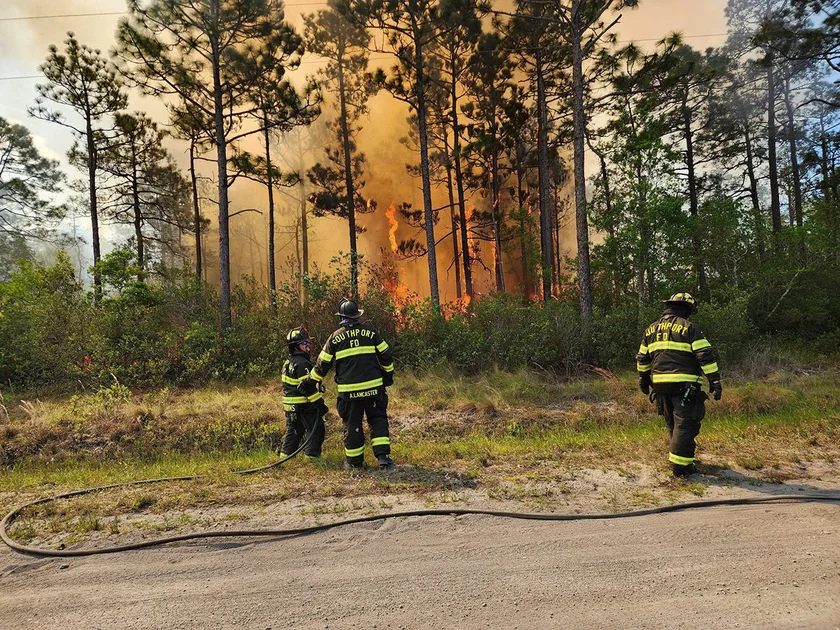
Brunswick County Wildfire Grows to 300 Acres; Multiple Roads Closed and Evacuations Underway
A fast-moving wildfire in southern Brunswick County, North Carolina, grew to approximately 300 acres overnight Friday, prompting evacuations and road closures as multiple agencies from two states battle the blaze near the Shallotte and Ocean Isle Beach areas. Officials are urging residents and drivers to avoid the area as heavy smoke continues to impact visibility and fire conditions remain highly unpredictable.
The North Carolina Forest Service, Brunswick County fire departments, and supporting crews from New Hanover County, Horry County (South Carolina), and the City of Wilmington are all on the scene. The fire is centered near the intersection of Old Georgetown Road and Hale Swamp Road, a rural area south of Shallotte. As of late Friday night, the North Carolina Forest Service reported the fire was 60% contained, although other officials said conditions remain fluid and an official containment percentage was not yet available.
Road Closures and Evacuations
The Brunswick County Sheriff’s Office confirmed the following roads are closed as of 11:58 p.m. Friday:
- Village Point Road
- Bricklanding Roundabout (southbound traffic)
- Bay Road at Todd Road
- Todd Road northbound from Bricklanding to Village Point Road
- Hale Swamp Road before Old Georgetown Road
- Old Georgetown Road at Ocean Isle Beach Road
Evacuations were ordered for some locations in the affected area, though no official count of displaced residents has been released. The Brunswick County Sheriff told WECT crews at the scene that no injuries have been reported, but a minor injury was noted by other sources. All agencies emphasize that the situation remains dynamic and residents should stay alert and follow guidance from local government and public safety officials.
Multi-Agency Response
The response includes all Brunswick County fire departments, the North Carolina Forest Service, and additional crews from New Hanover County, Horry County, South Carolina, and the City of Wilmington. Law enforcement agencies from across Brunswick County and the region, along with the Brunswick County Sheriff’s Office, are assisting with traffic control and emergency operations. Horry County Fire Rescue (HCFR) sent staff, engines, and brush trucks to help contain the wildfire.
Why This Fire Matters: Drought, Dry Conditions, and Rising Wildfire Risk in the Carolinas
The Brunswick County wildfire comes amid a record drought that has gripped the region. Earlier this week, Brunswick County banned outdoor irrigation as water conservation measures took effect. The dry conditions have created a tinderbox across much of southeastern North Carolina, with vegetation parched and fire danger elevated to critical levels.
Wildfires in the coastal plain are less frequent than in the western part of the state, but when they do occur, they can spread quickly due to dense underbrush, pine forests, and windy conditions. The 300-acre fire near Shallotte is a stark reminder that no part of the state is immune to wildfire risk, especially during prolonged dry spells.
Other Fires Burning Across the Region
The Shallotte fire is not the only blaze in the region. A wildfire burning north of Kelly, near the White Hall Plantation Game Lands in Bladen County, had burned approximately 89 acres and was 20% contained as of Friday afternoon, according to the North Carolina Forest Service. The Forest Service said it is actively monitoring that fire as well.
These multiple fires underscore a troubling trend: as climate change drives longer and more intense drought cycles, the southeastern United States is seeing an uptick in wildfire activity, even in areas not traditionally considered high-risk. The North Carolina Forest Service has reminded the public that flying a drone near or over a wildfire is illegal in North Carolina, as drones can interfere with aerial firefighting operations.
Smoke and Visibility Concerns
Heavy smoke from the Brunswick County fire is expected to remain in the area through the weekend, threatening visibility for drivers on major roadways. Officials are asking anyone who does not live in the affected area to stay away and allow firefighters, law enforcement, and emergency crews room to work safely.
“We will continue to provide updates as conditions change. Thank you for your patience and cooperation,” said the Brunswick County Sheriff’s Office in a social media post.
Broader Implications: What the Brunswick County Wildfire Signals for the Carolinas
The Brunswick County wildfire is more than a local emergency—it is a bellwether for the growing wildfire threat in the southeastern United States. As development pushes into wildland-urban interfaces, more homes and businesses are being built in areas prone to fire. The intersection of drought, human activity, and climate change is creating conditions where wildfires can ignite and spread rapidly, even in coastal counties like Brunswick.
Lessons from Past Fires
North Carolina has experienced devastating wildfires in recent years, including the 2023 fire near the Holly Shelter Game Land and the massive 2008 Evans Road fire that burned over 40,000 acres. Each event has led to improvements in interagency coordination, public warning systems, and firefighting tactics. The response to the Shallotte fire—drawing resources from multiple counties and even across state lines from South Carolina—demonstrates the effectiveness of mutual aid agreements and regional preparedness.
However, challenges remain. The Brunswick County fire highlights the difficulty of containing a blaze in dry, windy conditions with limited water sources. Officials are relying on containment lines, brush trucks, and aerial support to prevent the fire from spreading further. As of late Friday, the fire had not threatened major structures, but the potential for escalation remains high.
The Human Cost
While no serious injuries have been reported, the fire has disrupted lives, forced evacuations, and closed roads. Residents in the Shallotte and Ocean Isle Beach areas faced an anxious evening, watching smoke rise and waiting for updates. The psychological toll of wildfire—anxiety, uncertainty, and the fear of losing one’s home—should not be underestimated.
“The smell of smoke and the sound of sirens are enough to unsettle anyone,” said one local resident in a social media post. “We’re grateful for the firefighters, but it’s scary to think how fast this could have spread.”
What’s Next
The North Carolina Forest Service will continue to monitor the fire through the weekend. Officials are optimistic about containment, but warn that shifting winds and dry conditions could change the outlook quickly. The Forest Service is working to establish containment lines around the fire, and heavy equipment is being used to create firebreaks.
Residents in the area should stay informed through local news and official government channels. For those looking to help, donations to local fire departments or the North Carolina Forest Service are always appreciated.
A Changing Landscape
The Brunswick County wildfire is a reminder that fire seasons are lengthening and intensifying across the United States. Even in the humid Southeast, drought can turn green forests into fuel. Policymakers, land managers, and residents must adapt to this new reality. This includes investing in fire prevention, creating defensible space around homes, and supporting emergency services.
In a related development, the Trump Administration Opens Endangered Species Habitats to Logging and Mining, a move that critics say could increase fire risk in vulnerable ecosystems. The debate over land use and fire management is likely to intensify as fires like this one become more common.
How to Stay Safe During Wildfire Season
For residents in wildfire-prone areas, preparedness is key. The North Carolina Forest Service recommends the following:
- Create a defensible space of at least 30 feet around your home by clearing dry vegetation.
- Have an evacuation plan and a go-bag ready with essentials.
- Stay informed by signing up for local emergency alerts.
- Never fly a drone near a wildfire—it is illegal and dangerous.
For real-time updates on the Brunswick County fire, follow WECT, WPDE, and WWAY. The North Carolina Forest Service wildfire viewer also provides up-to-date information on fire perimeters and containment.
Conclusion
The Brunswick County wildfire is a serious event that has mobilized a massive response from local, state, and even interstate agencies. While the fire is currently 60% contained, the situation remains fluid, and officials are urging caution. This fire serves as a stark reminder of the growing wildfire risk in the Carolinas and the importance of community preparedness.
As firefighters continue to work through the night and into the weekend, the cooperation between agencies offers hope. But the ultimate lesson from the Shallotte fire is clear: in an era of climate change and drought, no community is safe from the threat of wildfire.
Comments