
Tentative Deal Reached Hours Before Strike Deadline
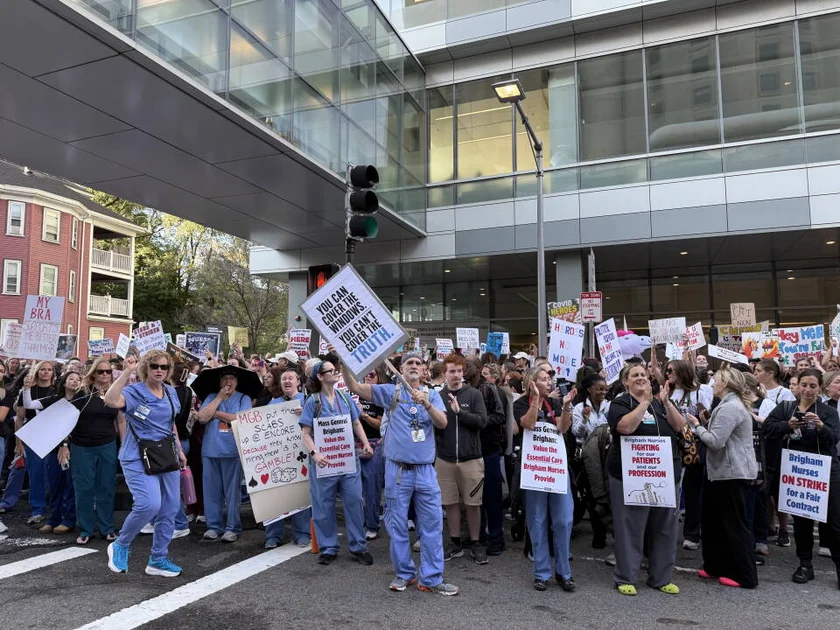
More than 4,000 registered nurses at Brigham and Women's Hospital (BWH) in Boston reached a tentative contract agreement with Mass General Brigham (MGB) late Wednesday night, averting what would have been the largest open-ended nurses strike in Massachusetts history. The agreement, announced just hours before a strike was scheduled to begin at 7 a.m. Thursday, addresses the nurses' central priorities on staffing, health insurance, and wages, according to the Massachusetts Nurses Association (MNA).
The deal follows months of tense negotiations and collective action, including a one-day strike in July and a subsequent four-day lockout, as well as an overwhelming vote in September authorizing an open-ended strike. Nurses had initially set an October 14 strike date but paused plans to vote on the hospital's "last, best, and final offer," which they rejected on October 23. A new strike date was set for November 12, prompting last-minute negotiations that culminated in Wednesday's agreement.
Key Details of the Agreement
The tentative contract, which remains subject to ratification by the bargaining unit, includes provisions aimed at protecting patient care by reducing the hospital's reliance on temporary nurses and limiting the practice of floating nurses between units. Specifically, the hospital committed to posting 20 new 36-hour float pool nurse positions, tracking floating and temporary nurse use, and establishing a joint Staffing and Resources Committee to review data and explore ways to reduce floating and temporary staffing. The agreement also preserves affordable health insurance and protects the nurses' wage scale while maintaining competitiveness for experienced nurses, according to a press release from the MNA.
"I'm incredibly proud of the Brigham nurses who stood strong to protect the world-class patient care we provide," said Kelly Morgan, RN, a labor and delivery nurse and chair of the BWH MNA Bargaining Committee. "We secured this agreement with the help of countless community members, patients, unions and elected officials who supported us for many months. By standing together, we protected patients and the future of union nursing care at the Brigham."
The hospital also expressed satisfaction with the deal. "We deeply value our Brigham nurses and believe this agreement recognizes their important contributions while supporting the long-term sustainability of our hospital and our ability to care for our patients and communities," BWH said in a statement Wednesday night. The agreement was reached "within the financial limits of the hospital's last, best and final offer presented on Oct. 10," the hospital added.
Context: A Long Road to Compromise
The path to Wednesday's agreement was anything but smooth. Negotiations between the union and hospital management stretched over 28 bargaining sessions, the most recent of which began at 9 a.m. Monday and continued past midnight without a resolution. As the strike loomed, the hospital began onboarding hundreds of temporary agency nurses—around 400 on Tuesday and another 400 on Wednesday—many of whom had worked during the July strike. The hospital also prepared to maintain operations in the event of an indefinite walkout.
The core disputes centered on wages, healthcare benefits, and staffing shortages. The union pushed for across-the-board wage increases, while the hospital's final offer included two 2.5 percent raises to the top step of the pay scale for the most tenured nurses. According to hospital data, new graduates earn just shy of $87,000 per year with a 5 percent increase for the next 20 years, and approximately 30 percent of nurses are at the top step, making at least $220,000 annually. The hospital contended that its nurses' wages are among the highest in the market and that it had moved on several other union priorities throughout negotiations, including staffing and travel nurse provisions.
Strike Averted, But Tensions Remain
The July strike, which was the largest healthcare strike in state history at the time, saw nurses walk off the job for one day and then face a four-day lockout due to contractual obligations for temporary replacements. That action underscored the deep frustrations among nurses over staffing levels and what they describe as unsafe patient care conditions. The September 24 vote authorizing an open-ended strike demonstrated overwhelming support for the union's demands, and the October rejection of the hospital's final offer further escalated the standoff.
As the November 12 strike deadline approached, both sides faced mounting pressure. The MNA had signaled willingness to resume negotiations before Thursday to "avert the strike," and the hospital said it remained open to continued discussions. The breakthrough came late Wednesday, just in time to prevent a disruption that could have affected thousands of patients and rippled through the broader Massachusetts healthcare system.
Perspective: A Relief for Patients and a Bellwether for Labor
The resolution at Brigham and Women's Hospital brings immediate relief to patients and the community, avoiding a strike that would have forced the hospital to rely heavily on temporary staff and potentially delay non-emergency care. It also prevents a significant financial blow to Mass General Brigham, which had already incurred costs from onboarding hundreds of agency nurses and preparing for a prolonged labor action.
For the nursing profession, the agreement signals that sustained collective action can yield tangible gains, even against large hospital systems. The inclusion of contract language on temporary staffing and floating—key concerns for nurses nationwide—could set a precedent for other hospitals negotiating similar issues. The joint staffing committee, in particular, creates a formal mechanism for nurses to have a voice in staffing decisions, a model that unions may seek to replicate elsewhere.
The deal also highlights the growing militancy of healthcare workers in the post-pandemic era. Nurses across the country have increasingly resorted to strikes or strike threats to address chronic understaffing and burnout, and the Brigham case illustrates both the leverage unions can wield and the willingness of hospital administrators to make concessions to avoid disruptions. As the tentative agreement moves to ratification, all eyes will be on whether the rank-and-file nurses approve the deal—and whether it truly delivers on the promise of safer staffing and fair compensation.
For now, the strike is averted, and the focus shifts to implementation and ratification. The MNA has indicated it will support the agreement, and a vote is expected in the coming weeks. If ratified, the contract could serve as a benchmark for future labor negotiations in the healthcare sector, where staffing crises and wage pressures continue to simmer.
Comments