
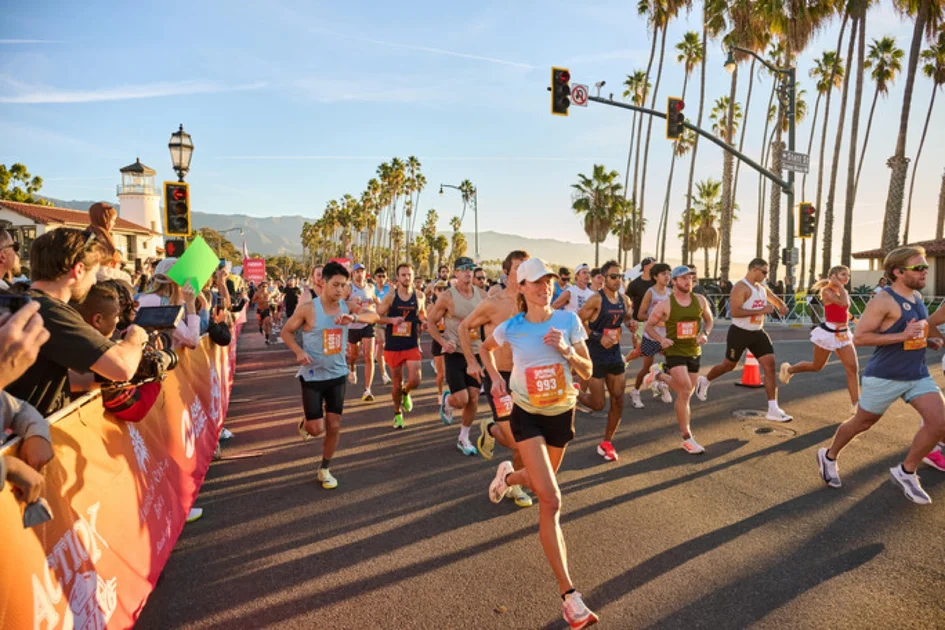
Santa Barbara Half Marathon Illnesses Spark Police Investigation
Santa Barbara police have launched an investigation after at least 27 participants in Sunday's Santa Barbara Half Marathon sought emergency medical treatment for what authorities describe as "unusual symptoms." The runners were treated at two Cottage Health emergency rooms in Santa Barbara and Goleta, with three still hospitalized in stable condition as of Monday, according to hospital spokesperson Cristina Cortez. The remaining patients were released after treatment.
The race, sponsored by Hoka and organized by Run Local, drew roughly 6,000 participants across the half-marathon and 5K events. Temperatures soared to 86 degrees Fahrenheit at noon—well above the typical high of 71 for this time of year—and runners faced little shade along the 13-mile course. Race director David Monico said the event's medical team treated numerous runners for dehydration and overheating both on the course and at the finish line, and that 15 people were transported from the medical tent to local hospitals.
Conflicting Accounts Emerge
While police have not determined a cause, Lt. Ethan Ragsdale confirmed the department is "actively investigating these reports" of unusual symptoms. Emergency crews responded to multiple locations along the route, including State and Cota streets, between 9:40 a.m. and 10:45 a.m., according to Santa Barbara City Fire Department Battalion Chief Cory Cloud. Twelve people were taken to Santa Barbara Cottage Hospital and three to Goleta Valley Cottage Hospital, while four others transported themselves.
Monico pushed back on speculation that something more sinister was at play. "We have no reason to believe that it's anything more than just the heat and exhaustion from the half marathon," he told Noozhawk, adding that the medical staff's observations supported that conclusion. He declined to comment on online rumors that water stations may have been contaminated. Cottage Health described the situation as "a larger than expected number of emergency visits" with "similar symptoms of undetermined cause," and said it is working to determine whether heat or other factors are responsible.
Heat and Rumors: What We Know
The timing of the race—held during an unseasonably warm November weekend—has emerged as the leading explanation. The National Weather Service recorded a high of 86 degrees, though the Guardian reported 88F, both far above seasonal norms. Participants like Kate Sheppard, 38, said they prepared for the heat by increasing water and electrolyte intake days in advance, but still found conditions challenging. "Even on some of our cooler days we'll have some transports," Monico noted, suggesting that hospitalizations are not unprecedented for endurance events.
Still, the sheer number of patients—19 on Sunday alone, rising to 27 by Monday—prompted police to treat the situation as potentially suspicious. Social media quickly filled with theories ranging from drugged water stations to contaminated supplies, rumors that authorities have neither confirmed nor ruled out. "There is no specific action recommended for the general public at this time," Ragsdale said, urging anyone feeling unwell to seek medical attention.
A Community on Edge
Santa Barbara's half marathon is a popular local event that draws thousands of runners to the scenic coastal city each year. The race's association with Hoka, a major running shoe brand, and Run Local, a well-known organizer, adds to its profile. The incident has raised questions about race-day safety protocols, particularly as climate change pushes temperatures higher in regions unaccustomed to extreme heat. While endurance events routinely prepare for dehydration and heat exhaustion, the cluster of hospitalizations has strained local emergency resources and heightened scrutiny.
Police have asked anyone with information about the incident to contact Sgt. Andre Miller at 805.897.2330. The investigation remains ongoing, and authorities have not released further details about the specific symptoms that prompted the probe.
Broader Implications for Endurance Events
The Santa Barbara case highlights a growing challenge for race organizers: balancing the popularity of endurance sports with the increasing frequency of unseasonable heat. As climate patterns shift, events held in traditionally mild climates may need to adapt with more aggressive hydration stations, cooling areas, and start-time adjustments. The investigation also underscores the power of social media to amplify rumors before facts are established—a dynamic that can complicate public health responses.
For now, the focus remains on the three hospitalized runners and the unresolved question of what exactly caused their symptoms. Whether heat alone or another factor is to blame, the incident serves as a cautionary tale for race organizers and participants alike: even well-prepared athletes can be caught off guard by extreme conditions, and vigilance is essential when unusual symptoms emerge. As police continue their probe, the running community awaits answers—and hopes for a swift recovery for those affected.
Comments