
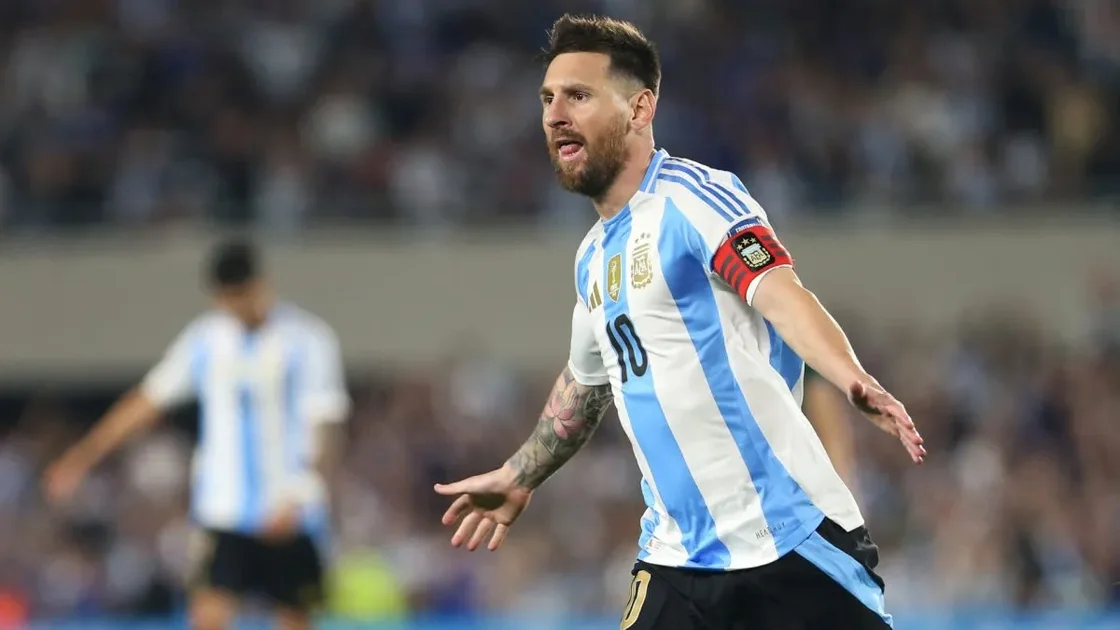
Argentina Reclaims Top FIFA Ranking as Rivals Stumble Ahead of World Cup
Argentina will officially reclaim the No. 1 spot in the FIFA world rankings when the next update is released on Monday, June 8, 2026. The shift follows a pair of disappointing friendly results for the teams directly above them: Spain settled for a 1-1 draw against Iraq in La Coruña, while France suffered a surprising 2-1 loss to Ivory Coast in Nantes on Thursday.
According to calculations cited by World Soccer Talk, even if Argentina loses its final warm-up match against Honduras on Saturday, Lionel Scaloni’s side will hold 1,874 points — enough to leapfrog Spain (1,873) and France (1,869). France had briefly occupied the top spot after overtaking Spain during the March international window, but their reign lasted only one update cycle.
The friendly defeat to Ivory Coast was an especially jarring result for Les Bleus. Playing at Stade de la Beaujoire in Nantes, Didier Deschamps’ squad looked disjointed in the second half, raising questions about their readiness for the tournament. Spain, meanwhile, struggled to break down a disciplined Iraq side, leaving Luis de la Fuente’s men with more questions than answers as they prepare to travel to the United States.
What the No. 1 Ranking Has Meant — and Not Meant — in World Cup History
Being ranked No. 1 in the world is a double-edged sword heading into a World Cup. On the one hand, it reflects sustained quality. On the other, the history of the tournament suggests it can be a curse. Since the modern FIFA ranking system was introduced in 1993, only three teams have entered the World Cup as the No. 1-ranked side and gone on to win it: Brazil in 1994 and 2002, and France in 2018.
All three champions shared a common trait: they were not the overwhelming favorites. Brazil in 1994 were seen as a team in transition, while their 2002 side — though stacked with talent — had endured a rocky qualifying campaign. France in 2018 played pragmatic football under Deschamps, often winning without dominating possession or shot counts.
In contrast, top-ranked teams have frequently fallen short. Spain entered the 2014 World Cup as No. 1 after winning three consecutive major tournaments, only to be eliminated in the group stage. Germany held the top spot in 2018 and crashed out in the group phase as defending champions. Belgium, which spent years at No. 1, never reached a final. The pattern suggests that the top ranking can create unrealistic expectations and additional scrutiny.
A recent analysis by The Athletic — which examined every World Cup winner through 22 editions — found that only one common factor truly matters: having a core of home-based players. The 2018 France squad, for example, included nine players from Ligue 1 clubs; the 2022 Argentina side also relied heavily on domestic league talent such as Julián Álvarez, who had just moved from River Plate to Manchester City. This raises a red flag for the current Argentina squad, where almost all key players — including Lionel Messi — now play abroad.
France’s Rocky Path and the Pressure on Messi
France’s 2-1 loss to Ivory Coast is not an isolated blip. According to The Athletic’s tactical guide for Group I, Deschamps’ side struggled during the 2024-25 Nations League, losing at home to Italy and then enduring a chaotic quarterfinal against Croatia before collapsing defensively against Spain in the next round. Deschamps, who has been in charge since 2012, is coaching his fourth and final World Cup. The team has reached two consecutive finals — winning in 2018 and losing on penalties to Argentina in 2022 — but the current squad appears less cohesive than its predecessors.
For Argentina, the No. 1 ranking carries an extra layer of intrigue because of Lionel Messi’s age. Now 38, Messi is widely expected to play his final World Cup. In a recent interview, former Argentina teammate Pablo Zabaleta admitted, “We don’t have the Messi of five years ago.” While Messi remains a decisive playmaker, his physical decline is undeniable. Argentina’s defense and midfield, anchored by Enzo Fernández and Alexis Mac Allister, will need to carry a heavier load than in Qatar.
Broader Implications: Ranking Volatility and the Group of Death
The shifting rankings also highlight the volatility of international football in the months before a World Cup. Spain and France both dropped points against teams ranked outside the top 40, underscoring the narrow margins that separate elite and mid-tier nations.
For France, the timing is especially awkward. They have been drawn into Group I — described by analysts as the “group of death” — alongside Senegal, Norway, and Iraq. Senegal reached the round of 16 in 2022 and will be motivated after controversially losing their Africa Cup of Nations title earlier this year. Norway, back at a World Cup for the first time since 1998, boast a golden generation led by Erling Haaland and Martin Ødegaard. Iraq ended a 40-year drought to qualify via the inter-confederation playoff. Any further slip-ups in the group stage could cost France a chance at a third consecutive final appearance — a feat only Brazil (1994-2002) and West Germany (1982-1990) have accomplished.
Meanwhile, Argentina will open its campaign in Group H against Saudi Arabia, Mexico, and Poland — a manageable draw but one that demands focus. If history is any guide, being No. 1 in June means little come July. But for now, the Albiceleste can enjoy their return to the summit, even as the warning signs flash beneath the surface.
This article was written as part of our World Cup 2026 coverage. For more on the tournament, see our analysis of Mikal Bridges Rewrites Narrative as Knicks Take 2-0 NBA Finals Lead and Xavier Becerra Advances to California Governor General Election.
Comments