
Tokyo-Bound American Airlines 787-9 Makes Unplanned Landing at LAX
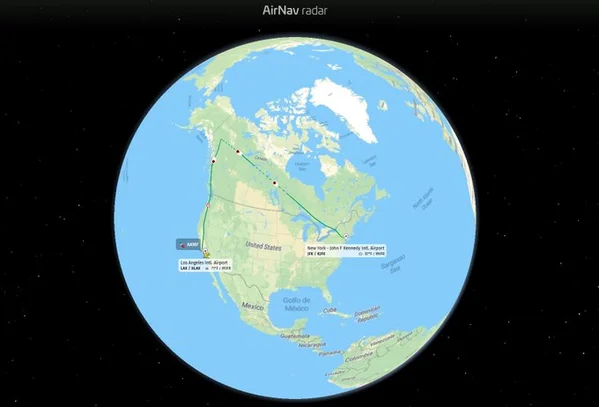
LOS ANGELES — An American Airlines Boeing 787-9 Dreamliner en route from New York to Tokyo diverted to Los Angeles International Airport (LAX) on Wednesday, September 23, after a technical issue forced the crew to abandon its transpacific crossing roughly five hours into the flight. The aircraft, operating as Flight AA167, landed safely at LAX shortly after 5:00 p.m. PDT (00:00 UTC, September 24), having spent more than 10 hours in the air on a journey that normally takes about 14.5 hours to complete.
The flight departed John F. Kennedy International Airport (JFK) at 10:45 a.m. EDT (14:45 UTC) with a planned polar route across Canada toward Tokyo Haneda Airport (HND). According to aviation news outlet AIRLIVE, the crew identified a technical malfunction as the aircraft approached the border of Alaska, approximately five hours into the flight. Instead of continuing across the Pacific Ocean, the pilots executed a sharp left turn back toward the continental United States.
Rather than diverting to closer airports such as Vancouver or Seattle, American Airlines’ Flight Operations Center directed the widebody jet to fly south to LAX. The aircraft, registered as N824AN, had climbed to a cruising altitude of 34,000 feet before the diversion. After covering thousands of miles, it touched down safely in Los Angeles, where it is now undergoing maintenance inspection. Stranded passengers are scheduled to resume their journey to Tokyo later today, September 24.
Key Facts at a Glance
- Flight: American Airlines AA167
- Aircraft: Boeing 787-9 Dreamliner, registration N824AN
- Route: New York JFK (JFK) to Tokyo Haneda (HND)
- Departure: September 23, 10:45 a.m. EDT
- Diversion point: Near Alaska border, approximately 5 hours into flight
- Landing: LAX, September 23, shortly after 5:00 p.m. PDT
- Time in air: More than 10 hours
- Status: Aircraft under maintenance inspection; passengers rebooked for September 24
Why the Diversion Mattered: Operational and Passenger Impacts
The decision to divert such a long-haul flight to a major hub like LAX rather than a closer alternative reflects standard airline operational strategy. According to AIRLIVE, operations centers frequently choose major hub airports for complex diversions to ensure adequate maintenance staffing, replacement aircraft availability, and better accommodation facilities for stranded passengers. LAX, as a major international gateway, offers American Airlines the resources to inspect and repair the aircraft while providing passengers with hotel accommodations and rebooking options.
For passengers, the diversion meant an unexpected 10-hour flight that ended thousands of miles short of their destination. The flight had already been airborne for roughly five hours when the technical issue was identified, and the return to U.S. airspace added another five-plus hours. While the airline has not disclosed the specific nature of the technical issue, the aircraft is undergoing inspection, and passengers are expected to complete their journey to Tokyo later today.
Technical Issues and Diversion Decisions
Technical malfunctions during long-haul flights are rare but not unprecedented. Airlines and pilots must weigh multiple factors when deciding where to divert: the severity of the issue, the nearest suitable airport, weather conditions, and the availability of maintenance and passenger services. In this case, the crew’s decision to turn back near Alaska rather than continue across the Pacific avoided the risk of being far from suitable diversion airports over open ocean.
The choice of LAX over Seattle or Vancouver suggests that American Airlines prioritized its maintenance and customer service capabilities over sheer proximity. This is a common practice among major carriers, as hub airports are better equipped to handle unscheduled aircraft and large numbers of displaced passengers.
Context: A Series of 787-9 Incidents Raises Questions
The diversion of AA167 is the latest in a string of incidents involving Boeing 787-9 Dreamliners. Just two days earlier, on September 22, an IndiGo Airlines 787-9 bound for New Delhi from London Heathrow declared an emergency shortly after departure and returned to London. According to AIRLIVE, the crew squawked 7700 — the international signal for a general onboard emergency — as the aircraft reached the English Channel. The flight, operating as 6E4 with registration LN-FND, had halted its climb at 24,000 feet before turning back. It landed safely on runway 27L at Heathrow, where emergency services met the aircraft. Reports indicated a burning smell onboard, though the precise cause was not officially confirmed.
These incidents, while unrelated, highlight the operational challenges that can arise even with modern, highly reliable widebody aircraft. The Boeing 787 Dreamliner family has been in service since 2011 and is widely used on long-haul routes. While technical diversions are infrequent, they are an inherent part of commercial aviation, and airlines train extensively for such scenarios.
How Passengers and Observers Can Verify Diversion Reports
In an era of instant social media updates, verifying aviation incidents can be challenging. According to guidance from eciks.org, the fastest way to confirm a diversion is to check live flight trackers such as FlightAware and Flightradar24, which show an aircraft’s flight path and status in real time. Institutional sources like the FAA’s Daily Air Traffic Report and LAX’s airport conditions page can provide operational context. Official airline statements are the most reliable confirmation. When no operator or FAA statement appears within a few hours, reputable outlets typically label the event “unconfirmed.”
For passengers or those expecting someone on a diverted flight, the airline app and airport arrival pages are the quickest ways to get gate and arrival information.
Perspective: What This Means for Long-Haul Travel and Airline Operations
While the AA167 diversion ended safely, it underscores the complexities of modern long-haul operations. Transpacific routes often traverse remote regions where diversion options are limited. Pilots and dispatchers must constantly monitor aircraft systems and weather, ready to make split-second decisions that prioritize safety above all else.
The incident also highlights the importance of hub airports like LAX as critical nodes in the global aviation network. Their ability to handle unexpected arrivals — from maintenance to passenger services — is vital to keeping travelers moving, even when plans go awry.
For American Airlines, the diversion represents a logistical challenge but also a test of its operational resilience. The airline’s handling of the stranded passengers and the aircraft’s repair will be closely watched. As of now, no injuries have been reported, and the aircraft is expected to return to service after inspection.
The Broader Trend: Diversions in the News
Aviation incidents often capture public attention, especially when they involve large aircraft and long delays. In recent weeks, several high-profile diversions and emergencies have made headlines, from the IndiGo 787-9 return to London to a Ryanair flight that transmitted a hijack code before returning to Porto. These events, while rare, remind the public of the rigorous safety protocols that govern commercial aviation.
As air travel continues to recover and expand, the industry faces ongoing pressures to maintain safety, efficiency, and customer service. Technical diversions, though disruptive, are a testament to the layers of redundancy and training that keep flying one of the safest forms of transportation.
American Airlines has not yet released a detailed statement about the cause of the technical issue, but the airline is expected to provide updates as maintenance progresses. Passengers on AA167 are advised to check with the airline for the latest information on their rebooked flight to Tokyo.
For now, the Boeing 787-9 remains at LAX, a reminder that even the most advanced aircraft can encounter unexpected challenges — and that the response to those challenges is what defines the safety and reliability of modern aviation.
Comments