
Ukraine Accuses Russia of Breaching Ceasefire as Kindergarten Is Hit
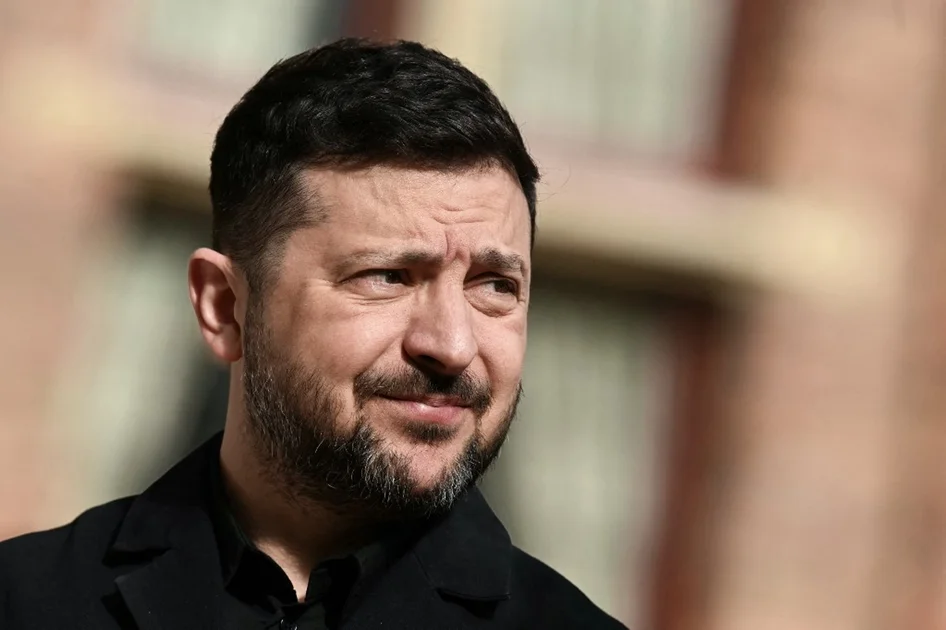
Ukraine has accused Russia of violating its unilateral ceasefire within hours of it taking effect, as a deadly strike on a kindergarten in the Sumy region killed two people on Wednesday. President Volodymyr Zelensky said Russia launched dozens of drones and missiles at civilian areas, directly contradicting Kyiv’s offer of a “regime of silence” aimed at testing Moscow’s willingness for genuine peace talks.
“Russia has not stopped any type of its military activity,” Zelensky said in his nightly address on Wednesday, noting that over 1,800 strikes were recorded across Donetsk, Kharkiv, Sumy, and other regions. The attack on the kindergarten, which local authorities confirmed was hit in the morning, occurred when no children were present. Zelensky described Russia’s actions as “an obvious spurning of a ceasefire and of saving lives.”
In response, Ukraine has warned it will act “mirror-like” and has already launched one of its largest drone attacks to date. The breakdown of the truce comes amid a flurry of rival ceasefire proposals ahead of Russia’s Victory Day celebrations on May 9, when Moscow commemorates the Soviet victory over Nazi Germany.
Ceasefire Diplomacy Collapses as Rival Proposals Clash
The Battle of the Ceasefires
Earlier this week, both sides announced competing ceasefires with no agreement on terms, length, or monitoring mechanisms. Moscow was the first to demand a truce covering May 8 and 9, ostensibly to allow for Victory Day events. Kyiv responded by declaring an open-ended unilateral ceasefire starting midnight on Tuesday, stating it would act “symmetrically” from that point on.
Zelensky dismissed Russia’s offer as “cynical” and a “theatrical performance” designed to secure the parade and protect Moscow from potential Ukrainian strikes. He pointed to evidence that Russia had reinforced air defenses around Moscow, redeploying systems from other parts of the country. “This is proof the Kremlin was more concerned about its parade than about the rest of the country,” Zelensky said.
Diplomatic Channels Remain Open
Despite the military escalation, diplomatic efforts continue. Zelensky announced that Ukraine is holding new talks with the United States on Thursday, with National Security Council Secretary Rustem Umerov meeting US Special Envoy Steve Witkoff in Miami. The discussions aim to advance the diplomatic process, focusing on potential prisoner exchanges and broader security cooperation between Kyiv and Washington.
“Ukraine remains in close contact with US partners and is pushing for a ‘dignified peace,’” Zelensky said, while accusing Russia of failing to respond constructively to Kyiv’s ceasefire proposals. Negotiations between Kyiv and Moscow have stalled, despite earlier US mediation, with attention partly diverted by the US war against Iran.
Broader Geopolitical Fallout: Armenia Hosts Zelensky, Strains Ties with Moscow
A Warning to Yerevan
The ceasefire drama unfolded against a backdrop of shifting alliances in the South Caucasus. Russia publicly scolded its traditional ally Armenia for hosting Zelensky at a European summit this week. Russian Foreign Ministry spokeswoman Maria Zakharova said it was “incomprehensible” that Armenia had served as a platform for what Moscow calls a “terrorist.”
“Russian society, with deep indignation and bewilderment, not only saw but remembered that Armenia, which we are used to considering a friendly, brotherly country, served as a platform. For whom? For a terrorist,” Zakharova said. She also warned Yerevan that pursuing closer ties with the European Union would lead to “irreversible involvement in Brussels’ anti-Russian line.”
Armenia’s Pivot West
Armenian Prime Minister Nikol Pashinyan responded defiantly, telling reporters: “Back in 2022-2023 I already stated that, on the issue of Ukraine, we are not an ally of Russia.” He later confirmed he would not attend Moscow’s Victory Day parade, citing the need to prepare for parliamentary elections scheduled for June 7.
Ties between Yerevan and Moscow have frayed significantly in recent years, especially after Azerbaijan’s 2023 takeover of Nagorno-Karabakh, which Armenia blamed on Russia’s failure to intervene. In 2024, Armenia effectively froze its participation in the Russian-led CSTO military alliance, and last year passed a law formally declaring its intention to apply for EU membership. Russian President Vladimir Putin warned Pashinyan in April that Armenia could not be a member of both the EU and the Russian-led Eurasian Economic Union.
What This Means: A New Phase in the War
The Parade as a Symbol
Zelensky’s assertion that Moscow’s main Victory Day parade now “depends on us” marks a significant rhetorical shift. For the first time, Ukraine is directly linking its military actions to Russia’s most sacred national holiday. The parade on Red Square is a deeply symbolic event for the Kremlin, and any disruption would be a major embarrassment for President Vladimir Putin.
“Russia has fought to the point where even their main parade already depends on us,” Zelensky said, adding that “It is time to end this.” His comments signal that Ukraine may be preparing to escalate drone strikes on Moscow or other symbolic targets, despite the risk of retaliation.
A War of Attrition and Signaling
The failure of the ceasefire proposals highlights the deep mutual distrust between the two sides. Russia’s offer of a two-day truce was widely seen as a tactical move to secure its parade, while Ukraine’s unilateral ceasefire was perceived as an attempt to seize the moral high ground and expose Russian intransigence. Neither side appears willing to make genuine concessions.
Meanwhile, the war continues to exact a heavy toll on civilians. The attack on the kindergarten in Sumy, though claiming no children’s lives, underscores the vulnerability of civilian infrastructure. The broader trend points to a prolonged conflict in which ceasefires are used as propaganda tools rather than genuine steps toward peace.
What Changes?
This week’s events may accelerate Ukraine’s push for long-range strikes on Russian territory, particularly around Moscow. If Ukraine demonstrates that it can disrupt the Victory Day parade, it could fundamentally alter the calculus for the Kremlin, which has relied on the parade as a display of national unity and military strength.
For Armenia, the rift with Russia opens up both opportunities and risks. While closer ties with the EU and the US offer economic and security benefits, they also invite Russian pressure. The Kremlin has many levers—energy supplies, trade, and the presence of Russian bases in Armenia—that it could use to punish Yerevan.
In a related development, local political shifts have also captured attention, as seen in the Reform Sweeps Essex County Council 2026 Elections in Landslide Victory, illustrating how domestic politics continue to evolve even as international crises dominate headlines.
The coming days will be critical. If Ukraine launches a major attack on Moscow during the Victory Day celebrations, it could trigger a significant escalation. If not, the status quo of grinding attrition is likely to persist, with both sides digging in for a long war.
Comments