
Xbox Unveils Project Helix Details in 25th Anniversary Magazine
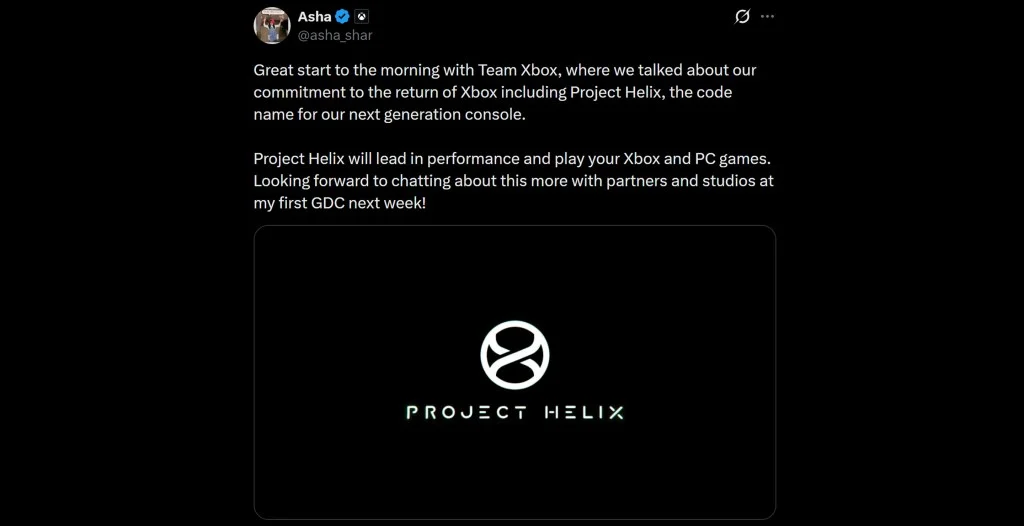
Microsoft has shared the first substantial new details about its next-generation console, codenamed Project Helix, in a special 25th anniversary edition of its Xbox magazine. The revelation, which surfaced over the weekend, confirms that the next Xbox is being designed as a console first and foremost—but one that can also play PC games. According to Jason Ronald, Vice President of Next Generation at Xbox, the goal is to remove the traditional barriers between console and PC gaming while maintaining the ease of use that console players expect.
"Project Helix is designed to be the ultimate gaming machine – one that removes all the barriers of play that have historically existed," Ronald said in the magazine. "My entire library is accessible to me. I'm able to bring four generations of my Xbox library and progression with me and have it available instantly. And we remove the arbitrary constraints between console and PC games." The company also confirmed that Project Helix is not a PC that plays console games, but rather a console capable of playing PC games, emphasizing a console-first experience with optional deeper customization for power users.
Key Features: PC Game Support and Backward Compatibility
The magazine detailed how Project Helix will handle PC games. Ronald explained that launching a PC game should feel as straightforward as starting any other game on the console, with driver updates and settings menus largely automated. However, players who want more control can still access settings and performance options. Which PC storefronts and games will be supported remains an open question, but the vision is clear: a unified device that bridges the gap between the living room and the desktop.
Backward compatibility is another cornerstone. Microsoft previously committed to keeping games from four Xbox generations playable, and Ronald went further, stating that players will be able to bring both their existing Xbox library and in-game progress to the new console. The goal is to have both available immediately upon upgrading. Game preservation is described as "core" to Xbox, with Ronald noting the company's deep responsibility to keep the past three decades of video games accessible. The magazine also describes Project Helix as a family of next-generation devices, not just a single console.
Why It Matters: Affordability and the Component Crisis
The timing of these revelations is significant. The gaming industry is facing a component crisis that has driven up the cost of hardware, particularly memory and chips. Xbox CEO Asha Sharma has already confirmed that the memory shortage will impact Project Helix pricing and availability. In this context, the company's focus on neural rendering—a technology that can generate frames without requiring more computational horsepower or additional memory—is seen as a way to keep the console affordable while still delivering next-generation visuals.
"It's definitely a challenging time, but as a system and a platform designer, it's also one of the most exciting times, because we have to invent entirely new technology to continue to advance the state-of-the-art while also continuing to make things accessible and affordable," Ronald said. He added that advancements like neural rendering are "an entirely new way to generate a frame without requiring more computational horsepower, additional memory, and things like that." Ronald also predicted that innovation will accelerate over the next three to five years faster than in the last decade.
Developer Focus and Timeline
Xbox is also focusing on what developers can do with the new hardware. Ronald mentioned that the company has been in conversations with its own studios and developers worldwide to understand their needs. Early Project Helix hardware is planned to be sent to developers in 2027. However, no release date or price for the console has been announced. Speculation suggests the device could arrive as soon as late 2027, but that remains unconfirmed.
Perspective: A New Chapter in Console Evolution
The details shared about Project Helix signal a broader shift in the console market. By blending console and PC gaming, Xbox is attempting to create a device that caters to both casual players and power users, while also addressing the growing importance of game preservation in an all-digital era. The emphasis on backward compatibility and carrying over four generations of games and saves sets a new standard for how platforms treat their legacy libraries. As the industry grapples with rising hardware costs and digital ownership concerns, Project Helix's approach could influence how competitors design their next-generation systems.
Moreover, the focus on neural rendering as a means to achieve affordability without sacrificing performance highlights how hardware makers are turning to software and AI-driven innovations to navigate supply chain constraints. The success of Project Helix will depend on execution, but for now, Xbox has painted a compelling picture of a console that aims to be the ultimate gaming machine—one that respects the past while embracing the future.
As the 25th anniversary celebrations continue, Xbox fans will be watching closely for more concrete details about Project Helix, including its final name, design, and launch lineup. For now, the company has made one thing clear: the next Xbox is not just a console, but a platform that seeks to unify gaming experiences across devices and generations.
Comments