
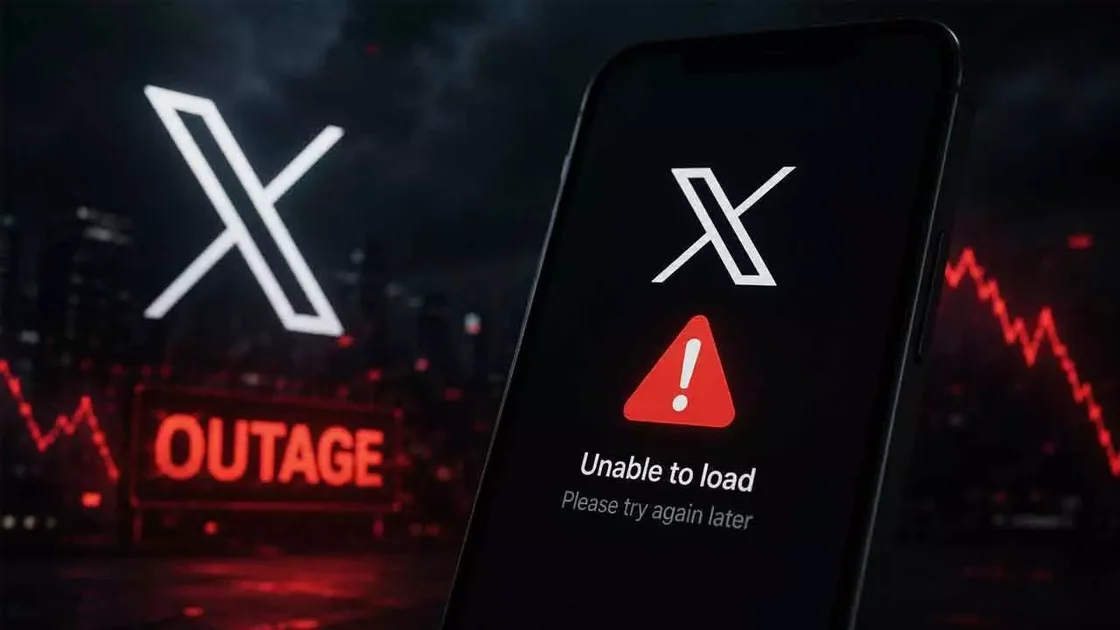
X Suffers Another Major Outage, Leaving Thousands of Users in the Dark
On the morning of June 19, 2026, social media platform X (formerly Twitter) experienced a significant outage, disrupting access for users around the world. According to data from Downdetector, a leading outage monitoring service, reports of the malfunction began surfacing around 7:30 a.m., with over 3,000 complaints logged from the United States alone within the first hour. By 7:03 a.m., approximately 609 reports had been filed, with users citing issues such as an inability to search, feeds failing to load, and the app being completely unresponsive.
What Users Experienced
Reports from the outage indicated a range of problems. The data from Downdetector revealed that about 46% of users were facing issues with the mobile app, 34% reported problems with the feed or timeline, and 12% encountered difficulties with the website. User comments captured during the disruption included frustrations such as "I can't search anything" and "Won't load." The outage appeared to be widespread, though reports from India were relatively low, with only around 50 logged reports at the time.
Official Response Still Missing
As of the latest updates, X's parent company, X Corp, had not issued an official statement confirming the outage or providing a timeline for restoration. This silence has become a pattern during recent disruptions, leaving users and businesses that rely on the platform for real-time communication in a state of uncertainty. The company's lack of transparency has drawn criticism from some quarters, especially given the platform's role as a go-to source for breaking news and live event updates.
Why the X Outage Matters: Platform Reliability Under Scrutiny
The June 19 outage is not an isolated event. X has faced a series of technical difficulties in recent months, raising questions about the stability of the platform since its acquisition by Elon Musk in 2022. In a context where social media is deeply integrated into daily life, such disruptions have far-reaching consequences.
Real-Time Communication Disrupted
For many, X is more than a social network—it is a critical tool for real-time information. Journalists, public figures, and emergency services use the platform to disseminate updates during crises. When X goes down, the typical fallback—users heading to the platform for reactions—becomes impossible, forcing people to migrate to competitors like Threads, Bluesky, or Mastodon. As one user on Downdetector lamented, "Im tired elon. Im so tired. Just delete the website."
This outage comes on the heels of a similar disruption just two days earlier, on June 17, 2026, when X also suffered a massive outage affecting thousands. That incident, reported by Digit, highlighted the same pattern: reports of app failures, timeline issues, and no official confirmation from the company. The recurrence suggests a deeper problem, possibly related to infrastructure changes or staffing reductions following Musk's cost-cutting measures.
Impact on Sports and Entertainment Coverage
The timing of the outage was particularly unfortunate for sports fans. On June 18, 2026, the Canada men's national soccer team (CANMNT) was playing a match against Qatar, during which a serious injury occurred. In a post on X, the team reported that midfielder Ismaël Koné had suffered a dangerous challenge and remained down, prompting a second red card for Qatar. Julian McKenzie, a journalist covering the game, expressed devastation at seeing Koné lifted off the field. For fans following live updates, the outage on the 19th would have disrupted any post-match analysis or reactions, compounding the frustration.
In parallel, the Berlin Open 2026 tennis tournament was nearing its climax, with stars like Elina Svitolina and Linda Noskova advancing, while Coco Gauff faced a "grass crisis." X serves as a primary platform for tennis fans to share live reactions and highlights. The outage likely dampened the online conversation around these events, shifting discussions to other platforms or leaving them incomplete.
The Broader Landscape: X's Stability and the Social Media Competition
The repeated outages at X underscore a broader trend of platform instability that has become a hallmark of the Musk era. Since taking over, Musk has slashed the company's workforce by over 80%, including key engineers responsible for maintaining server infrastructure and preventing downtime. While these cuts were intended to reduce costs and streamline operations, they have left the platform more vulnerable to technical failures.
Technical Debt and Infrastructure Concerns
X continues to run on a legacy codebase inherited from Twitter, with significant modifications made in a short period. The introduction of features like paid subscriptions, algorithm changes, and new verification systems has likely increased the complexity of the platform. When outages occur, the reduced engineering team may struggle to identify and resolve issues quickly. The Downdetector data shows that in the June 17 outage, about 50 reports came from India, suggesting the disruption was not limited to the US but had a global reach.
This pattern is reminiscent of previous high-profile outages under Musk's leadership, including a notable failure in December 2022 when the platform was down for hours. Each incident erodes user trust and reinforces perceptions that X is no longer the reliable service it once was.
Competition Heats Up
As X falters, competitors are eager to capture its user base. Platforms like Threads, launched by Meta in July 2023, have grown steadily, attracting users seeking a more stable alternative. Bluesky, a decentralized platform backed by former Twitter CEO Jack Dorsey, has also gained traction, especially among journalists and activists. The outages provide these rivals with an opportunity to promote their own reliability, often through pointed social media posts.
However, X still retains a massive user base and cultural significance. It remains the default platform for real-time public conversation, particularly around politics, sports, and entertainment. But if the outages become more frequent, the tipping point may arrive where users and advertisers begin to migrate in earnest.
Advertiser Confidence at Risk
The reliability issues pose a direct threat to X's advertising revenue, which has already suffered a significant decline since the acquisition. Advertisers demand consistent uptime to ensure their brands are seen. If the platform cannot guarantee that, they may pull their spending entirely. The lack of official communication during outages exacerbates this problem, as brands are left in the dark about when their campaigns will resume.
In the broader context, the outage also highlights the fragility of centralized social media platforms. The entire ecosystem relies on a single company's infrastructure. When it fails, users have no recourse but to wait. Decentralized alternatives, while still niche, offer the promise of a system where no single point of failure can disrupt communication.
Reflections on a Platform in Flux
The June 19 X outage is more than a temporary inconvenience—it is a symptom of the challenges facing one of the world's most influential social media platforms. As users wait for the service to return, the incident reinforces the need for transparency, investment in infrastructure, and perhaps a reassessment of the platform's role in society.
The Human Cost of Downtime
For individuals like Ismaël Koné, who suffered a serious injury during a match, the outage means that support and updates from fans may be delayed or lost. For journalists covering events like the England national team under Thomas Tuchel, who recently begged FIFA to fix photographers blocking the anthem view, the disruption can interfere with real-time reporting. Even internal links within the ecosystem, such as coverage of the Florida IVF mix-up or the ongoing NHL investigation into Mike Babcock, become harder to access when the platform is down.
A Call for Resilience
As the digital world becomes increasingly interconnected, the reliability of core platforms like X is a matter of public interest. Users expect a certain standard of service, especially when they pay for premium subscriptions. The company's silence during outages feels like a breach of trust, one that may be difficult to repair.
In the meantime, users are encouraged to diversify their social media usage and explore alternatives. While X remains the dominant player for now, its future will depend on whether it can restore confidence—both in its technology and in its leadership. Until then, each outage serves as a reminder that no platform is immune to failure, and that the true cost of instability is always paid by the people who depend on it.
Comments