
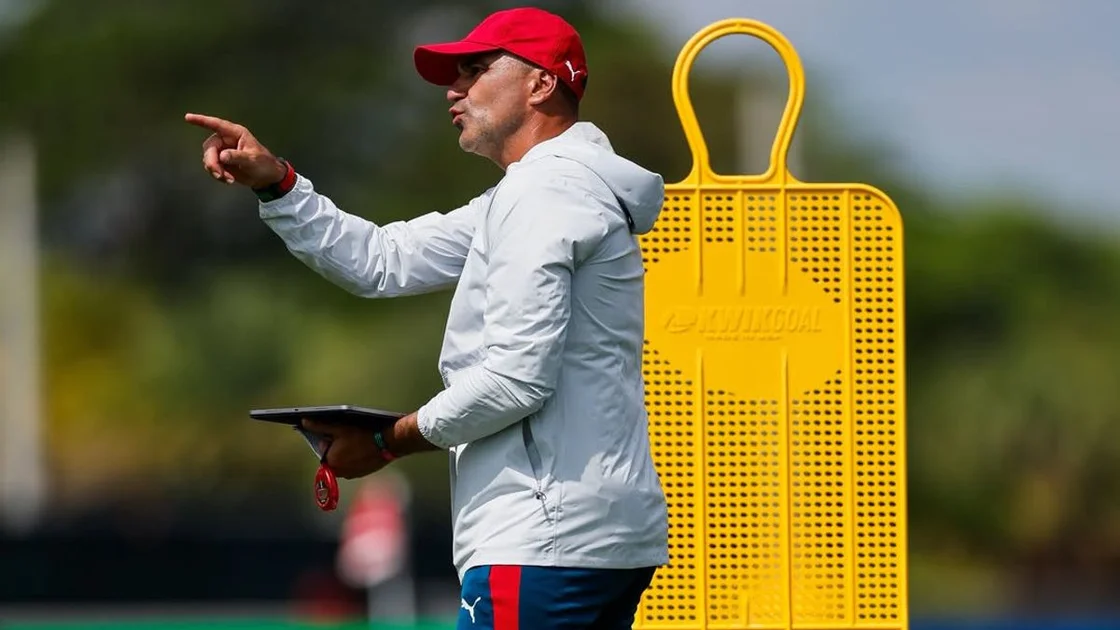
Roberto Martínez signals Portugal exit after World Cup as speculation over future intensifies
Roberto Martínez has strongly hinted that the 2026 World Cup will be his final tournament as Portugal head coach, confirming that discussions about his departure have been ongoing for some time. The revelation came on the eve of Portugal’s Group K opener against DR Congo, adding a layer of uncertainty to a campaign that already carries enormous expectations.
Speaking to reporters on Tuesday, Martínez acknowledged that reports of his exit after the World Cup are not new, but sought to downplay the timing. "It's not news. We've talked about this many times in Portugal," he said. "Maybe it's new elsewhere, but in Portugal we've discussed it a lot already. The focus remains continuing the work we've done over the last three and a half years."
The comments, first reported by ESPN, mark the first time Martínez has publicly addressed the swirling speculation since the tournament began. While he stopped short of confirming his departure explicitly, the message was clear: the end of his tenure is already a foregone conclusion in Portuguese football circles.
Why it matters: Portugal enters World Cup among favorites with Ronaldo in final bid
Martínez’s situation carries immense weight because of what is at stake for Portugal. The Selecao arrives in North America as one of the tournament favorites, boasting a squad that blends veteran leadership with exceptional young talent. Cristiano Ronaldo, now 41, is playing in his sixth and almost certainly final World Cup. The team also features Bruno Fernandes, Rafael Leao, Bernardo Silva, Vitinha, Joao Neves, Ruben Dias, and Nuno Mendes — a roster that rivals any in the competition.
Portugal has never won a World Cup. The closest the nation came was in 2006, when they finished fourth under Luiz Felipe Scolari, and again in 2014, when a late Paul Pogba header knocked them out in the round of 16. Under Martínez, however, the team has found consistency and a winning mentality. In 2025, Portugal won the UEFA Nations League, its second title in that competition and a clear signal that the squad is capable of beating the best.
Yet even that triumph did not silence critics of the manager. Martínez’s earlier stint with Belgium — a golden generation that reached only the semifinals in 2018 and the quarterfinals in 2022 — left a legacy of perceived underachievement. His Portugal tenure, though statistically impressive (28 wins, 7 draws, 5 losses in 40 matches, a 70% win rate), began slowly and only really found its rhythm during the Nations League run.
Now, with the World Cup already underway, the uncertainty around his future risks becoming a distraction. Players have been asked repeatedly about the situation. Cristiano Ronaldo, who shares a close relationship with Martínez, is said to have been informed of the coach’s plans, according to reports from World Soccer Talk. The forward, who hugged Martínez after a recent friendly, has publicly backed the manager but is focused entirely on ending his international career with the ultimate prize.
Group K presents immediate test for Portugal
Portugal finds itself in a group that looks manageable on paper but has already produced surprises. Group K includes DR Congo, Uzbekistan, and Colombia. The first match, against DR Congo, was scheduled for June 17 and was seen as a must-win for a team with title ambitions. Martínez acknowledged the weight of expectation before the game.
"We've got very little to win tomorrow from the outside. If you win against Congo, it's expected. If you win by one, it's a big problem. If you draw, it's a catastrophe. If you lose, this is the end of the world," he said. "They come with no expectations, and they are enjoying being here. We've seen incredible performances from teams like Qatar, Cape Verde, exemplary performances that show you that there are no easy games in a World Cup."
The warning was prescient. Earlier in the same tournament, Qatar had produced a stunning upset, and Cape Verde held Spain to a draw. The World Cup has already shown that reputations count for little. For Martínez, a poor result could accelerate scrutiny on his future and amplify the noise.
A manager under the microscope: From Belgium’s ‘golden generation’ to Portugal’s unfinished business
Roberto Martínez’s career has been defined by two contrasting narratives. On one hand, he is a pragmatic, well-liked coach who has managed at the highest level for two decades. On the other, he has never fully escaped the criticism that he underused Belgium’s golden generation — a squad that included Kevin De Bruyne, Eden Hazard, Romelu Lukaku, and Thibaut Courtois at their peak.
At Euro 2016, Belgium lost to Wales in the quarterfinals. At the 2018 World Cup, they finished third, beating England in the bronze medal match. However, the tournament was widely seen as a missed opportunity, especially after a dramatic 3-2 loss to France in the semifinals. Two years later, Belgium reached the quarterfinals of Euro 2020 but lost to eventual winners Italy. By the 2022 World Cup, the team was in decline and exited at the group stage.
When Martínez took over Portugal in 2023, the reaction was mixed. The federation gave him time, and the early results were solid if not spectacular. The breakthrough came in the 2024-25 Nations League, where Portugal defeated Spain in the final. That victory won Martínez breathing room, but the World Cup remains the ultimate test.
What the numbers say: Martínez’s record in perspective
At 563 matches across his club and international career, Martínez has 259 wins, 143 draws, and 161 losses — a 46% win rate. However, his record with Portugal is significantly better: 28 wins in 40 matches, a 70% win rate, with only five defeats. The improvement owes much to the quality of the squad, but also to a tactical flexibility that some believe was lacking during his Belgium years.
Still, the underlying question is whether Martínez can deliver when it matters most. Portugal has suffered heartbreaking exits in recent World Cups — a loss to Uruguay in the round of 16 in 2018, and a defeat to Morocco in the quarterfinals in 2022. Martínez’s task is to guide the team past that mental barrier.
Broader implications: What Martínez’s departure would mean for Portugal and the coaching market
The prospect of Martínez stepping down after the World Cup opens up a series of questions for the Portuguese Football Federation. If he leaves, the federation will need to find a successor capable of maintaining the team’s upward trajectory. Potential candidates could include domestic coaches like Rui Jorge or foreign managers with experience in international football.
The timing also matters. A departure immediately after the tournament would allow the next coach to take charge early in the next World Cup cycle. However, if Portugal performs poorly, the federation may face pressure to make a change before the end of the tournament, which could destabilize the squad.
Internationally, Martínez may find himself in demand. His experience managing at the highest level and his reputation for player management could make him a candidate for club jobs or other national teams. A strong World Cup showing would only enhance his stock.
For neutral observers, the situation echoes other high-profile managerial sagas at major tournaments. In 2018, Joachim Löw faced persistent questions about his future with Germany, though he stayed on until after Euro 2024. In 2022, Tite announced before the World Cup that he would leave Brazil afterward, and he did. Martínez appears to be following a similar script.
How this changes the narrative around Portugal’s campaign
The revelation that Martínez’s departure is already "discussed" in Portugal adds a layer of intrigue to every match. If the team struggles, critics will point to a lame-duck manager. If it succeeds, the achievement will be seen as a final triumph before a natural succession.
Players will inevitably be asked about the situation. Cristiano Ronaldo, who has often been the center of attention, will now share the spotlight with questions about the manager’s plans. The locker-room dynamic could become a factor, though Martínez’s careful handling of the issue suggests he is trying to shield the squad as much as possible.
The World Cup itself has already seen its share of drama. Earlier in the tournament, FIFA admitted a VAR technical glitch during a controversial match between Qatar and an opponent, a reminder that the modern game is fraught with external pressures (read more about that controversy here). Portugal will hope its own disruptions remain off the pitch.
What comes next: Martínez and Portugal’s path through the knockout rounds
For now, all attention is on Group K. After DR Congo, Portugal faces Uzbekistan, then Colombia. A top-two finish is almost expected, though the knockout stage will bring opponents like France, Argentina, or Brazil. Martínez’s tactical decisions will be scrutinized, especially his handling of Ronaldo’s minutes and the integration of younger players.
If Portugal wins the World Cup, the questions about his departure will be muted — his exit would be celebrated as a triumph. If the team falls short, the post-mortem will inevitably focus on whether the uncertainty around his future cost them.
Martínez himself seems at peace with the situation. "The focus remains on the work," he said. For a coach who has faced doubts throughout his career, that may be the most honest answer he can give.
Comments