
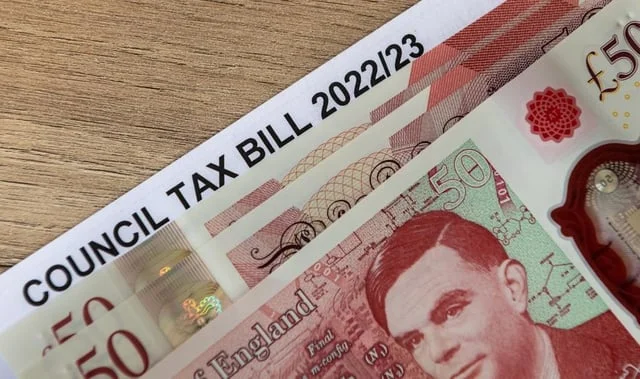
Wandsworth Council Tax Set to Soar Amid Funding Row
Wandsworth Council has confirmed that council tax will need to rise unless the Government rethinks sweeping cuts to its funding, with the authority's leader reportedly plotting a record 160 per cent increase. The warning, issued on 15 September 2026, comes as the borough faces the loss of an £84 million top-up grant under the Government's new Fair Funding Formula and a £54 million structural budget deficit.
The council's official X account stated that the cuts "will put major pressure on local services" unless ministers change course. The announcement has ignited a fierce political row, with four London councils—Wandsworth, Richmond, Westminster, and Kensington and Chelsea—jointly opposing a new "mansion tax" that they say will disproportionately hit their residents.
Mansion Tax Fight and Funding Formula
The mansion tax, due to take effect in April 2028, will impose a £2,500 annual charge on homes worth over £2 million. The four councils argue that their boroughs could end up paying £275 million per year through the levy, more than half the revenue expected to be raised across the UK. In a joint letter to the Government, they warned that landlords may pass the cost to tenants and that homeowners on modest incomes could be unfairly affected.
Wandsworth Council leader Robert Morritt said: "We won't get to keep a single extra penny raised, with Wandsworth residents hammered to pay for those elsewhere. Why should an additional tax on our residents' houses be spent so far from their homes?" Richmond leader Gareth Roberts accused the government of treating residents as "cash cows," while Kensington and Chelsea's Elizabeth Campbell said the tax "lacks nuance" and will hit pensioners and families.
Supporters of the fairer share campaign, including new Prime Minister Andy Burnham, argue the measures are needed to address an outdated tax system that allows wealthy London boroughs to keep council tax low while less affluent areas struggle. Westminster residents in Band G pay £1,749.25 annually, compared to £4,592.32 in Nottingham.
Governance Concerns at Wandsworth
The funding crisis has been compounded by governance issues at Wandsworth Council. For the third consecutive full council meeting, no papers have been published ahead of the meeting, leaving councillors uninformed about key decisions, including the spending review that will determine next year's council tax rise. The agenda for the extraordinary meeting on 16 September runs to just two pages, with no reports attached.
Putney.news reported that a rule introduced by the Conservative administration in July allows statements to be made without prior documentation. The lack of transparency has raised questions about how the borough is being governed at a critical financial juncture. The council's reserves, once £206 million, are projected to be exhausted by 2028, and the previous Labour leadership has been blamed for the current deficit.
Broader Implications for Local Government
The standoff reflects a wider trend in UK local government, where well-run, low-tax councils are facing significant funding reductions under the new Fair Funding Formula. The Spectator has described the move as a "blatantly partisan attack" on efficient councils, noting that Conservative-run Westminster, Windsor and Maidenhead, and Chelsea & Kensington are also in the crosshairs, along with Labour-run Hammersmith & Fulham.
If Wandsworth proceeds with the reported 160 per cent council tax rise, it would be one of the largest increases ever seen in the UK. Residents could face unprecedented cuts to services or soaring bills, while the political battle over the mansion tax and fair funding is likely to intensify. With the Government yet to respond to the joint letter, the future of council tax in Wandsworth—and other affluent boroughs—remains uncertain.
Comments