
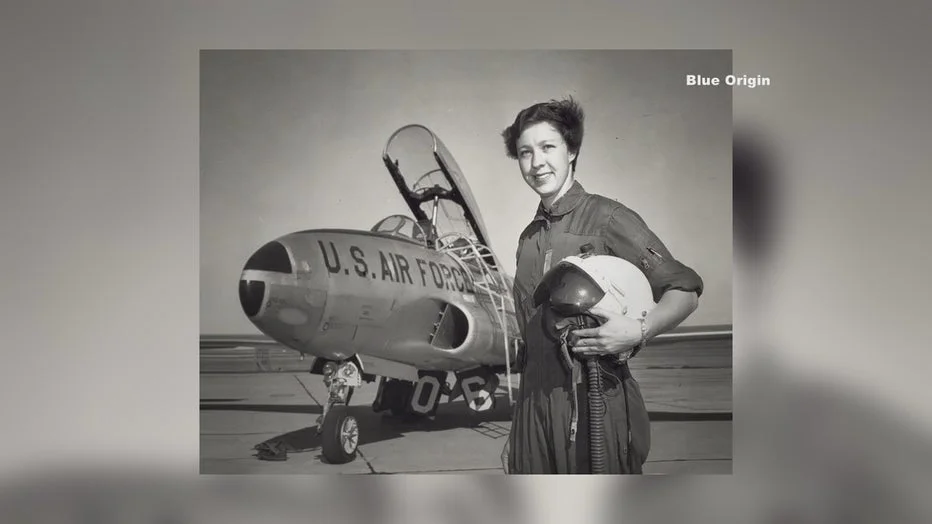
Wally Funk, Mercury 13 Pioneer and Oldest Woman in Space, Dies at 87
Wally Funk, the North Texas aviation pioneer who shattered gender barriers for decades and finally reached space at age 82 as the oldest woman ever to do so, has died. She was 87.
The city of Grapevine, Texas, where Funk lived, confirmed that she passed away peacefully on Wednesday evening, July 8, 2026, surrounded by loved ones. Her death marks the end of an era for the Mercury 13 program, of which she was the last surviving member, and for the broader fight for women’s inclusion in aviation and space exploration.
A Life Dedicated to the Skies
Funk’s career spanned more than seven decades. She began flying as a teenager and never stopped. At age 22, she had already earned top aviation ratings in college, became a professional certified pilot, and broke ground as the first female civilian flight instructor at a U.S. military base—Fort Sill, Oklahoma—at a time when women were systematically barred from many parts of aviation.
“Wally Funk’s unwavering determination proves that dreams have no expiration date,” said Grapevine City Councilwoman Duff O’Dell in a statement. “Her courage, resilience, and groundbreaking achievements continue to inspire young people—especially girls—to pursue careers in science, aviation, and space exploration. Grapevine is honored to call Wally Funk one of our own.”
The Mercury 13: Qualified but Denied
In 1961, Funk was selected as one of 13 women in the Mercury 13 program—also known as the First Lady Astronaut Trainees—who underwent the same grueling physical and psychological testing as NASA’s Mercury 7 male astronauts. Funk was the youngest of the group, at just 22, and she performed exceptionally, often outscoring men on key tests.
Yet despite proving they were qualified, none of the Mercury 13 women were allowed to fly. The program was abruptly canceled, and NASA did not accept women into the astronaut corps until 1978. Funk herself remained adamant that her exclusion was not solely due to gender but also because she lacked an engineering degree—a requirement that kept many qualified women out of the program.
“Nothing has ever gotten in my way,” Funk said before her 2021 launch. “They said, ‘Well, you’re a girl, you can’t do that.’ I said, ‘Guess what, doesn’t matter what you are. You can still do it if you want to do it, and I like to do things that nobody has ever done.’”
Breaking Barriers on Earth
Though she never initially flew to space, Funk carved out an extraordinary career on Earth. She became the first female air safety investigator for the National Transportation Safety Board and the first female inspector for the Federal Aviation Administration. She trained more than 3,000 pilots and logged more than 30,000 hours of flight time, earning international respect as one of the world’s most accomplished female pilots.
She was also a lifelong member of the Ninety-Nines, an international organization of licensed female pilots from 44 countries.
A Dream Realized at 82
Funk’s lifelong dream finally came true on July 20, 2021, when she flew aboard Blue Origin’s New Shepard NS-16 mission alongside Jeff Bezos, his brother Mark Bezos, and 18-year-old Oliver Daemen. At 82, she became the oldest woman to travel to space—a Guinness World Record—and the only Mercury 13 member to ever make it beyond the atmosphere.
“The greatest feeling,” she told CBS News Texas anchor Doug Dunbar after the flight, describing the experience of weightlessness and seeing Earth from above.
The mission came exactly six decades after she first trained as a potential astronaut, a delay that never dulled her determination. Funk often encouraged young people, especially girls, to pursue careers in science, aviation, and space exploration.
Legacy and Tributes
Funk’s death has prompted tributes from across the aviation and space communities. Grapevine, which honored her with a parade in 2021—Wally Funk Day—remembered her as a beloved resident whose generous spirit left an enduring impact.
Her story is also a reminder of the systemic barriers women faced in the 20th century and how one person’s persistence can help tear them down. Funk’s journey from the Mercury 13 to the edge of space is a testament to the idea that talent and determination cannot be suppressed forever.
Broader Implications for Women in STEM
Funk’s life highlights the progress—and the slow pace of change—in women’s access to STEM fields. While many of the barriers she faced have been dismantled, women remain underrepresented in certain aerospace and engineering roles. Funk’s record-breaking flight in 2021 served as a global symbol of how late-in-life achievements can inspire new generations.
Her story echoes that of Mara Brock Akil on Oprah Podcast, $50M Girlfriends Film, and Healing Through Writing, where perseverance in the face of systemic exclusion creates lasting cultural change.
The Final Frontier: A Changed Perspective
Funk’s death closes a chapter on the Mercury 13, but it opens a broader conversation about who gets to explore space. Today, the commercial space industry—led by companies like Blue Origin, SpaceX, and Virgin Galactic—offers opportunities that were unimaginable in the 1960s. Yet access remains uneven, and the legacy of pioneers like Funk underscores the importance of ensuring that space exploration is inclusive.
As Grapevine City Councilwoman O’Dell put it, Funk’s life proves that dreams have no expiration date. Her journey from a small Texas town to the edge of the cosmos is a story of grit, grace, and an unyielding belief that the sky is not the limit—just the beginning.
Funk is survived by her legacy of determination and the thousands of pilots and aspiring astronauts she inspired. The city of Grapevine plans to hold a public memorial in the coming days.
Comments