
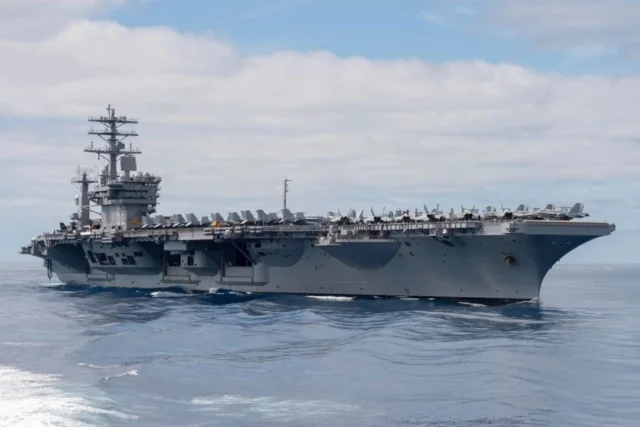
USS Nimitz Carrier Strike Group Arrives in Caribbean Amid Escalating US-Cuba Tensions
The United States Southern Command (SOUTHCOM) announced on Wednesday, May 20, the deployment of the USS Nimitz carrier strike group to the Caribbean Sea. The strike group, which includes the nuclear-powered aircraft carrier USS Nimitz (CVN 68), Carrier Air Wing 17, the destroyer USS Gridley (DDG 101), and the replenishment ship USNS Patuxent (T-AO 201), arrived on Cuba’s Independence Day.
In a post on its official X account, SOUTHCOM welcomed the Nimitz Strike Group to the Caribbean, describing it as "the pinnacle of preparedness and presence, unmatched reach and lethality, and strategic advantage." The deployment is part of the Southern Seas 2026 exercise — the 11th edition of a routine circumnavigation of South America with port calls in Brazil, Chile, Panama, and Jamaica. However, the timing and the geopolitical context give the movement a clear political and deterrent edge.
A Coordinated Pressure Campaign
The Nimitz’s arrival coincided with a series of high-profile actions against the Cuban government. On the same day, the U.S. Department of Justice filed federal criminal charges against former Cuban President Raúl Castro for the 1996 shootdown of two civilian aircraft operated by the humanitarian group Brothers to the Rescue, killing four unarmed aviators. President Donald Trump issued a statement linking the indictment to the recent capture of Venezuelan President Nicolás Maduro, warning that "those who destabilize our hemisphere and threaten the United States will face consequences."
The Nimitz is on its final voyage before planned deactivation in March 2027. But its presence in the Caribbean follows months of intensifying economic warfare. Since January, Washington has imposed more than 240 new sanctions on Cuba, intercepted at least seven oil tankers bound for the island, and signed an executive order on May 1 restricting Cuba’s energy, defense, mining, and financial sectors. The measures have slashed Cuban energy imports by 80 to 90 percent, leaving more than half the island’s territory enduring power outages of up to 25 hours daily.
Regional Context: Carriers in Transition
The Nimitz deployment comes as another supercarrier, the USS Gerald R. Ford, returned home on May 16 after an 11-month combat deployment — the longest since the Vietnam War. The Ford supported the capture of Maduro in January and later participated in operations against Iran. Its 326 days at sea broke a 50-year record and raised questions about fleet readiness and crew endurance.
With the Ford home and the Nimitz positioned in the Caribbean, the U.S. Navy is signaling that it can rotate carrier presence across theaters even while managing extended maintenance schedules. The Nimitz is one of the oldest carriers in the fleet, and its current deployment is widely seen as a demonstration of conventional power projection before retirement.
The Broader Geopolitical Stakes
This is not the first time the Nimitz has operated in a crisis theater. In mid-2025, it supported Operation Midnight Hammer, the U.S.-Israeli campaign that bombed key Iranian nuclear facilities. Now, its role in the Caribbean is tied to a strategy of isolating Cuba after the fall of Maduro. Trump has previously threatened to send the USS Abraham Lincoln near Cuban waters, contingent on the Iran conflict. The Nimitz’s arrival ensures Washington maintains a visible naval presence in the region as diplomatic negotiations over the oil blockade continue with Havana.
The deployment highlights a significant shift: the U.S. is using its carrier fleet not only for distant wars but also as a tool of hemispheric coercion. For comparison, the Trump Approval Below 40% in All States as GOP Primaries Show Base Still Firm suggests that domestic political dynamics may also be influencing the timing of such shows of force.
Perspective: What This Deployment Changes
The arrival of the USS Nimitz in the Caribbean marks a new phase in U.S.-Cuba relations. It is the second carrier deployment to the region in less than a year, after the Ford’s role in capturing Maduro. While SOUTHCOM frames the operation as a routine exercise, the convergence of legal action, sanctions, and naval power signals a policy of maximum pressure reminiscent of the first Trump administration.
Cuba, facing an energy collapse and diplomatic isolation, now confronts a U.S. aircraft carrier in its backyard. The Nimitz’s strike group can project air power across the island within minutes. The political message is unmistakable: Washington is prepared to escalate pressure further if Havana does not comply with U.S. demands.
For the U.S. Navy, the deployment is also a test of how aging carriers can be used for strategic signaling while the newer Ford-class ships recover from extended combat tours. The Nimitz’s final voyage may yet become one of its most consequential.
Internal links: EU Strikes Late-Night Deal on US Trade Pact to Avert Trump’s July 4 Tariff Threat adds context to the broader trade and geopolitical tensions the U.S. is navigating in 2026.
Comments