
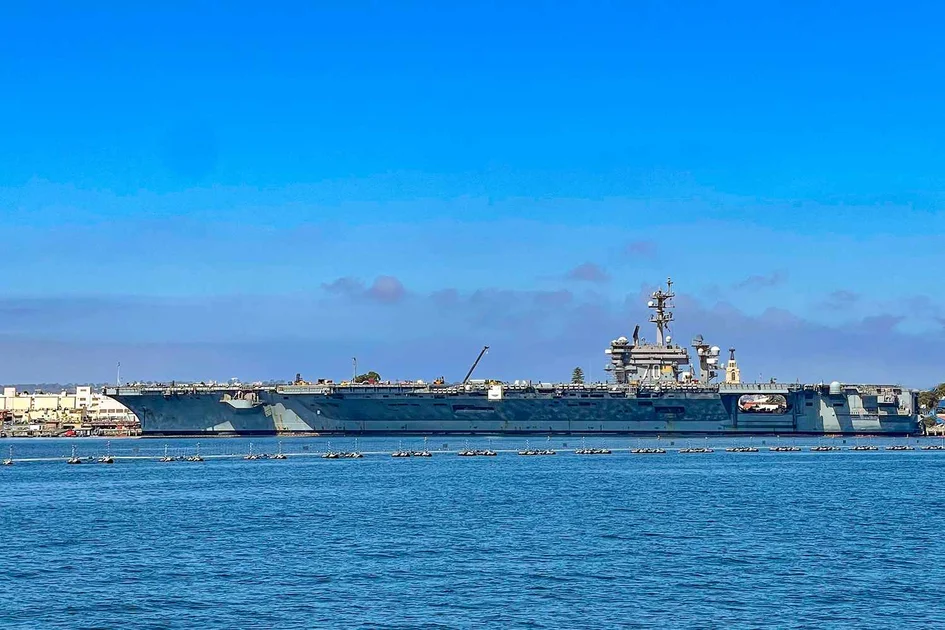
USS Lincoln Departs Middle East After Record Deployment
The USS Abraham Lincoln aircraft carrier has begun its journey back to its home port in San Diego after an extended nine-month deployment in the Middle East, a U.S. official confirmed to NBC News on Thursday. The ship, which has spent more than 250 consecutive days at sea supporting U.S. operations against Iran, departed the region earlier this week, with the USS George Washington arriving on Wednesday to take over its duties, according to U.S. Central Command (CENTCOM).
The Lincoln’s departure marks the end of a deployment that has drawn intense scrutiny over living conditions aboard the vessel. Reports from family members and crew have detailed food and water shortages, disrupted mail service, plumbing failures, and a growing sense of despair among the 5,000 sailors and Marines on board. The Navy has acknowledged some of the issues but has stopped short of calling them a crisis, while lawmakers and relatives demand answers.
CENTCOM Commander Adm. Brad Cooper, who visited the Lincoln on Saturday to announce the return home, wrote in a Wall Street Journal op-ed that he told the crew: “You have delivered a performance for the ages, and now you are going home.” His comments aim to counter negative headlines, but they have done little to reassure worried families.
Conditions at Sea: Warnings from Families and Service Members
The Lincoln was originally slated for a six-month deployment, but it was extended multiple times. After the carrier was redirected from the South China Sea to the Middle East in late February, crew members went three to four months without receiving mail, according to a mother of a sailor who spoke to NBC News. She said her son reported losing weight because the onboard commissary limited purchases, and that hot water was sometimes unavailable for days.
“He was just eating what he could eat,” she said. Another family member told the Guardian that sailors feel “treated like a pawn on a chessboard,” not like people. Reports in Navy Times and Stars and Stripes have described low morale, worsening mental health, and at least one sailor who “had just given up” and wanted to be sent home. There have also been “man overboard” incidents, one of which ended in a successful rescue, according to U.S. officials.
While these incidents have raised alarms, a U.S. official told NBC News they are not viewed as indicative of a broad mental health crisis across the fleet. Still, the cumulative stress of 250 days without a significant port visit is unprecedented in recent memory, and the Navy has promised a review of the deployment’s impact on the crew.
The Broader Implications: Morale, Retention, and Naval Readiness
The Lincoln’s experience highlights a growing tension in U.S. naval operations: extended deployments are sometimes necessary to meet global security demands, but they come at a human cost that can affect readiness and retention. Military experts note that prolonged time at sea, especially with limited port calls, can lead to burnout, mental health struggles, and decreased performance—factors that may prompt sailors to leave the service.
The Navy has defended the deployment as critical to deterring Iranian aggression, but the public airing of grievances from families is unusual. Democratic lawmakers have demanded the Pentagon explain why the Lincoln was kept at sea so long without relief, and the arrival of the George Washington suggests a shift toward more predictable rotation schedules. However, the George Washington’s deployment is just beginning, and questions remain about whether similar issues could arise.
This episode also underscores the importance of mental health support in the military. The Navy has said it is increasing counseling services on ships, but critics argue that such measures are reactive. For sailors and their families, the hope is that the Lincoln’s return marks not just an end to this deployment, but a turning point in how the Navy manages the welfare of its personnel during long missions.
As the Lincoln sails toward San Diego, the stories of its crew will likely fuel continued scrutiny. The ship is expected to arrive in a few weeks, and the Navy has promised a thorough debrief. For now, the priority is getting the crew home safely and addressing the issues that made this deployment so difficult.
Comments