
U.S. Navy Enforces Full Blockade of Iranian Ports as Diplomacy Collapses
At 10 a.m. EST on Monday, April 14, the United States Navy began enforcing a sweeping blockade of all maritime traffic entering and departing Iranian ports, following the breakdown of high-stakes nuclear negotiations between Washington and Tehran. President Trump announced the order on Sunday, describing it as an immediate response to Iran's failure to meet key diplomatic benchmarks. The move marks one of the most assertive applications of American naval power in the Persian Gulf in decades.
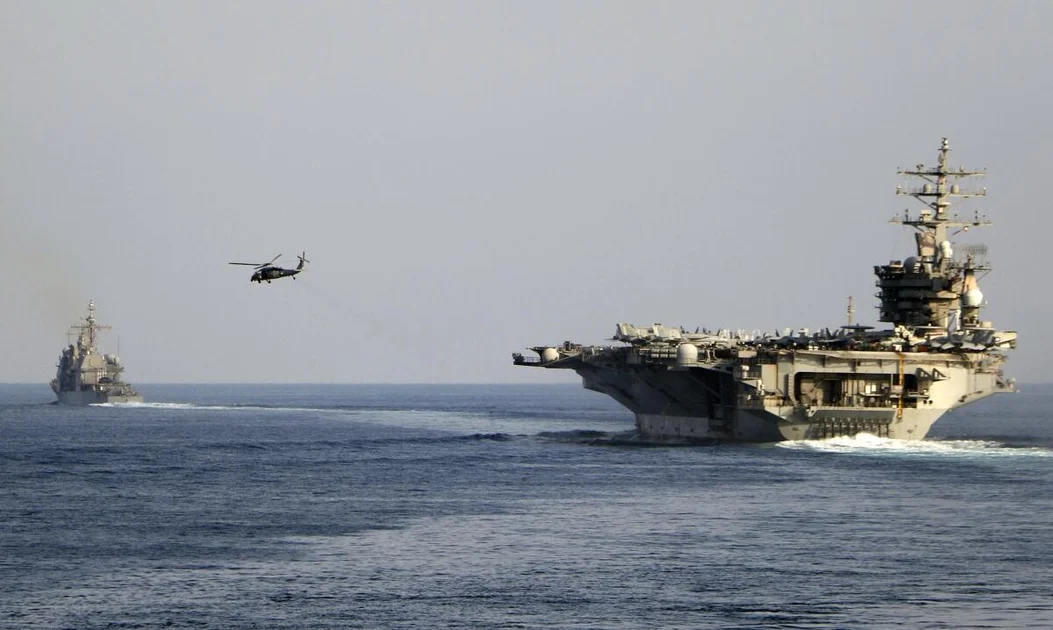
The enforcement language issued by CENTCOM was unambiguous: any vessel, regardless of flag or nationality, entering or leaving Iranian ports is subject to interdiction. The USS Dwight D. Eisenhower (CVN-69), already a symbolic presence in the region — having been among the last American carriers to transit the Strait of Hormuz, in late 2023 — now stands as an emblem of the escalating confrontation. A growing naval force is assembling in the Arabian Sea, with the USS George H.W. Bush currently rounding the African continent to join it, deliberately bypassing the Red Sea and the Bab Al-Mandeb strait to avoid the Houthi missile and drone threat that has made those waters increasingly dangerous for American warships.
No American Carrier Has Crossed Bab Al-Mandeb Since December 2023
The detour taken by the Bush is itself a telling indicator of how dramatically the regional threat environment has shifted. According to the U.S. Naval Institute, no American aircraft carrier has transited Bab Al-Mandeb since the Eisenhower did so in December 2023, shortly after Houthi forces launched their campaign of attacks on commercial and military shipping. American destroyers that have attempted the crossing in subsequent years have come under repeated fire. The Bush's route around Africa — adding weeks to its transit — reflects a strategic calculation that the risk is simply too high.
The Blockade's Real Target May Not Be Tehran
While the announced purpose of the blockade is to deny Iran the revenue it has extracted from controlling the strait since late February, analysts and officials are pointing to a second, less publicized audience: China.
No country depends more heavily on the Strait of Hormuz than China, which imports nearly half of its oil through the waterway. Throughout what U.S. officials have called Operation Epic Fury, Beijing has continued purchasing Iranian oil. Maritime intelligence firm Lloyd's List Intelligence documented at least two vessels paying passage fees to Iranian toll operators in Chinese yuan, making China not merely a passive observer but an active financial participant in Iran's stranglehold over the strait.
President Trump made the geopolitical stakes explicit. "If China does that," he warned Sunday, referring to reports that Beijing might be preparing to supply Iran with advanced missile and air defense systems, "China's going to have big problems." The warning came as CENTCOM was already moving ships into position — giving it the character of a named threat backed by immediate force.
This dynamic places China in what analysts describe as a genuine strategic dilemma. If Beijing instructs its vessels to comply with U.S. interdiction orders, it effectively concedes that American naval power can dictate the operating environment for Chinese-linked shipping in the Persian Gulf — a significant symbolic and practical retreat. If it refuses, it risks direct confrontation with the U.S. Navy at a moment when the bilateral relationship is already under severe strain. Reports of potential Chinese military support for Tehran have already prompted a sharp White House response, and a closely watched summit between Trump and Chinese President Xi Jinping in Beijing next month — intended to stabilize relations — now hangs over the crisis like an unanswered question. The intersection of trade policy and military posture in this standoff echoes broader patterns examined in coverage of the AI arms race and Washington's strategic competition with Beijing.
The Nuclear File Becomes Entangled With the Strait
Adding another layer of complexity, U.S. diplomats have linked negotiations over freedom of navigation through the Strait of Hormuz directly to the broader question of Iran's nuclear program — a diplomatic file that has consumed international attention for more than two decades. That linkage, while potentially useful as leverage, risks making any individual breakthrough harder to achieve, as progress on one track becomes hostage to movement on the other.
The two sides had agreed to a two-week ceasefire last Tuesday, conditioned on Iran allowing full freedom of navigation through the strait. That fragile arrangement has now given way to the blockade, suggesting the ceasefire terms were either unmet or collapsed under the weight of the broader negotiating impasse.
A Pivotal Moment With No Easy Exits
The Strait of Hormuz crisis has moved with unusual speed from a regional military conflict to a potential flashpoint in the world's most consequential bilateral relationship. The economic stakes alone are staggering: a sustained blockade would likely send global oil prices sharply higher, with ripple effects across energy-importing economies worldwide. South Korea, for instance, has already begun emergency crude stockpiling in response to the Hormuz disruption — a sign that American allies are bracing for prolonged instability. South Korea's emergency procurement of 273 million barrels of crude oil underscores how quickly the blockade is reshaping energy security calculations far beyond the Gulf.
For the United States, the blockade represents a calculated gamble: that the economic pain inflicted on China will compel Beijing to pressure Tehran into concessions, rather than drawing China more deeply into the conflict. Whether that calculation proves correct may depend as much on decisions made in Beijing as on those made in Washington — or aboard the ships now assembling in the Arabian Sea.
Comments