
A Phrase That Has Taken Over Capitol Hill
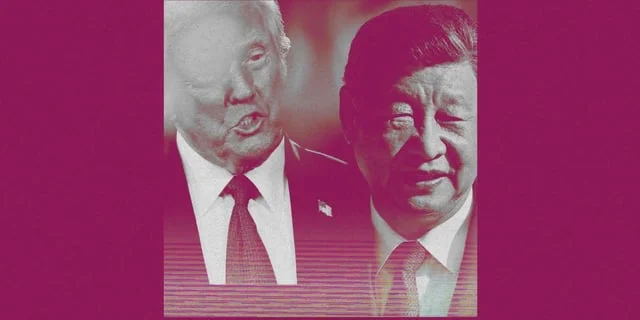
Walk into nearly any congressional hearing touching on technology, national security, or trade in 2026, and the odds are strong you will hear some variation of the same sentence: the United States is in an artificial intelligence arms race with China, and it cannot afford to lose. The line has been delivered by Republicans and Democrats alike, by committee chairs and backbench members, by witnesses from think tanks and from Silicon Valley. It has become, in the words of one Republican congressman, simply "commonplace."
That ubiquity is now itself drawing scrutiny. At a House Ways and Means subcommittee hearing earlier this year, Rep. Blake D. Moore of Utah paused to flag the problem out loud. Saying the U.S. must win the AI race with China, he observed, is repeated so often that it risks losing its force. "I worry to some degree that we just keep saying it," Moore told his colleagues, "and what strategies do we have?"
The question lands at an uncomfortable moment. With session days before the 2026 midterm elections dwindling, the gap between the urgency of the rhetoric and the substance of enacted legislation is becoming harder to ignore.
From Talking Point to Policy Battleground
A Bipartisan Slogan With Divergent Agendas
The AI-China framing is not new. Senate Commerce Chairman Ted Cruz was invoking it as far back as 2016, warning that ceding leadership in artificial intelligence to Beijing or Moscow would carry grave national security consequences. What has changed is the breadth of its adoption and the range of policy outcomes it is now being used to justify.
House Energy and Commerce Chairman Brett Guthrie invoked the race at a committee markup in January. At a House Foreign Affairs Committee hearing pointedly titled "Winning the AI Arms Race Against the Chinese Communist Party," Rep. Andy Barr of Kentucky went further, arguing that U.S. policy failures — specifically, he cited China's rapid construction of coal-fired power plants to feed its data centers — had pushed America "to the precipice of losing the AI race."
Yet when lawmakers deploy the same phrase, they often arrive at opposite policy conclusions. For some, the race justifies deregulation and accelerated domestic investment; for others, it demands tighter export controls, more aggressive industrial policy, or greater scrutiny of foreign technology transfers. The shared vocabulary masks a fractured legislative agenda.
The Trump administration's AI Action Plan, released last year, declared it "imperative that the United States and its allies win this race," lending executive-branch weight to the framing. But a formal action plan is not the same as a coordinated legislative program, and Congress has yet to consolidate competing visions into durable law.
Public Anxiety Adds a New Dimension
The political salience of the AI race is reinforced by polling — but the public mood is more complicated than the headline figures suggest. A RAND American Life Panel survey conducted in the spring of 2025 found that 37 percent of Americans rated U.S. leadership in AI as "critical," a significant share but not a commanding majority. Meanwhile, a Quinnipiac University poll from March 2026 found that 80 percent of respondents expressed concern about AI in general, and fully 70 percent said they believed the technology would result in fewer job opportunities — a figure that rose 14 percentage points in a single year.
Those two data points sit in tension with each other. Voters may want America to lead in AI, but they are also increasingly anxious about what that leadership will cost them personally. For legislators heading into a competitive midterm environment, navigating that tension — cheering on American technological dominance while acknowledging workforce disruption — is becoming one of the defining challenges of the campaign cycle.
The intersection of AI and real-world consequences extends well beyond Capitol Hill. Researchers and forecasters have already documented how machine learning tools are reshaping fields from climate prediction to logistics, as explored in depth in reporting on Weather Forecasting in 2025: AI, Extreme Events, and the Race to Predict a More Dangerous Climate. The technology's reach into everyday life makes the stakes of the policy debate feel tangible, even when the legislation itself remains abstract.
Rhetoric Without a Finish Line
No Clear Metric, No Clear Winner
Experts consulted on the AI competition question point to a structural problem with the arms race metaphor itself: unlike a traditional arms race, there is no single capability that, once achieved, settles the contest. AI development is not a moon shot with a defined endpoint. It is an ongoing, multi-front competition spanning semiconductors, data infrastructure, talent pipelines, regulatory environments, and the commercial deployment of AI applications across every sector of the economy.
That ambiguity serves a political purpose — a race with no finish line can never be declared won or lost before an election — but it also makes coherent strategy difficult to build. When any setback can be framed as falling behind and any advance can be celebrated as pulling ahead, the language becomes a vessel for almost any policy preference.
What the Midterms Could Decide
With the legislative calendar compressing ahead of the November elections, the practical impact of AI-related bills may be limited in the short term. What is more likely to matter is how the issue is framed on the campaign trail. Candidates who can credibly connect national AI competitiveness to local economic concerns — job security, energy costs, regional investment — will have a more durable argument than those who simply repeat the arms race formula.
The broader implication is significant: the AI debate in Washington is entering a phase where the political performance of urgency may be shaping public understanding of the technology more than the technology itself is shaping policy. That dynamic carries risks. If the gap between rhetoric and results continues to widen, the credibility of the lawmakers most loudly calling for action may be the first casualty — well before any race with China is decided.
Comments