
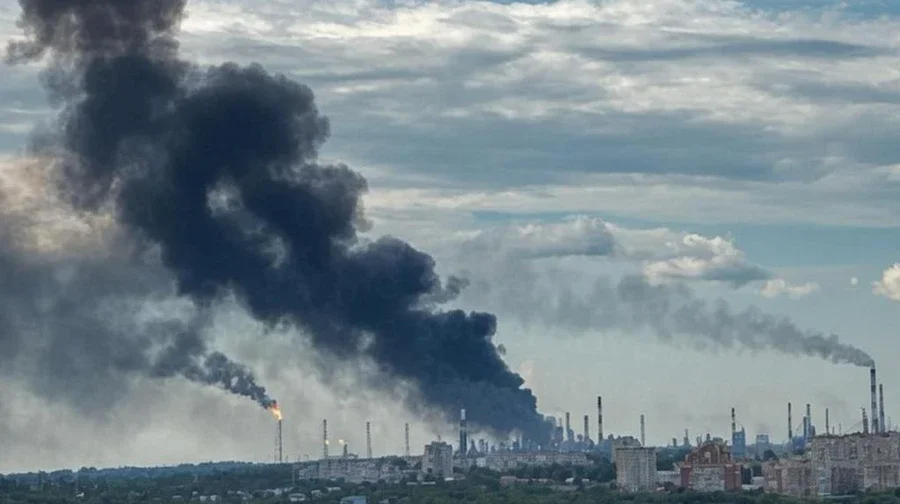
Ukraine Strikes Russia's Largest Oil Refinery in Record-Breaking Drone Attack
Ukrainian Special Operations Forces (SOF) carried out a historic long-range drone strike on Russia's largest oil refinery in Omsk, Siberia, on July 6, 2026, marking the deepest penetration of Ukrainian drones into Russian territory since the start of the full-scale invasion. The attack targeted the Omsk Oil Refinery, a strategic facility that processes over 21 million tons of crude oil annually and supplies a significant portion of Russia's domestic gasoline, diesel, and aviation fuel.
According to the SOF statement on Telegram, the drones traveled approximately 3,000 kilometers (1,864 miles) to reach the refinery — a distance that dwarfs previous Ukrainian deep strikes. "This is the deepest long-range strike on enemy territory during the entire full-scale invasion," the SOF said. The operation was carried out by Deep Strike units of the Special Operations Forces, and it was the first time Ukrainian drones had successfully hit the Omsk facility since the war began.
Critical Equipment Damaged
The attack hit the refinery's ELOU-AVT-11 primary crude oil processing unit, described by the SOF as "the plant's most important installation." Without this unit, the refinery cannot process raw crude into feedstock for other refining stages. "Without primary refining, all other facilities simply have no raw materials," the SOF report noted. The damage is expected to disrupt operations at the facility for an extended period, potentially affecting fuel supplies across Russia.
Ukrainian monitoring channel Exilenova+ reported that the refinery accounts for about 10% of Russia's total oil refining capacity. Local social media channels and Russian Telegram accounts reported fires breaking out after at least two drone hits, though official Russian sources have not confirmed the extent of the damage. The strike follows a pattern of escalating Ukrainian drone attacks on Russian energy infrastructure, aiming to degrade Moscow's war-fighting capability and reduce revenue from oil exports.
Why the Omsk Refinery Matters: Strategic and Economic Impact
The Omsk Oil Refinery, owned by Gazprom Neft, is the largest in Russia by design capacity and a cornerstone of the country's fuel industry. Located in the Siberian city of Omsk, approximately 2,500 kilometers from the nearest point of the Ukraine-Russia border, the facility had long been considered safe from Ukrainian attacks due to its distance from front lines. The strike shatters that assumption, demonstrating Ukraine's ability to project power deep into Russian territory.
Fuel Supply and Military Implications
The refinery supplies a significant share of Russia's domestic gasoline and diesel market and is one of the country's main producers of aviation fuel — a critical resource for the Russian military. Disrupting production at Omsk could create supply bottlenecks, particularly for the Russian air force, which relies on steady supplies of jet fuel for combat operations in Ukraine. The SSO highlighted the refinery's strategic importance, calling it "a strategic enterprise for the Russian fuel industry."
Analysts point out that repeated strikes on Russian refineries have already forced Moscow to import gasoline and consider export bans to stabilize domestic prices. The Omsk hit compounds these pressures, potentially accelerating inflation and public discontent inside Russia. The attack also sends a signal to Russian oil companies that no facility is beyond Ukraine's reach, which may affect investment and operational decisions in the energy sector.
Technical Feat and New Drone Capabilities
The 3,000-kilometer range of the drones used in the strike represents a significant leap in Ukrainian unmanned aerial vehicle (UAV) technology. While Ukraine has previously struck targets in the Volga region and the Urals, hitting a city in Siberia — east of the Ural Mountains — required drones capable of flying over 1,000 kilometers further than earlier models. The SOF did not specify the type of drone used, but analysts suggest it could be an upgraded version of the UJ-22 or a newly developed platform designed for ultra-long-range missions.
This technological advancement raises the stakes for Russia's air defense forces, which now must defend targets across a vast expanse of territory stretching from the Baltic Sea to Siberia. The Kremlin has ordered media silence on the incident, according to reports, indicating Moscow's sensitivity to the strategic implications of the strike.
The Escalating Drone Campaign: Ukraine's Strategy of Deep Strikes
Ukraine has steadily expanded its long-range strike capabilities throughout 2025 and 2026, targeting Russian oil refineries, air bases, ammunition depots, and logistics hubs. The Omsk attack is the latest and most dramatic example of this strategy, which aims to reduce Russia's ability to sustain its war effort by attacking its economic and military infrastructure.
Previous Deep Strikes and Learning Curve
Before Omsk, Ukraine's longest drone strikes hit targets in Tatarstan — over 1,200 kilometers from the border — including the Taneco refinery and the Yelabuga drone factory. Strikes on the Moscow region and St. Petersburg have also occurred, but none approached the distance achieved in the Omsk operation. The attack on the Omsk refinery required navigating through dense Russian air defense networks, including S-400 systems deployed around key cities.
Ukraine's Defense Ministry and military intelligence (HUR) have partnered with domestic drone manufacturers to develop platforms with longer ranges, better payload capacity, and improved resistance to electronic warfare. Western allies have also transferred technology and components, though Ukraine produces many of its long-range drones domestically. The success of the Omsk strike suggests that Ukraine has solved key technical challenges, including navigation over vast distances without GPS jamming and fuel efficiency for multi-hour flights.
Coordinated Pressure Campaign
The drone campaign is part of a broader effort by Ukraine to force Russia to redeploy air defense systems from front lines to protect rear-area infrastructure. This creates vulnerabilities for Russian ground forces, which face more frequent Ukrainian missile and drone attacks. The timing of the Omsk strike is also significant — it came just hours after Russia launched a massive missile and drone barrage against Kyiv and other Ukrainian cities, killing at least 14 people and wounding dozens more. Ukraine's response underscores its commitment to retaliatory strikes.
The attack also coincided with a fire at a Crimean oil depot hit by Ukrainian drones earlier in the day, as reported by the "Madyar" unit. This coordinated targeting suggests Ukraine is systematically dismantling Russia's fuel infrastructure, aiming to create cumulative effects that hinder military logistics.
Broader Implications: What This Changes in the War
The Omsk drone strike marks a turning point in the Ukraine-Russia conflict, with implications that extend beyond the immediate damage to the refinery. It signals Ukraine's growing technological autonomy and its willingness to take risks that could provoke a Russian escalation. The strike also challenges the notion of a "sanctuary" deep inside Russia, where the Kremlin had assumed its infrastructure was safe from direct attack.
Geopolitical and Diplomatic Consequences
Western allies have generally supported Ukraine's right to defend itself, including strikes on military targets inside Russia, but have been cautious about endorsing attacks on energy infrastructure that could cause global market disruptions. The Omsk strike, however, targets a facility primarily serving the domestic Russian market, reducing the risk of oil price spikes. This may make Western backing more politically sustainable, though some allies may urge restraint to avoid a direct NATO-Russia confrontation.
Russian officials have already condemned the attack, with State Duma members calling for expanded retaliatory strikes on Ukrainian energy infrastructure. The Kremlin is likely to use the incident to justify further mobilization and crackdowns on dissent. However, the attack also exposes Russia's inability to protect its own territory, which could undermine domestic confidence in the government.
Military Lesson: No Safe Havens
From a military perspective, the Omsk strike demonstrates that distance is no longer a reliable defense. Russian air defense planners must now account for threats from all directions, including from the east, where infrastructure was previously considered safe. This will stretch Russia's already limited air defense resources and may force the military to prioritize protection of some targets over others, creating gaps that Ukraine can exploit.
Ukrainian President Volodymyr Zelenskyy has consistently promised to "return the war to Russia," and the SOF echoed this message in their statement: "The Special Operations Forces will return the war Russia started back to it, no matter how far the enemy hides the targets." The Omsk strike delivers on that pledge in a dramatic and strategically meaningful way.
Economic and Energy Market Effects
Global oil markets reacted to news of the attack with modest price increases, as traders assess the potential for further disruptions to Russian refining capacity. Russia exports significant volumes of crude oil and refined products, and any reduction in refining capacity could alter export flows. While the Omsk refinery primarily serves the domestic market, its shutdown could force Russia to import more fuel or reduce exports of crude to make up for lost refining capacity.
For Ukraine, the economic dimension is critical. By reducing Russia's ability to earn revenue from oil exports and refining, Ukraine hopes to limit the Kremlin's ability to finance its military operations. The cumulative effect of strikes on refineries, oil depots, and export terminals may slowly degrade Russia's war economy, though immediate impacts are difficult to measure.
Reaction and Aftermath: Russian Silence and Ukrainian Defiance
Russian officials have not yet provided detailed assessments of the damage to the Omsk refinery. Local authorities in Omsk confirmed a drone attack but downplayed its significance, claiming that air defenses intercepted most drones and only minor damage occurred. However, unverified footage on social media showed flames and smoke rising from the refinery, suggesting more substantial damage. The Kremlin's order to media to maintain silence on the incident indicates Moscow's desire to control the narrative and avoid public panic.
Ukraine, meanwhile, has celebrated the operation as a tactical and strategic victory. The SOF released a statement emphasizing the distance traveled and the critical nature of the target. Ukrainian media outlets, including Ukrainska Pravda and the Kyiv Post, have extensively covered the strike, framing it as evidence of Ukraine's resilience and technological progress.
The attack has also sparked discussions about the need for further Western support for Ukraine's drone programs. Some analysts argue that the success of the Omsk strike strengthens the case for the United States and European allies to provide more advanced drone technology, including longer-range systems and better navigation aids.
In a related development, Ukraine's Defense Ministry recently approved the UAT.DESNA armored vehicle for troop transport, showing the country's continued efforts to modernize its forces despite the war's demands. Separately, the European Union is debating its 21st sanctions package against Russia, with some member states pushing for tighter oil price caps and restrictions on energy technology.
Conclusion: A New Phase in the War
The July 6 drone strike on the Omsk refinery represents a paradigm shift in the Ukraine-Russia conflict. It proves that Ukraine can reach any target in Russia, regardless of distance, and that no infrastructure is immune from attack. The strike also deepens the economic pressure on Moscow, potentially accelerating the timeline for renewed negotiations or Russian force degradation.
While the immediate impact on the battlefield may be limited, the psychological and strategic effects are profound. Russian citizens and the military can no longer assume that Siberia is safe. Ukrainian forces have demonstrated that they possess the capability and the will to strike at the heart of Russia's energy sector, altering the calculations of both sides as the war enters its fifth year.
For Ukraine, the operation is a powerful morale booster and a signal to its allies that continued investment in drone technology yields tangible results. For Russia, it is a stark reminder that there are no safe havens, and that the war — now in its fourth year — will continue to come home in increasingly unexpected ways.
Comments