
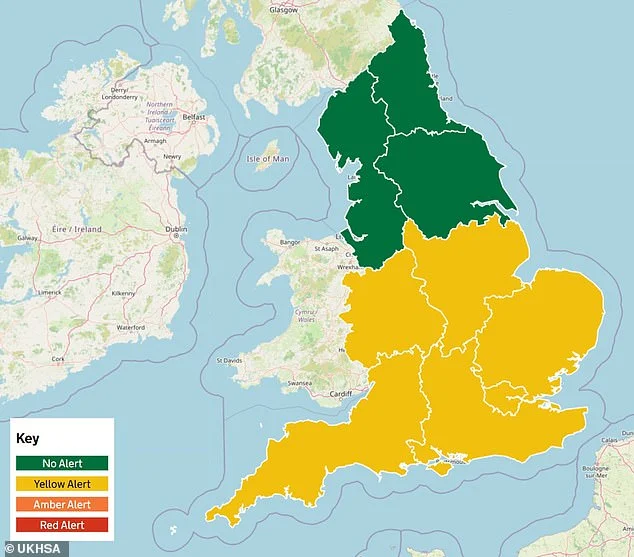
New Yellow Heat Health Alert Issued for London as Fifth Heatwave Looms
The UK Health Security Agency (UKHSA) has issued a yellow heat health alert for London, effective from 9am on Sunday until 9am on Thursday, August 5, as the capital braces for what could be its fifth heatwave of the year. Forecasters predict temperatures will peak on Monday, reaching 32°C (89.6°F), following the driest July on record for England and Wales.
According to the Met Office, London will see highs of 28°C on Sunday, 32°C on Monday, and 28°C on Tuesday. If these temperatures materialize, it will mark another official heatwave, defined in London as three or more consecutive days at or above 28°C.
Meteorologist Tom Moran explained: "After the driest July on record across England and Wales, there is at least some welcome rain in the forecast early next week for some of us, but not for all. For England and Wales, it's another dry start to the day, so plenty of sunshine through the first day of August here."
The yellow alert, the lowest of three levels, indicates that heat-related health impacts are possible, particularly for vulnerable groups. The UKHSA's alerts are designed to help health and social care services prepare for increased demand during hot spells.
Widespread Heat Alerts Across England
This latest warning follows an amber heat health alert issued earlier this week for parts of eastern England, which was in place for 24 hours from 09:00 BST on Wednesday. Temperatures in those regions reached 34°C (93°F), prompting significant concern for public health.
The amber alert warned of "significant impacts" across health and social care services, including a rise in deaths, particularly among those aged 65 or over or with underlying health conditions.
On July 29, the Environment Agency declared an official drought for more than half of England, triggered by the summer's relentless heat and severe lack of rainfall. The declaration covered seven areas, including East Anglia, Hertfordshire, London, and parts of the Midlands.
As of early August, half of England and the whole of Wales are officially in drought, placing immense pressure on water resources and agricultural operations.
Why This Matters: Public Health Risks and Water Crises
The repeated heat health alerts underscore a summer of extraordinary conditions. Provisional statistics show England recorded just 5.6mm of rainfall in July – less than half the previous record low of 13.4mm set in 1911. This arid spell has created tinderbox conditions for wildfires and has pushed reservoirs to critical levels.
At Alton Water reservoir in Suffolk, operated by Anglian Water, levels have dipped to about 75% of capacity. The dry, dusty banks are a stark visual reminder of the drought. Residents like Jessica Southwell, who lives in Birch, Essex, have adapted to the restrictions: "I absolutely understand why I'm not using my hosepipe because of the water levels. We are definitely doing all we can to help with everything by using the watering can."
Hosepipe bans are in place for Anglian Water customers, while other regions served by different utilities have so far avoided restrictions. In Lowestoft, Suffolk, resident Pauline Turner says it's "common sense" not to use her hosepipe, even though no ban exists there.
The health implications are equally serious. The UKHSA's amber alert highlighted a projected rise in deaths, especially among the elderly and those with pre-existing health conditions. Heat exhaustion and heatstroke are real risks during prolonged high temperatures, and the NHS often sees increased admissions during such episodes.
The current yellow alert for London is a precautionary measure, but health officials are urging residents to stay hydrated, check on vulnerable neighbours, and avoid strenuous outdoor activities during peak heat hours.
The Broader Context: Record-Breaking July and Climate Trends
July 2026 was characterized by an "exceptional combination of extreme heat, abundant sunshine and an almost complete absence of rainfall," according to the Met Office. The conditions have not only affected human health but have also devastated agriculture and wildlife.
Farmers in Sussex, fruit growers, and gardeners have been struggling with ongoing drought, as reported by GB News. The lack of rain has stunted crops and increased irrigation costs. For many, the arrival of some showers early next week – though forecast to be hit-or-miss and generally not widespread – may offer only partial respite.
As meteorologist Tom Moran noted: "There will probably be some hit or miss showers across England and Wales, so for gardeners and farmers there may well be some respite from the drought conditions in the south, but we're not looking at anything widespread or particularly significant in terms of rainfall."
Should today (August 3) remain dry, it would equal the 45-day rainless period experienced during the severe drought of 1976 – a benchmark of extreme aridity in UK history. This comparison highlights the severity of the current situation.
Wildlife is also under stress. Parched landscapes, low river flows, and reduced reservoir levels affect aquatic life and birds. Conservation groups have advised people to leave water out for animals and to maintain birdbaths.
Perspective: A Summer of Extremes and What It Means Going Forward
The frequency of heat health alerts this summer – at least five – is unusual. The UKHSA's alert system, introduced in recent years, reflects a growing recognition of heat as a serious public health threat. Climate scientists have long warned that such extremes would become more common and intense due to global warming.
While the immediate focus is on coping with the current heatwave, the broader trend points to a need for long-term adaptation. Cities like London are particularly vulnerable to the urban heat island effect, where concrete and asphalt absorb and re-radiate heat, making nights uncomfortable and increasing health risks.
Residents are already adjusting their behavior. As Jessica Southwell puts it: "I think it's something we're going to have to get used to as the years go by because I don't think it's going to get any better sadly."
For those seeking to understand the relationship between heat and health, the concept of a heat index is crucial. The index measures how hot it really feels when humidity is factored in, as highlighted in our article on the Heat Dome 2026: What Is a Heat Index as 'Feels Like' Temp Hits 123°F?. Even in the UK, high humidity can make 32°C feel considerably more oppressive.
Preparing for the Rest of Summer
The Environment Agency's drought declaration is not just a status; it has practical implications. Water companies are implementing drought plans, which may include temporary bans, increased leakage repairs, and public awareness campaigns. Homeowners are being encouraged to reduce water use, fix dripping taps, and use water butts for gardening.
The Met Office outlook suggests that while the current heat spike will fade by mid-week, temperatures will remain above average – in the mid-to-high 20s Celsius – into the weekend. The forecast also hints at an "increasingly unsettled" pattern next week, but significant rainfall is not guaranteed.
For now, the advice remains simple: stay cool, stay hydrated, and look out for those most at risk. As the summer continues, the UK will likely face more heat health alerts, and the resilience of communities and infrastructure will be tested again.
While the immediate news is about the yellow alert and the looming heatwave, the underlying story is one of a changing climate and the need for proactive adaptation. The drought conditions have already impacted agriculture, water supplies, and ecosystems, and the health sector is bracing for further pressures. As we navigate this unprecedented summer, the choices made at individual, community, and policy levels will shape how well we cope with future extremes.
Comments