
Privacy Campaigners Lose Landmark High Court Battle Over Facial Recognition
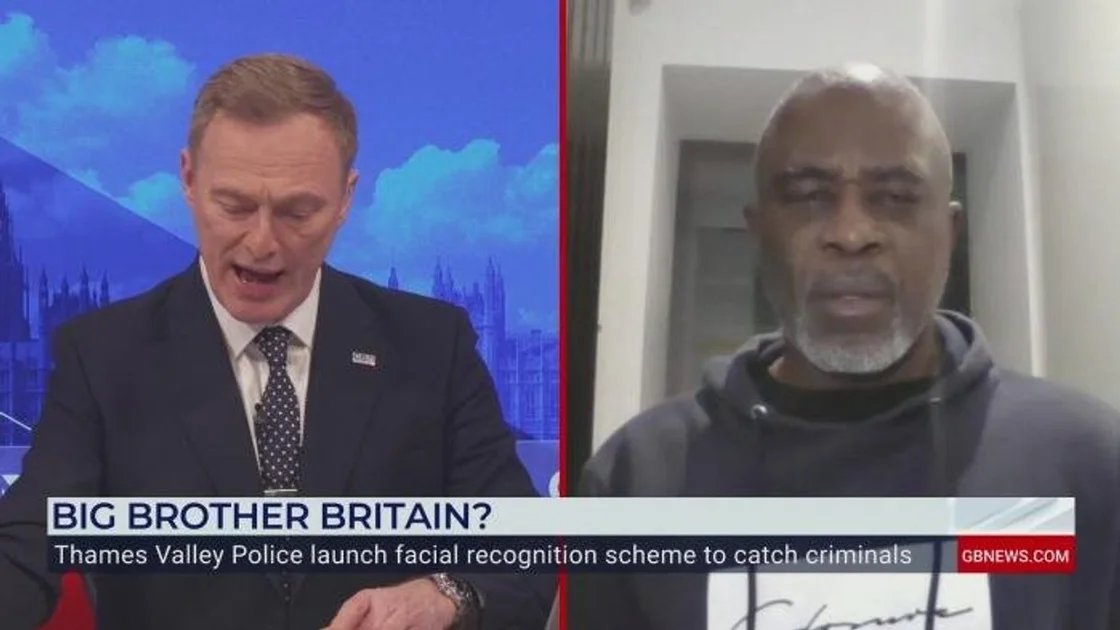
In a ruling that will reverberate across the United Kingdom's policing and civil liberties landscape, the High Court has rejected a legal challenge aimed at limiting the Metropolitan Police's use of live facial recognition (LFR) technology. The judgment, handed down on April 21, 2026, represents a significant legal endorsement of a surveillance tool that has been expanding rapidly across London and beyond — and all but guarantees that expansion will continue.
The claimants were youth worker Shaun Thompson and Silkie Carlo, director of civil liberties group Big Brother Watch. Thompson said he was wrongly identified as a criminal suspect by an LFR camera outside London Bridge Tube station in February 2024. Carlo, whose organisation has long campaigned against what it calls "mass biometric surveillance," joined the judicial review to challenge the lawfulness of the technology's deployment. Their legal team argued that live facial recognition is comparable to taking a DNA profile from every person who walks past a camera, and that the police's use of it breached human rights and privacy law.
The High Court disagreed. In dismissing the claims, the court handed the Metropolitan Police what Commissioner Sir Mark Rowley called "an important victory for public safety." Shaun Thompson has since announced his intention to appeal the decision.
What the Ruling Actually Authorises
How London's Facial Recognition System Works
The Metropolitan Police deploys live facial recognition using cameras mounted on identifiable vans, typically placed at busy public locations such as high streets or major transit hubs. Once activated — and accompanied by visible signage alerting the public — the cameras scan the faces of people passing through the area and compare them in real time against a database of wanted criminals and missing persons.
If no match is found, the biometric image is deleted immediately. If the system flags a potential match, it alerts a human officer who then manually reviews the alert and decides whether to approach the individual. The force has also recently installed a permanent LFR system at London Bridge station, one of the UK's busiest rail hubs with over 54 million passengers annually, where the technology cross-references faces against a list of serious offenders.
During the judicial review hearing, lawyers for the claimants noted that the Met used facial recognition 231 times in 2025 alone, scanning approximately four million faces in the process — figures they described as evidence of exponential growth in the technology's use.
The Government's Response
Policing Minister Sarah Jones welcomed the ruling, saying it confirmed that "law-abiding citizens have nothing to fear" from the technology because it "only locates specifically wanted people." She went further, indicating that the government intends to roll out facial recognition cameras across the country, backed by what she described as "record investment."
Commissioner Rowley, speaking at Charing Cross Police Station, pushed back against critics, citing internal polling that suggests 80% of Londoners support the Met's use of the technology. He insisted that LFR would not become "as ubiquitous as CCTV," and that it is being deployed in a "targeted way" in high-crime areas rather than on every street corner.
Why This Case Mattered — And What Was at Stake
The Civil Liberties Argument
For privacy advocates, the stakes in this case could hardly have been higher. Big Brother Watch and allied organisations have argued for years that the absence of specific primary legislation governing police use of live facial recognition in the UK creates a dangerous accountability gap. Unlike DNA profiles, which require explicit consent or legal authority to collect, LFR effectively captures biometric data from every person who walks past a camera — the vast majority of whom are entirely innocent and have no idea their face has been scanned.
The claimants' legal team also raised concerns about accuracy and discrimination. Facial recognition systems have been shown in multiple independent studies to perform less accurately on darker-skinned faces, raising the possibility that the technology disproportionately burdens minority communities. Shaun Thompson's own case — in which the system wrongly flagged him as a suspect — was presented as a real-world illustration of those risks.
Privacy campaigners have further warned that, without robust external oversight, there is no reliable mechanism to ensure the technology is not misused. Unlike the UK's regulated use of CCTV, LFR currently operates in a legislative grey zone, with watchdogs rather than Parliament setting the rules.
Plans for Permanent Infrastructure
One of the more alarming prospects raised during the judicial review was the possibility of permanent LFR installations across London. Unlike the mobile van-based deployments, fixed cameras would make it effectively impossible for residents to navigate the city without their biometric data being captured and processed. Lawyers for the claimants argued this would represent a qualitative shift in the nature of public surveillance — not just in degree, but in kind. Consultation on permanent installations is reportedly still underway, meaning the ruling does not settle that question definitively.
Facial Recognition Beyond the Courts: The Shoplifting Front
While the High Court battle dominated headlines, a parallel and rather different story unfolded on the same day. The Metropolitan Police announced it is also trialling a new technology platform designed to tackle London's persistent shoplifting problem — and notably, this tool does not rely on live facial recognition in the same contested way.
The platform allows retail stores to report shoplifting incidents instantly and attach CCTV footage at the point of reporting. Officers receive the evidence in real time, improving their ability to identify repeat offenders operating across different boroughs. The pilot, which launched in January 2026 in Lewisham and central London, has already shown positive outcome rates — defined as arrests, charges, or convictions — of 21.4%, well above the Met's overall average of 14%.
There is, however, a facial recognition element buried in the process: when CCTV footage is submitted with a shoplifting report, officers can run still images through facial recognition software as part of their investigation. The difference from live facial recognition is significant — this is a retrospective, case-specific use rather than the indiscriminate real-time scanning at issue in the High Court case. Still, the detail underscores how deeply facial recognition has embedded itself across multiple strands of modern policing, even where it is not the headline feature.
London Mayor Sadiq Khan praised the shoplifting trial, noting that shoplifting offences fell by 3.7% between April 2025 and March 2026 — roughly 3,200 fewer incidents — though he stopped short of committing to a city-wide rollout.
The Broader Picture: A Technology Outpacing Its Legal Framework
A Pattern Repeated Elsewhere
The UK is far from alone in grappling with these questions. Across the world, the deployment of facial recognition technology by both public authorities and private actors has consistently moved faster than the legal and ethical frameworks designed to govern it. In the United States, for instance, investigations have revealed that private venues have used facial recognition not just for security, but for purposes that critics regard as harassment — tracking specific individuals based on personal grievances rather than genuine safety concerns.
The trajectory in Britain, where a High Court ruling has now explicitly endorsed the technology's use by police without fresh primary legislation being passed, suggests that the onus will increasingly fall on appellate courts, regulators, and eventually Parliament to define the boundaries. For now, those boundaries remain contested and, in the view of civil liberties groups, dangerously vague.
What Happens Next
Shaun Thompson's intention to appeal means the legal battle is not over. A higher court could yet impose tighter restrictions or require Parliament to legislate more specifically. The ongoing consultation on permanent LFR installations will also be closely watched: if fixed cameras are approved, the practical and symbolic significance of that step would be enormous.
For the government, the ruling provides political cover to press ahead with a nationwide rollout. For the police, it is an operational green light. For privacy campaigners, it is a setback — but not necessarily the final word. The fundamental tension between public safety and individual liberty that animates this debate is unlikely to be resolved by a single court judgment, however significant.
As AI-powered surveillance tools become more capable and more affordable, the decisions being made in British courts and government ministries today will shape the kind of public space that millions of people inhabit for decades to come. Whether the UK ends up with targeted, accountable facial recognition or something closer to a pervasive biometric dragnet may depend less on the technology itself than on the political will to legislate clearly — and the courage of courts to hold authorities to account when they do not.
Comments