
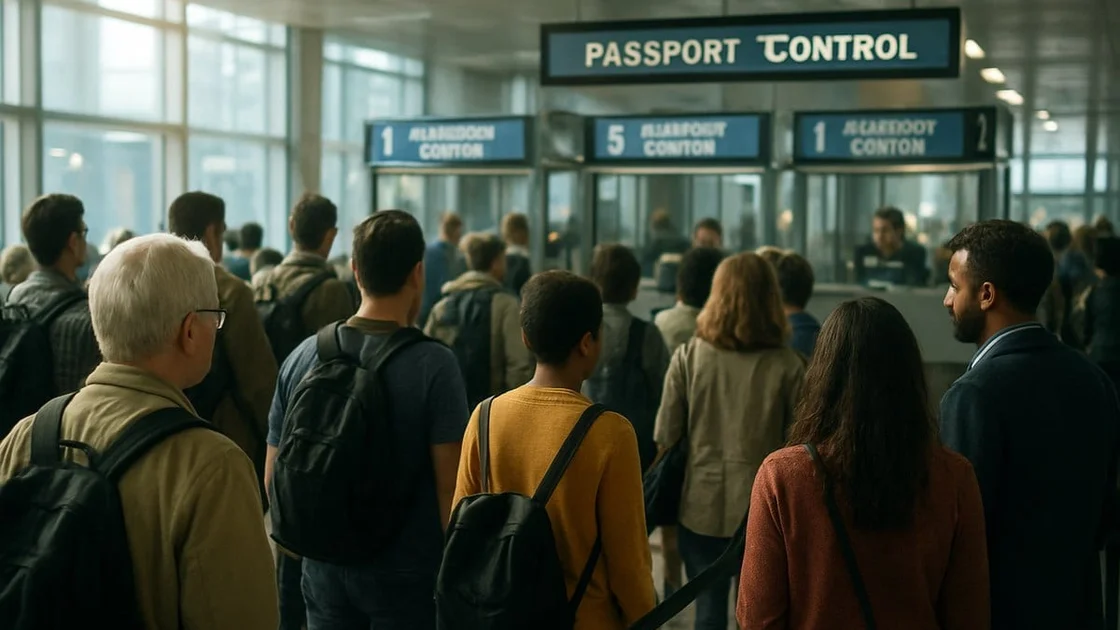
Summer Travel Chaos Looms as EES Biometric Checks Cause Airport Gridlock
American and British holidaymakers are facing significant delays, confusion, and missed flights at European airports as the European Union's new Entry/Exit System (EES) undergoes its first major stress test ahead of the summer travel season. The biometric border control program, which replaces traditional passport stamping with digital records, fingerprinting, and facial scans for non-EU travelers, has been fully operational across the 29-country Schengen Area since April 10, 2026. But early reports from travelers and airline executives paint a picture of uneven implementation, long queues, and a system that is still finding its footing.
Chris Miller, a deputy general manager from St. Louis, Missouri, told Newsweek he experienced the system firsthand during a late-April trip through Brussels Airport and Madrid Airport. He described significant inconsistencies across airports, with some locations relying heavily on manual processing while others use automated systems, leading to unpredictable wait times and uncertainty for travelers.
The warnings have become more urgent as the peak summer travel period approaches. Yvonne Moynihan, the UK boss of budget airline Wizz Air, told the BBC that British holidaymakers should arrive at European airports three hours before their flight home departs due to lengthy queues caused by the new border checks. The long delays getting through passport control at some European airports have already caused some passengers to miss return or connecting flights.
Greece Suspends Biometric Checks to Prevent Summer Disruption
In a telling sign of the system's vulnerabilities, Greece has effectively suspended biometric checks at its borders for British citizens in order to prevent summer disruption. The move comes after May bank holiday travelers faced hours-long queues at the Port of Dover, where French border officials suspended extra EU checks after thousands of holidaymakers faced delays of up to two and a half hours in soaring temperatures. The port said they had escalated the "challenging situation" with border authorities, and the change helped clear queues at the terminal and congestion on surrounding roads.
Why EES Airport Delays Matter This Summer
The stakes are high for the 2026 summer travel season. The EES was designed to modernize border controls, enhance security, and eventually speed up entry and exit for travelers. According to a European Commission spokesperson, the system is already delivering results: nearly 80 million crossings have been recorded since October 2025, and more than 35,000 refusals have been issued, including around 900 individuals identified as security threats.
But the transition has been uneven. While the system is intended to improve efficiency in the long term, the early experiences suggest that implementation varies widely across the Schengen Area. Some airports have invested heavily in automated kiosks and have extra staff on hand, while others are struggling with manually processing travelers through the new biometric requirements.
Moynihan told the BBC that when she traveled to Mallorca for half term, she encountered no queues, with extra staff on hand and "a significant amount of [EES] kiosks." However, she warned that in general, her airline is advising passengers to prepare for long waits at "usual hotspots such as Spain, Portugal, France."
The travel advice site TravelPirates has amplified these concerns, noting that a 60-minute connection in Paris, Amsterdam, Madrid, or Rome is now a "harmless little gamble" that could result in a missed flight. The site advises travelers to build in at least two to three hours for connections at major Schengen hubs this summer, especially for their first EES crossing, as the biometric step (fingerprints, facial scan, passport check) happens at the first Schengen airport a traveler enters.
What Travelers Need To Know
- EES is live across the Schengen Area and applies to most American and British travelers.
- The biometric border step occurs at your first Schengen airport, even if you are just connecting.
- Tight connections are now a real risk, especially on a first EES crossing.
- Build in at least two to three hours for connections at major Schengen hubs this summer.
- No pre-registration, no fee, no app, but no skipping it either.
- ETIAS is separate and not yet required; that launches later in 2026.
The Uneven Rollout: Inconsistencies Across European Airports
The EES was rolled out across all Schengen countries and has been fully operational since April 10, according to the European Commission. But the experiences of travelers like Chris Miller suggest that the system is far from uniform. He described inconsistencies across airports as a major issue, explaining that some locations rely heavily on manual processing while others use automated systems, leading to uneven wait times and uncertainty for travelers.
At Brussels Airport, Miller encountered long queues as border guards manually checked documents and collected biometric data. At Madrid Airport, the process was somewhat smoother, but still caused significant delays. The lack of consistency makes it difficult for travelers to plan their airport arrival times, as wait times can vary dramatically depending on the airport, the time of day, and the number of staff available.
The European Commission spokesperson told Newsweek that the system is "fully operational across all Schengen countries and works well at almost all border crossing points." But the spokesperson acknowledged that some border crossing points are experiencing teething problems, and the Commission is working with member states to address these issues.
The Port of Dover: A Case Study in EES Disruption
The May bank holiday weekend at the Port of Dover provided a stark warning of what could happen when the EES is tested at scale. French authorities suspended extra EU border checks at Dover on Saturday after thousands of holidaymakers heading to the port faced long queues in soaring temperatures. The port said they had escalated the "challenging situation" with border authorities, and the change helped clear queues at the terminal and congestion on surrounding roads.
Travellers had earlier faced up to two hours' delay reaching the port and up to a further two and a half hours to complete processing at the terminal on Saturday morning. By lunchtime traffic was "slow moving" and the processing time at check-in was under an hour, the port said. Just after 14:00, it said traffic was "free-flowing."
The additional measures were reinstated shortly before 17:00 on Saturday, but the disruption highlighted the fragility of the system. French authorities have not yet switched on the machines that will be used for biometric checks at the port, but border officials at Dover were still having to take details from travelers to enter into a database, which led to longer waits.
Perspective: What This Means for Summer Travel and Beyond
The EES is supposed to be the first phase of a broader modernization of EU border controls. The system is intended to replace passport stamping with digital records, making it easier to track entries and exits, identify overstays, and enhance security. But the transition has been bumpy, and the stakes are high for the 2026 summer travel season.
The European Commission insists that the system is working well and delivering results. But the warnings from airlines and travel experts suggest that travelers need to be prepared for delays, especially at major hubs and busy border crossings.
For Americans planning European vacations, the advice is clear: allow extra time at airports, be patient with the new procedures, and check the latest guidance from airlines and airports. For airlines, the challenge is to manage passenger expectations and minimize disruption.
The Wizz Air boss's advice to arrive three hours before a flight home is a sensible precaution, but it also reflects the reality that the system is not yet seamless. The fact that Greece has suspended biometric checks for British citizens suggests that member states are still grappling with how to implement the system without causing chaos.
The Broader Implications
The EES is not the only new EU border system on the horizon. The European Travel Information and Authorisation System (ETIAS), which will require travelers from visa-exempt countries (including the US and UK) to obtain pre-travel authorization, is expected to launch later in 2026. That system is separate from EES, but it will add another layer of complexity for travelers.
The experience with EES suggests that the rollout of ETIAS could also face challenges, especially if member states are not fully prepared for the additional administrative burden.
In the meantime, the travel industry is bracing for a summer of potential disruption. Airlines, airports, and border authorities are working to smooth out the teething problems, but travelers should expect some uncertainty.
As one travel expert noted, the key is to plan ahead, allow extra time, and be prepared for the possibility of delays. The EES is here to stay, and while it may eventually improve efficiency, the transition is likely to be rocky.
For those planning to travel to Europe this summer, the advice is simple: arrive early, pack your patience, and be prepared for a different airport experience than you may have had in the past. The system may be working well at "almost all border crossing points," but as the recent experiences at Dover and other airports show, it only takes a few problem spots to cause significant disruption.
How to Avoid Missing Your Europe Connection
Travel experts are offering practical advice for minimizing the risk of delays and missed connections under the new system:
- Arrive at the airport at least three hours before your flight, especially when flying out of major Schengen hubs like Paris, Madrid, Amsterdam, or Rome.
- Build in at least two to three hours for connections at Schengen airports, especially if it's your first EES crossing.
- Check the latest guidance from your airline and the airport you are traveling through.
- Use automated kiosks where available, as they can speed up the process.
- Have your passport ready and be prepared to provide fingerprints and a facial scan.
- Consider travel insurance that covers missed connections.
The bottom line: summer 2026 in Europe will be different. The EES is a significant change to border procedures, and the transition is still underway. Travelers who plan ahead and allow extra time are likely to have a smoother experience.
In a related development, the ongoing debate about technology and security continues to intersect with travel. Meanwhile, in the world of sports, Ian Happ Leads Cubs Out of 10-Game Slide with Monumental Series in Pittsburgh, showing that even in the face of challenges, there are always bright spots.
But for travelers heading to Europe this summer, the message is clear: prepare for queues, be patient, and don't cut it close. The EES is here, and it's not going anywhere.
Comments