
U.S. Warships Come Under Fire in Strait of Hormuz as Trump’s Project Freedom Begins
The United States launched a major military operation to reopen the Strait of Hormuz on Monday, with Navy destroyers coming under what officials described as a “sustained barrage” of small boats, missiles, and drones from Iranian forces. The operation, dubbed “Project Freedom,” marks a significant escalation in the ongoing confrontation between Washington and Tehran over access to one of the world’s most critical waterways.
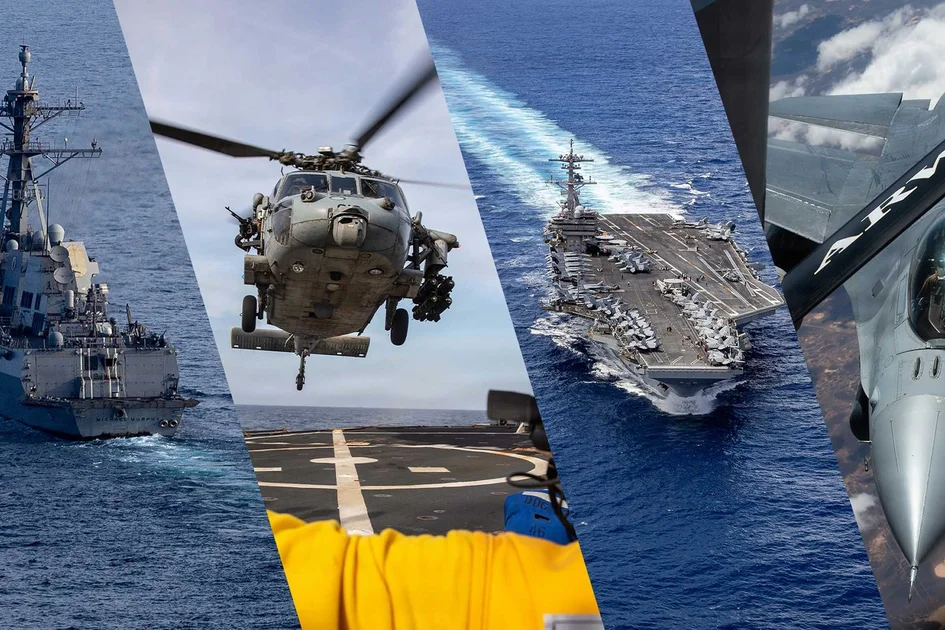
Two U.S. Navy destroyers, the USS Truxtun and USS Mason, transited the strait under heavy fire but emerged unscathed, according to reports from U.S. Central Command (CENTCOM). Fighter aircraft, including F-16s, and AH-64 Apache helicopters provided air cover, intercepting or deterring each threat. CENTCOM confirmed that more than 100 land- and sea-based aircraft are now supporting the operation.
Fragile Ceasefire Holds Despite Exchange of Fire
Despite the intensity of Monday’s clashes, Washington and Tehran have both indicated that a shaky ceasefire remains in place. Reuters reported on Tuesday that the United States said the ceasefire was intact, even as the United Arab Emirates came under attack from Iranian missiles and drones. The UAE confirmed it was under assault on Tuesday, raising fears that the conflict is spreading beyond the immediate vicinity of the Strait of Hormuz.
The operation was announced by President Donald Trump on Sunday, who expressed doubt about a 14-point peace plan proposed by Iran over the weekend. Trump’s decision to send warships to break what he called Iran’s “blockade” has drawn sharp warnings from Tehran. Senior Iranian lawmaker Ebrahim Azizi, head of Iran’s Parliament’s National Security and Foreign Policy Committee, stated that any U.S. interference in the “new maritime regime of the Strait of Hormuz will be considered a violation of the ceasefire.”
Azizi added that “the Strait of Hormuz and the Persian Gulf would not be managed by Trump’s delusional posts,” underscoring the deep mistrust between the two sides.
Stakes Rise as UAE and Tankers Come Under Attack
The conflict’s reach expanded dramatically on Tuesday when Iran struck targets in the United Arab Emirates. The UAE government reported being hit by Iranian missiles and drones, a development that prompted condemnation from Saudi Arabia. The attack marks one of the first direct strikes on Emirati territory since the conflict escalated, signaling that Iran is willing to take the fight to U.S. allies in the region.
Earlier, the United Kingdom Maritime Trade Operations (UKMTO) issued a warning of a tanker struck north of Fujairah in the UAE. The tanker reported being hit by unknown projectiles, though all crew were safe. Another large cargo ship reported being attacked by multiple small craft while transiting the strait, about 11 miles from the Iranian coast. These incidents have sent shockwaves through global shipping markets, with oil prices surging and stocks sinking amid fears of a prolonged disruption.
Iran’s Maritime Tolling and Mining Draws International Condemnation
U.S. Ambassador to the U.N. Michael Waltz condemned Iran’s actions as “illegal and unacceptable,” specifically citing the laying of sea mines in international waters and attempts to toll civilian commercial shipping. “Regardless of how you feel about the conflict over their nuclear program, Iran laying sea mines indiscriminately in international waters and attempting to ‘toll’ civilian commercial shipping is illegal and unacceptable,” Waltz said in a post on X.
Iran had earlier threatened to impose a “new maritime regime” in the Strait of Hormuz, effectively asserting control over one of the world’s busiest chokepoints for oil and gas shipments. Approximately 20% of the world’s petroleum passes through the strait, making any disruption a major concern for global energy markets.
Political Divisions Emerge Over U.S. Military Role
The escalating conflict has also stirred political debate within the United States over the wisdom of putting American troops on the ground in Iran. Republican congressional candidate Joe Kaufman, running in Florida’s newly formed 25th District, has staked out a hardline foreign policy stance but draws a clear line against deploying U.S. ground forces.
“No, I don’t support ground troops, at least not from the United States. I don’t want to see what took place in wars past happen here with seeing Americans come back in body bags,” Kaufman said. He co-founded a group called Cyrus Force with exiled Iranian crown prince Reza Pahlavi, whom he believes could become a future leader of Iran. Kaufman suggested that third parties should be given the green light to engage, rather than U.S. soldiers.
This position reflects a broader wariness among American politicians about repeating the costly ground wars in Iraq and Afghanistan. The debate is likely to intensify as the conflict drags on, especially if casualties mount or the operation expands.
The Trump Administration’s Strategic Gamble
President Trump has defended the operation, saying the war in Iran is “working out very nicely,” according to remarks reported by The Guardian. However, critics argue that Project Freedom risks turning into a quagmire. Iranian Foreign Minister Abbas Araghchi dismissed the operation as “Project Deadlock,” indicating that Tehran views it as a provocation rather than a solution.
The International Monetary Fund (IMF) has warned of a “much worse outcome” for the global economy if the war drags into 2027, as oil price spikes and supply chain disruptions ripple through markets. Stocks have already sunk amid the Hormuz flare-up, and the first Russian oil reportedly arrived in Japan since the war began, signaling a shift in global energy flows.
Broader Implications: A New Era of Maritime Conflict?
The confrontation in the Strait of Hormuz may signal a new phase in modern warfare, where state and non-state actors use asymmetric tactics — such as swarming small boats, drones, and missile barrages — to challenge superior naval forces. The U.S. Navy’s ability to defeat the “sustained barrage” against the Truxtun and Mason demonstrates the effectiveness of layered defenses, but the sheer volume of threats raises questions about sustainability.
Furthermore, Iran’s willingness to strike the UAE and attack commercial shipping suggests a strategic shift toward economic warfare. By targeting the global oil supply chain, Tehran aims to pressure Washington and its allies into concessions. The tolling of ships and mining of international waters, if left unchecked, could set a dangerous precedent for other chokepoints, such as the Malacca Strait or the Suez Canal.
For the United States, Project Freedom is also a test of its ability to project power in the Persian Gulf while managing multiple global commitments. Domestic debates over troop deployments and defense spending are likely to intensify, especially as Congress debates programs like the new Trump-class battleship and other naval priorities.
The Humanitarian and Diplomatic Toll
Beyond the military and economic dimensions, the conflict is exacting a humanitarian cost. Jailed Iranian peace laureate Narges Mohammadi is reportedly at risk of dying after a heart attack, according to her husband, highlighting the repression of dissent within Iran even as the country faces external pressure. The war also threatens to destabilize neighboring countries, as evidenced by the attacks on the UAE.
Diplomatic efforts, including the 14-point peace plan proposed by Iran over the weekend, appear stalled. Trump expressed doubt about the plan even before launching Project Freedom, and Iran’s warnings about ceasefire violations suggest that any diplomatic window is narrowing. British Prime Minister Keir Starmer has called for the escalation in the Middle East to cease, but no major international brokerage is currently underway.
What Comes Next: Escalation or De-escalation?
As of May 5, 2026, the situation remains extremely volatile. The ceasefire is holding by name but fraying in practice, with daily exchanges of fire and attacks on commercial shipping. The U.S. has deployed over 100 aircraft to support Project Freedom, while Iran continues to assert its maritime claims.
For global markets, the key question is how long the disruption will last. The IMF has already warned of severe economic consequences if the conflict extends into 2027. For the Biden administration — or a potential future Trump administration — the challenge will be to balance military deterrence with diplomatic off-ramps.
One thing is clear: the Strait of Hormuz has become the epicenter of a confrontation that could reshape the Middle East’s geopolitical landscape for years to come. The world is watching to see whether Project Freedom becomes a successful assertion of international law — or the beginning of a wider war.
Comments