
Turkish fighter jets harass EU defence ministers' aircraft heading to Cyprus
Turkish military forces interfered with multiple aircraft carrying European defence ministers as they flew to Cyprus on Monday for an EU meeting, the Cypriot government confirmed. The incidents involved radio communications disruptions and the scrambling of Turkish F-16 fighter jets, prompting Cyprus to announce it will lodge formal complaints.
Victor Papadopoulos, director of the press office of the president of the Republic of Cyprus, said in a statement that the defence ministers of Greece, the Netherlands and France all reported interference during their approach to the island. The disruption came from controllers operating at Ercan airport near Tymbou in the Turkish-controlled northern part of Cyprus, which Ankara does not recognise as a legitimate entry point.
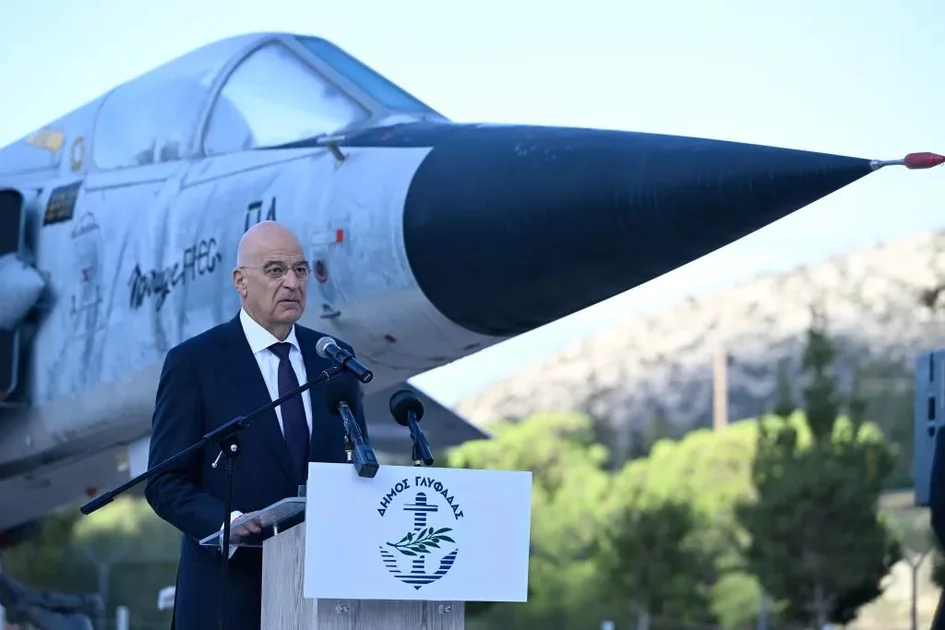
In the case of the plane carrying Greek Defence Minister Nikos Dendias, Turkish F-16 fighter jets were observed operating in the area, tracking the aircraft as it neared Cyprus while maintaining a distance. A similar incident occurred involving the aircraft carrying French Armed Forces Minister Catherine Vautrin, and the Dutch delegation also reported harassment, according to Cypriot officials.
“All this will be duly denounced by the Republic of Cyprus where appropriate,” Papadopoulos said. “The defence minister will today inform the EU high representative for foreign affairs and security policy [Kaja Kallas], and will also inform the European Council during its proceedings.”
A history of division and contested airspace
The incidents come as Cyprus holds the six-month rotating European Council presidency, a role that places the divided island at the centre of EU decision-making. Cyprus has been split into a Greek Cypriot south and a Turkish Cypriot north since 1974, when Turkish forces invaded following a coup backed by Greece.
Ankara does not recognise the Republic of Cyprus, an EU member state that is internationally recognised as the sole sovereign authority over the entire island. The Turkish Cypriot north operates its own administration, recognised only by Turkey, and maintains Ercan airport as its primary gateway — a facility that Cyprus and the EU consider illegal.
Kursad Hudaverdioglu, head of the Turkish Cypriot air traffic controllers' trade union, denied the incident. He claimed that the F-16s “took off due to an emergency” and “flew to the north of the island without violating any borders from the moment they took off.” He did not specify the nature of the emergency and dismissed reports that the jets tracked the EU officials' aircraft as “completely politically motivated.”
Broader implications for EU-Turkey relations
The harassment of defence ministers travelling to an official EU meeting is likely to strain already tense relations between Brussels and Ankara. Turkey remains a NATO ally but has increasingly clashed with EU member states over maritime boundaries, energy exploration, and the Cyprus issue.
Greek and Cypriot officials told POLITICO that radio communications with the aircraft were deliberately disrupted by controllers at Ercan. The use of Turkish fighter jets to intercept military transports carrying allied European ministers marks a significant escalation and raises questions about flight safety in the region.
Cyprus has positioned itself as a hub for space and AI innovation, but Monday’s events highlight the persistent geopolitical fault lines that complicate its role. The island’s strategic location at the crossroads of Europe, the Middle East and Africa makes it a valuable EU outpost, but also a flashpoint for tensions with Turkey.
A moment of peak visibility for Cyprus
The timing of the incidents is particularly sensitive. Cyprus currently holds the EU presidency, giving its government a platform to raise the issue directly at the highest levels. The interference with defence ministers en route to a Council meeting will likely feature prominently in the European Council’s proceedings.
The Cypriot government has said it will lodge formal complaints through diplomatic channels and at the EU level. The defence minister is expected to brief EU foreign affairs chief Kaja Kallas, and the matter will be raised during the European Council’s discussions.
For the visiting ministers, the disruption was an unwelcome start to a meeting focused on European security and defence cooperation — a topic that now has a very tangible illustration of the challenges posed by contested airspace and unresolved territorial disputes.
Comments