
Trump Administration Poised to Unveil New Tariffs on China and 15 Other Economies
The Trump administration is preparing to impose higher tariffs on China and 15 other economies, including the European Union, Japan, South Korea, India, and Vietnam, according to a Wall Street Journal report published Tuesday. U.S. Trade Representative Jamieson Greer could announce the decision as soon as this week, though officials caution that timing may slip.
The move would conclude a Section 301 investigation opened on March 11 into whether government subsidies give foreign manufacturers an unfair advantage by encouraging excess production capacity. The probe targets 16 economies accused of flooding global markets with lower-priced goods, disadvantaging American manufacturers. The new duties would cover most imports, though goods already subject to separate tariffs—such as steel, aluminum, and automobiles—may be partially excluded.
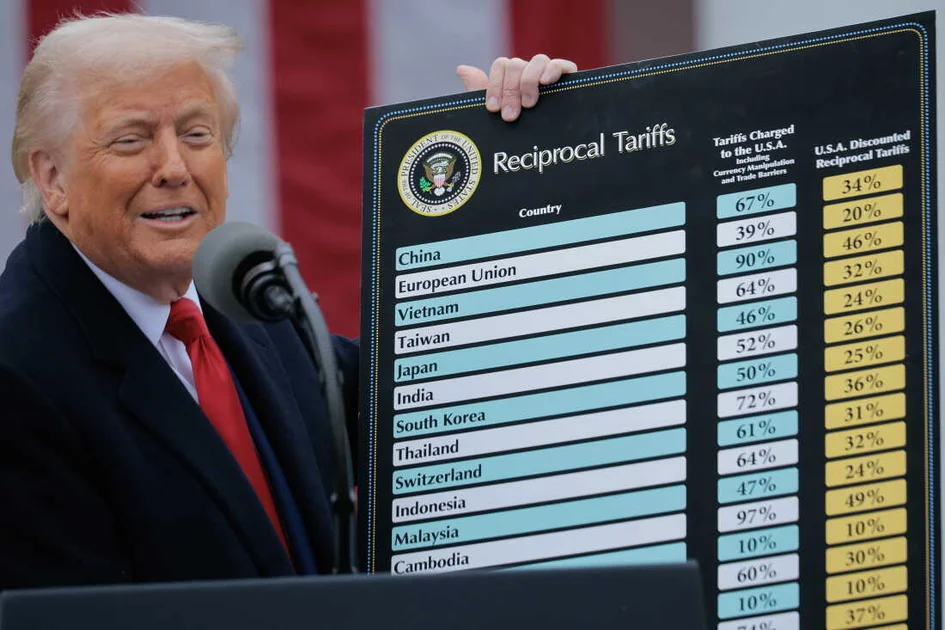
Rates would vary by country. The EU, Japan, and South Korea could face tariffs of 15% or less, consistent with trade deals negotiated last year that cap U.S. duties on their goods at 15%. China, Vietnam, and India risk higher rates. Bloomberg reported in August that Washington was considering an additional 7.5% tariff on China, which would bring its rate to 20% from the current 12.5%. The final rate remains undecided.
Market Reaction and Historical Precedent
Financial markets showed immediate unease. U.S. futures slipped Tuesday, with Nasdaq and S&P 500 extending losses. The S&P 500 had already fallen 3.7% on Friday. Bitcoin dropped 2.56% at the time of reporting, and Nvidia shares fell nearly 7%.
Investors have reason to be wary. In April 2025, a tariff standoff with Beijing helped give the S&P 500 its worst week since March 2020, with the index falling 6% in a single day after China retaliated against a 34% U.S. levy. In October 2025, after China restricted rare earth exports, Trump threatened a "massive increase" in tariffs, prompting a 2.7% drop in the S&P 500—its worst session since April—and a 10% plunge in Bitcoin within half an hour. More than $19 billion in leveraged crypto bets were liquidated, a record.
Rebuilding the Tariff Wall After Supreme Court Defeat
The new tariffs are part of Trump's effort to restore his tariff regime after the Supreme Court struck down his emergency-powers levies in February 2026. The administration turned to Section 301 of the Trade Act of 1974, which allows the president to impose tariffs after finding unfair foreign trade practices. The investigation focuses on whether state subsidies push foreign factories to produce far more than their home markets can absorb, creating excess capacity that distorts global trade.
Greer has argued that such subsidies have enabled companies in targeted economies to sell large volumes of lower-priced goods worldwide, putting U.S. manufacturers at a disadvantage. The announcement would bring higher tariffs for dozens of countries, including all 27 EU members, China, Japan, South Korea, India, Vietnam, and others.
Political and Economic Stakes
The timing is politically sensitive. The move comes just three weeks after Republicans lost their congressional majorities in midterm elections dominated by cost-of-living concerns. An Associated Press survey found that roughly two-thirds of midterm voters believed Trump's tariffs had hurt the national economy. "Tariffs have made everything too expensive," Texas Republican Sen. Ted Cruz wrote the day after the election.
Yet Greer told CNBC on Nov. 11 that Democratic gains had not changed America's trillion-dollar trade deficit or China's trillion-dollar trade surplus. The administration appears undeterred by the electoral backlash.
China's Rate and the Path to Implementation
China likely faces one of the highest tariff increases. If Washington follows through on the 7.5% additional tariff reported by Bloomberg, China's general rate would reach 20%, well above the 15% mark for allies. However, traders on Polymarket give 77% odds that the rate stays between 5% and 15% at year-end, on nearly $17,000 in trading volume. That contract counts only tariffs in force by Dec. 31, not those merely announced.
Timing may explain the discrepancy. When Washington imposed its forced-labor tariffs in July, seven weeks passed between proposal and implementation. If this week's announcement is merely a proposal, a similar timetable would push implementation into mid-January. Diplomacy could also favor a delay. Trump met Chinese President Xi Jinping in Shenzhen last week, and the countries' trade truce runs until Jan. 10.
The Nvidia Complication
The Wall Street Journal suggested that announcing tougher tariffs could complicate ongoing trade negotiations and affect major U.S. companies. Nvidia, which has significant exposure to Chinese markets, saw its shares fall nearly 7% on Tuesday. The semiconductor giant has been at the center of U.S.-China tech tensions, and any escalation could further disrupt supply chains.
Broader Implications: A New Tariff Era?
The renewed tariff push signals that Trump intends to maintain a protectionist trade posture despite judicial setbacks and electoral losses. By invoking Section 301, the administration can target specific countries and industries with tailored duties, potentially avoiding the legal challenges that derailed his emergency-powers tariffs.
The move also risks reigniting trade tensions with allies. The EU, Japan, and South Korea had negotiated deals capping tariffs at 15%, but the new duties could test those agreements. The administration says it will take existing deals into account, but the final rates remain uncertain.
For China, the tariffs could exacerbate an already strained relationship. The two countries have been observing a trade truce until Jan. 10, and the announcement could undermine fragile negotiations. Beijing has previously retaliated swiftly against U.S. tariffs, raising the specter of another tit-for-tat cycle.
Market and Economic Outlook
Economists warn that higher tariffs could fuel inflation and slow growth, particularly if trading partners retaliate. The U.S. trade deficit remains a trillion dollars, and China's surplus is equally large—imbalances that the administration argues are perpetuated by unfair subsidies.
Investors will be watching for details on rates, product coverage, and implementation timing. The S&P 500's recent slide suggests markets are already pricing in some risk. Cryptocurrencies, which have become increasingly correlated with risk assets, could see further volatility. The record $19 billion liquidation in October 2025 shows how quickly leveraged positions can unwind.
As the announcement looms, businesses and policymakers are bracing for another chapter in the volatile trade saga. Whether this round of tariffs follows the same script as previous ones—or breaks new ground—will depend on the specifics yet to be revealed.
For now, the world waits for Greer's announcement, expected any day.
Comments