
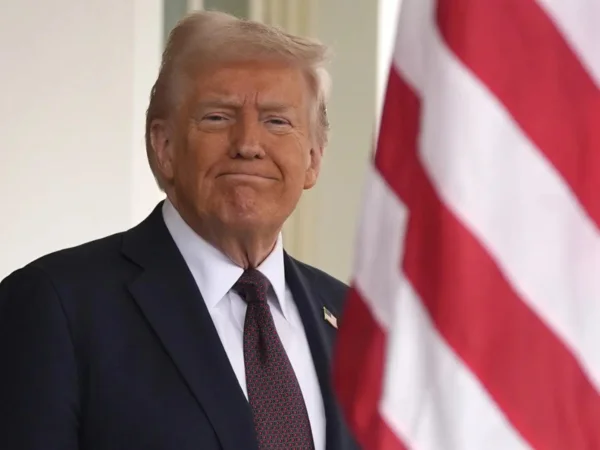
Opening: Trump's Approval Sinks to New Low
President Donald Trump's net approval rating has hit a fresh second-term low of -18.9, according to the latest Silver Bulletin average released May 11, 2026. The figure edges past the previous low of -18.8, signaling continued erosion of public support for the president as he navigates a challenging political landscape.
The new numbers, compiled by Nate Silver and Eli McKown-Dawson, reveal that nearly 48 percent of Americans now strongly disapprove of Trump's job performance. Among all U.S. adults—a broader measure that includes non-voters—the picture is even starker: net approval stands at -20.6.
These figures come as Democrats eye a strong performance in the 2026 midterm elections, buoyed by widespread dissatisfaction with the administration's handling of key issues. The Silver Bulletin average, which weights polls based on reliability, sample size, and recency, paints a consistently bleak portrait of a president struggling to regain the political momentum that carried him through his first term.
Polling Methodology Matters
The Silver Bulletin's default average combines polls of adults, registered voters, and likely voters, prioritizing all-adult surveys when available. This approach captures the sentiment of the entire electorate, including those who may not turn out but whose views shape the broader political climate. The latest data shows that even among registered and likely voters, Trump's numbers remain deeply negative, a warning sign for Republican strategists looking ahead to November.
Context: Why the Economy Is Driving the Downturn
The slide in Trump's approval rating is closely tied to growing economic anxiety, particularly among younger Americans. A new AP-NORC poll, published May 12, 2026, reveals that job market optimism among young adults has fallen sharply. The survey, which tracks attitudes across generations, shows that Americans aged 18 to 34 are significantly less confident about their employment prospects than they were just six months ago.
This trend is especially troubling for the White House, which has staked much of its messaging on the strength of the economy under Trump's policies. The president has frequently touted low unemployment and stock market gains, but the poll suggests that those headline numbers are not translating into felt security for younger workers. Many cite rising housing costs, stagnant wages in entry-level positions, and uncertainty about the long-term effects of tariff policies.
The Tariff Toll
Trump's aggressive tariff regime, particularly on Chinese imports, has been a double-edged sword. While intended to protect American manufacturing, the levies have raised costs for businesses and consumers. The AP-NORC poll indicates that younger workers, who often rely on sectors sensitive to trade policy such as retail and logistics, are feeling the pinch. The administration's recent moves to escalate tariffs in response to the Iran crisis have added another layer of uncertainty.
Meanwhile, the broader economic backdrop remains mixed. Inflation has moderated from its 2023 peaks, but key goods, including gasoline and food, remain stubbornly expensive. Trump's proposal to suspend the federal gasoline tax, announced over the weekend, is a tacit admission that energy costs are weighing on voters. However, the president lacks the unilateral authority to implement such a suspension—a fact that critics were quick to point out.
Perspective: A Weakened President Heading Into the Midterms
The combination of sinking approval ratings and eroding economic confidence has significant implications for the 2026 midterm elections. Historically, presidents with net approval ratings below -15 have seen their parties suffer substantial losses in Congress. With Trump now at -18.9 and trending downward, Republicans face an uphill battle to retain control of the House and Senate.
Democrats are already capitalizing on the discontent. The generic congressional ballot, which measures overall party preference, shows Democrats with a clear advantage. Pollsters attribute this to a backlash against Trump's handling of both economic and foreign policy issues, including the ongoing Iran war and tensions with Russia.
The Youth Vote Factor
The dip in job market optimism among young Americans is particularly consequential. This demographic has historically leaned Democratic, and any further erosion of Republican support could tip key swing districts. The AP-NORC poll reveals that youth pessimism is not just about jobs: it extends to broader concerns about student debt, housing affordability, and climate change—areas where the Trump administration has offered few concrete solutions.
Internal White House polling, according to leaked reports, has shown similar trends. Advisers are reportedly urging the president to double down on economic messaging, emphasizing pending trade deals and tax cuts. But with the Silver Bulletin average showing that nearly half the electorate strongly disapproves of Trump's performance, the window for a political recovery appears narrow.
International Pressures Mount
Foreign policy is compounding Trump's domestic troubles. The Iran war, which has entered its second year, is increasingly unpopular with the American public. A separate Silver Bulletin dashboard tracking support for the conflict shows growing opposition, particularly among younger voters who are wary of prolonged military engagement. The president's recent comments that the Iran ceasefire is on "life support" have done little to reassure a war-weary nation.
Meanwhile, Trump's relationship with other world leaders remains rocky. A recent report noted that Rod Stewart called Trump a 'ratbag' to King Charles at a trust anniversary, underscoring the diplomatic friction that has become a hallmark of the administration. At the same time, Putin claims the Ukraine war is coming to an end after a Trump-brokered three-day ceasefire—a fragile peace that could unravel at any moment.
In a separate development, Trump signed off on a plan to fire FDA Commissioner Marty Makary, according to WSJ reports. This shake-up at a key health agency has raised questions about the administration's priorities as it prepares for the midterms.
Section: The Silver Bulletin's Deep Dive
The Silver Bulletin analysis goes beyond the topline approval numbers, breaking down public sentiment by issue. Pollsters ask voters how well Trump is handling specific policy areas, and the results align with the overall negative trend. On the economy, approval is underwater; on foreign policy, it is deeply negative; on healthcare, it is even worse.
Nate Silver's model adjusts for "house effects," the systematic biases that individual pollsters bring to their surveys. By smoothing out these differences, the Silver Bulletin aims to provide a more accurate picture of public opinion. Its current verdict is clear: Trump is historically unpopular for a second-term president, and his numbers are not improving.
The Racial and Generational Divide
The approval gap between demographic groups is stark. Among white voters without a college degree, Trump remains relatively popular, with net approval hovering near positive territory. But among college-educated whites, suburban voters, and virtually all non-white demographics, his numbers are deeply negative. The youth vote, as noted, is particularly hostile, with net approval among 18- to 34-year-olds exceeding -35 in some polls.
This polarization mirrors trends seen in previous elections, but the intensity has grown. The Silver Bulletin average shows that the share of voters who strongly disapprove of Trump is now higher than at any point in his second term. "Strong disapproval" is a metric that often correlates with voter turnout: those who feel strongly negative are highly motivated to vote against the incumbent.
Section: The Stakes for November
As the midterms approach, Trump's approval rating is the single most important indicator of the political landscape. The Silver Bulletin average suggests a wave election may be building against the president's party. History shows that presidents with ratings this low often see their parties lose 30 or more House seats.
Democrats are already framing the election as a referendum on Trump's leadership. "The president has failed on the economy, failed on foreign policy, and failed to unite the country," said a Democratic National Committee spokesperson in response to the new polls. "Voters are ready for change."
Republicans, meanwhile, are scrambling to distance themselves from the president in swing districts. Some have called for a renewed focus on local issues, hoping to avoid being dragged down by Trump's unpopularity. The White House has responded by intensifying its media strategy, with Trump conducting more interviews and rally events in battleground states.
The Role of the Media
The polls themselves are becoming a story. Trump has long railed against "fake news" polls that show him trailing, but the Silver Bulletin's transparent methodology and high-quality data are difficult to dismiss. Legacy media outlets, including the Associated Press, are reporting the numbers without the caveats they once applied to more volatile surveys.
The AP-NORC poll on job market optimism, for instance, is based on a rigorous scientific sample and is widely trusted. Its finding that youth confidence is falling puts pressure on the administration to deliver tangible economic wins.
Section: Broader Implications Beyond the Elections
The erosion of Trump's approval rating has implications that extend beyond the midterms. A weakened president faces diminished capacity to push his legislative agenda. With a likely Democratic wave in Congress, Trump may struggle to pass further tax cuts, deregulation, or trade deals. The final two years of his term could be defined by gridlock and investigations.
Internationally, allies and adversaries alike take note of domestic polling. A president with a -18.9 approval rating has less leverage in negotiations—foreign leaders may calculate that Trump cannot deliver on promises or that he may be a short-term partner. The Iran situation, in particular, highlights the stakes: a president seeking to de-escalate a war while facing domestic political headwinds is in a precarious position.
The Putin claims Ukraine war ‘coming to an end’ after Trump-brokered three-day ceasefire story illustrates both the potential and the fragility of Trump's diplomatic initiative. A ceasefire could boost the president's ratings, but any violation could cause them to plunge further.
The Economic Policy Crossroads
Trump's economic policies are at a crossroads. The tariff war with China, the proposed gas tax holiday, and the management of the Iran war all have direct consequences for the American pocketbook. The AP-NORC poll suggests that voters are not seeing the benefits of these policies. Inflation expectations remain elevated, and job anxiety is rising.
Young Americans, in particular, are questioning whether the administration's approach serves their interests. The job market optimism fall is a leading indicator of broader consumer sentiment. If young workers stop believing in the economy, they may reduce spending, which could slow growth further.
Section: What Comes Next
The next few months will be critical for the Trump administration. The president has shown a capacity for political rebound in the past—his approval rating recovered after the initial dip in 2017 and after the first impeachment acquittal. But the current slump feels different; it is rooted in real economic pain and a multi-front foreign policy crisis.
Pollsters will be watching closely for any changes in sentiment following upcoming trade negotiations, the outcome of the Iran ceasefire talks, and the administration's response to any potential recession. The Silver Bulletin average is updated with each new high-quality survey, and it could move in either direction.
For now, the numbers are clear: Donald Trump is the least popular he has been in his second term, and the public is losing faith in his economic stewardship. The midterms will be the ultimate test of whether that disapproval translates into electoral consequences.
Even as sports fans celebrate the Thunder sweeping the Lakers into the West Finals, and viewers follow the dramatic breakup of Rachel and Steven on MAFS Australia, the political world remains focused on the president's declining fortunes. The next poll may show a recovery—or it may show an even deeper hole.
Comments