
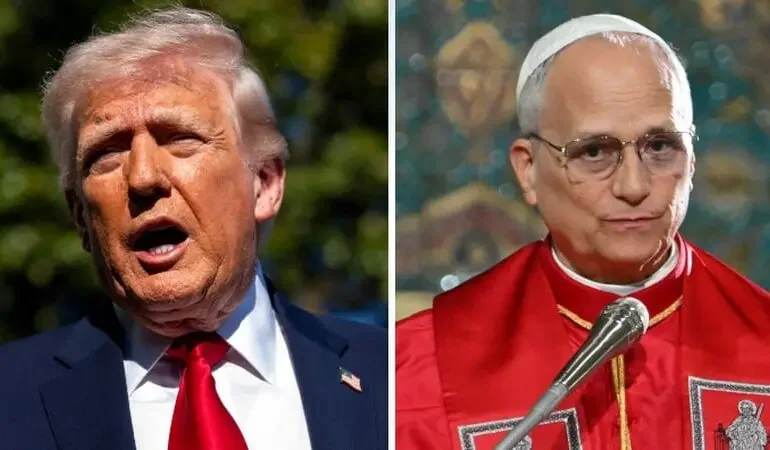
Trump Escalates Feud With Pope Leo XIV, Threatening to Overshadow Rubio's Vatican Visit
President Donald Trump has reignited his war of words with Pope Leo XIV, accusing the U.S.-born pontiff of endangering Catholics by failing to condemn Iran's nuclear ambitions and declining to speak out on the jailing of Hong Kong pro-democracy activist Jimmy Lai. The fresh attack on the 70-year-old pope comes just days before Secretary of State Marco Rubio is scheduled to meet with the Catholic leader at the Vatican, raising fears that the diplomatic effort could be undermined by the escalating personal feud.
Trump's Latest Broadside
In a Monday interview with Hugh Hewitt on the Salem News Channel, Trump lashed out after Hewitt criticized the pope for not highlighting the plight of Lai, the jailed Hong Kong media tycoon sentenced to 20 years under the territory's national security law. Trump claimed the pope would rather focus on Iran, accusing Leo of tacitly endorsing a nuclear-armed Tehran. “Well, the pope would rather talk about the fact that it’s OK for Iran to have a nuclear weapon, and I don’t think that’s very good,” Trump said. “I think he’s endangering a lot of Catholics, and a lot of people, but I guess if it’s up to the pope, he thinks it’s just fine for Iran to have a nuclear weapon.”
The remarks marked the latest escalation in a conflict that began shortly after Trump launched strikes against Iran on Feb. 28. The president, 79, has been incensed by Leo’s repeated public calls for an immediate ceasefire and a return to diplomacy. In response, the pope has not shied away from criticizing world leaders, bemoaning that the world is “being ravaged by a handful of tyrants” without naming any specific figure.
Why It Matters: A Clash of Worldviews
The confrontation between the U.S. president and the leader of the global Catholic Church is more than a personal spat; it reflects a fundamental divergence over the use of military force, the role of diplomacy, and the moral obligations of powerful nations. Leo, who has made peacebuilding the cornerstone of his papacy, has consistently urged dialogue over rearmament. Speaking to a crowd of 10,000 at St. Peter’s, he declared, “There are certainly binding responsibilities that fall to the leaders of nations. To them we cry out: Stop! It is time for peace! Sit at the table of dialogue and mediation, not at the table where rearmament is planned, and deadly actions are decided.”
Rubio's Vatican Visit Hangs in the Balance
Secretary Rubio’s upcoming meeting with the pope is now caught in the crossfire. Originally intended as a routine diplomatic engagement to discuss humanitarian cooperation and shared concerns, the encounter is likely to be dominated by Trump's inflammatory comments. Analysts suggest that the U.S. delegation will face an uphill battle to project unity and respect for the Holy See when the president has openly derided its leader. The incident echoes Trump's earlier clashes with Pope Francis during his first term, though the new context of an active U.S. military campaign in Iran adds unprecedented gravity.
The pope’s stance on Lai’s case has also drawn criticism from pro-democracy advocates. When asked about the jailed activist, Leo declined direct comment, instead urging prayer for peace and a reduction of hatred. “We must pray for peace, work for peace and reduce hatred. Hatred is constantly increasing in the world. We must seek to promote dialogue and find solutions,” he said.
Perspective: A Broader Schism Between Washington and the Vatican
The escalating dispute is symptomatic of a growing rift between the Trump administration’s transactional, hard-power approach to foreign policy and the Vatican’s emphasis on multilateralism, human dignity, and conflict resolution. While Trump views the pope’s calls for peace as weakness or even complicity, Leo sees them as a moral imperative in a world scarred by war and oppression.
The Iran Conflict as a Flashpoint
At the heart of the tension is the U.S. war in Iran, which has triggered devastating humanitarian consequences across the Middle East. The pope has made several impassioned appeals for a ceasefire, earning him praise from peace activists but scorn from hawkish U.S. circles. Trump’s accusation that Leo is “OK for Iran to have a nuclear weapon” misrepresents the pope’s position; Leo has consistently called for nuclear disarmament and non-proliferation, not acquiescence.
The clash also raises questions about the influence of religious voices in American foreign policy. While previous administrations, both Democratic and Republican, have sought the Vatican’s moral backing on issues ranging from climate change to human trafficking, the current White House appears to view the Holy See as an adversary rather than an ally.
An Unprecedented Breach of Protocol?
Presidents and popes have disagreed before, but rarely has a sitting U.S. president so directly and personally attacked a pontiff in public. The breach of diplomatic decorum is all the more striking given that Leo is American-born—a fact that might have been expected to foster comity. Instead, it has produced a unique form of conflict: an American president at war with an American pope.
For Catholics in the U.S.—who represent roughly 20% of the electorate—this conflict poses a dilemma. Many conservative Catholics support Trump’s policies on religious liberty and abortion, yet they also revere the papacy. The feud could further polarize an already divided church.
In the days ahead, all eyes will be on Rubio's visit to the Vatican. Whether he can mend fences or merely manage the fallout will define the immediate trajectory of a diplomatic relationship now teetering on the edge.
Comments