
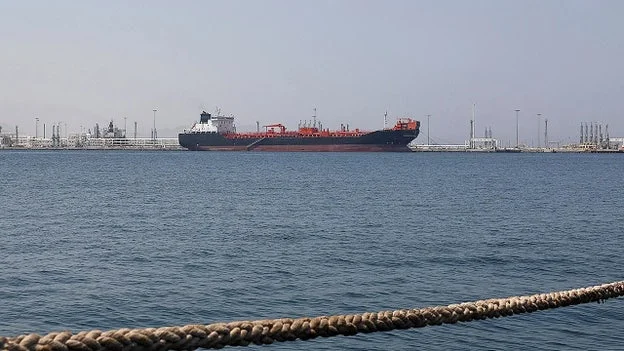
Trump Claims Hormuz Deal 'Imminent' as Iran Denies Talks, Oil Prices Tumble
President Donald Trump said Monday that the Strait of Hormuz could reopen "literally by tomorrow," claiming that a deal with Iran is imminent. However, Iranian officials flatly denied that any direct negotiations are taking place, leaving the status of the critical waterway — through which about a fifth of global oil passes — in a state of high uncertainty.
Speaking at an executive order signing at the White House, Trump said the first phase of any agreement would be the opening of the strait, followed by denuclearization. "You'll find out today or tomorrow," he told reporters. "They're going to go quickly one way or the other. It's not very complex." He also said he was giving Iran "every last chance" before a potential military strike, which he described as "the biggest attack since World War II."
Iran Denies Direct Talks, But Back-Channel Progress Reported
Iran's foreign ministry quickly pushed back, stating that no talks with the United States are underway. "There are no talks with the US," a spokesman said. Yet, regional officials told the Associated Press that Iran and Oman have made progress toward a deal that would see ships enter the Persian Gulf via an Iranian-controlled route and exit via an Omani-controlled route, with service fees for security and environmental protection. The emerging agreement would be linked to lifting the US blockade on Iran's ports.
Secretary of State Marco Rubio expressed hope that a deal could be reached "very shortly," while Treasury Secretary Scott Bessent said energy prices should settle once the strait reopens. The mixed signals — Trump's optimism, Iran's denials, and behind-the-scenes Omani mediation — underscore the fragility of the current moment.
Why This Matters: The Stakes for Global Energy and Regional Stability
The Strait of Hormuz is a chokepoint of immense strategic importance. A blockade, which the US imposed as part of its maximum-pressure campaign, has spiked oil prices and raised fears of a broader Middle East conflict. The standoff comes amid an ongoing US-Israel war on Iran, with attacks in Gaza and Lebanon continuing. The US military, according to Defense Secretary Pete Hegseth, remains "locked and loaded" and ready at levels not seen since World War II.
Oil markets reacted sharply to the prospect of a diplomatic breakthrough. Brent crude fell more than 6% to $82.41 a barrel, while West Texas Intermediate dropped to $79.40 — a clear signal of how much is riding on the reopening of the strait. The US blockade and Iranian threats have disrupted shipping, with at least one cargo ship reportedly struck by an "unknown projectile" near Oman on Monday, according to the UK Maritime Trade Operations.
The Broader Context: A Tenuous Path to De-escalation
The current crisis is the culmination of decades of tension over Iran's nuclear program and its regional influence. Trump's "maximum pressure" policy has included sanctions, military deployments, and now a naval blockade. In retaliation, Iran has threatened to close the Strait of Hormuz, a move that would choke global energy supplies. The potential deal, brokered by Oman, would be a significant step toward de-escalation, but it remains unclear whether Tehran is willing to accept the terms, which likely include limits on its nuclear activities and the reopening of its ports.
On the other hand, Israel has insisted on no Israeli withdrawal from Gaza until Hamas is disarmed, adding another layer of complexity. The US has also facilitated fresh Israel-Lebanon talks in Rome. The interconnected conflicts mean that any Hormuz deal could have ripple effects across the region, potentially opening pathways for broader negotiations.
Perspective: What This Changes
The possibility of a Hormuz deal marks a pivotal shift from military confrontation to diplomacy, at least temporarily. Trump's decision to delay a planned strike on Iran to allow for talks is a remarkable reversal from his earlier saber-rattling. The president's claim that Iranian officials called him "begging" for a deal may be rhetorical, but it signals a willingness to claim victory through negotiation rather than force.
However, the disconnect between Trump's public statements and Iran's denials highlights the fragile nature of these back-channel efforts. Even if an agreement is reached, the details of implementation — who controls what, how fees are collected, and how compliance is verified — are fraught with potential for misunderstanding. The fact that Oman is acting as an intermediary suggests that both sides are looking for a face-saving way to step back from the brink.
For global markets, the immediate effect is a drop in oil prices, offering some relief to consumers. But the underlying risks remain. A failure of talks could lead to renewed conflict, with far more catastrophic consequences. And even if the strait reopens, the broader issues — Iran's nuclear program, regional proxies, and the Gaza war — remain unresolved.
As the world watches, the next 48 hours could be decisive. Trump says "you'll find out today or tomorrow," but the reality may be more complicated. The straight of Hormuz may open "by tomorrow," or it may remain closed for weeks more, keeping the world on edge. In times like these, one thing is certain: the price of oil and the fate of millions in the Middle East hang in the balance.
For more on the intersection of global events and sports, check out our coverage of the Commonwealth Games 2026 or the latest from the Wyndham Championship 2026.
Comments