
IRGC Captures American Underwater Drone Near Strait of Hormuz
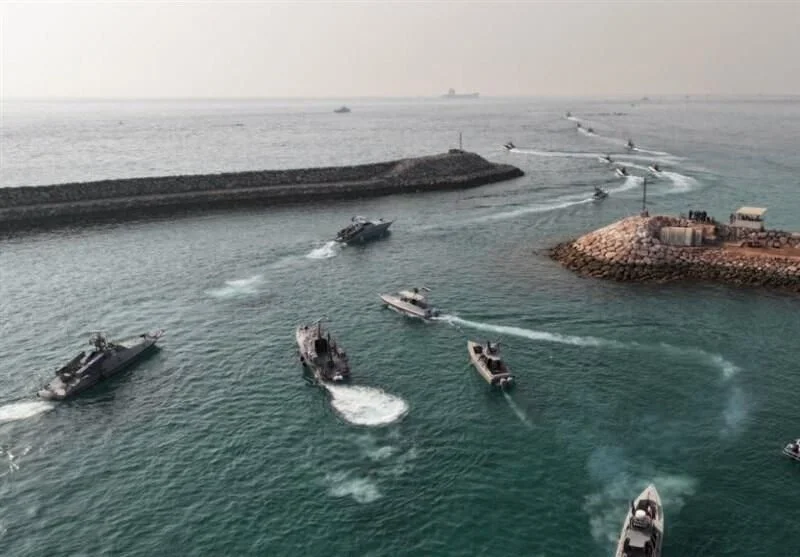
Iran's Islamic Revolutionary Guard Corps (IRGC) announced on September 8 that it had captured an American uncrewed underwater vehicle near the entrance to the Strait of Hormuz, according to Iranian state media. The IRGC identified the seized vessel as an Anduril Dive-LD, a 19-foot autonomous submarine designed for seabed surveillance and reconnaissance missions. The capture marks a significant escalation in the ongoing technological cat-and-mouse game between US naval forces and Iranian paramilitary units in one of the world's most strategically vital waterways.
The Pentagon has acknowledged the loss but disputed key details of Iran's account. US Central Command (CENTCOM) spokesperson Navy Capt. Tim Hawkins told DefenseScoop that the drone was an older model that had malfunctioned while conducting survey operations in the area. According to Hawkins, the vehicle was "essentially dead in the water for more than a day" before IRGC forces recovered it. CENTCOM further stated that the captured drone was not carrying classified sonar or radar equipment at the time of seizure.
Divergent Narratives Emerge
The competing narratives reflect the broader information war between Washington and Tehran. Iranian state media portrayed the capture as a significant intelligence victory, showcasing what they described as "one of the most modern, unmanned, and smart submarines" operated by the US Navy. The IRGC released footage of the seized vessel, which appeared to show the drone in Iranian custody.
Anduril Industries, the California-based defense contractor that manufactures the Dive-LD, has characterized the platform as "attritable"—a defense industry term indicating that the equipment is designed to be expendable and replaceable. The company has not publicly commented on the specific circumstances of the seizure.
Context: Strategic Waters and Technological Competition
The Strait of Hormuz: A Critical Chokepoint
The Strait of Hormuz represents one of the most consequential maritime chokepoints in the global energy system. Approximately one-fifth of the world's petroleum passes through this narrow waterway, making control and surveillance of the area a paramount concern for both regional powers and global stakeholders. The ongoing confrontation between the US and Iran—which Washington launched alongside Israel in late February—has significantly disrupted global energy markets, as both nations have sought to pressure each other through restrictions on oil exports from the Persian Gulf.
Iran has repeatedly demonstrated its intent to challenge American naval presence in the region. Earlier this month, the IRGC reported destroying a Saildrone Explorer—an unmanned surface vessel manufactured by California-based Saildrone—and released footage showing the drone on fire. The US Navy has utilized Saildrone products for intelligence gathering in the Middle East since at least 2021, and Iran has previously been accused of attempting to steal these platforms in 2022.
A Pattern of Technological Capture
Tehran has a documented history of capturing and reverse-engineering American military technology. The Shahed 171 Simorgh and Shahed Saeqeh drones bear striking resemblance to the US RQ-170 Sentinel, one of which Iran captured after it crossed into Iranian airspace during a surveillance mission in 2011. Iranian kamikaze drones have since played a significant role in the ongoing conflict with the US, demonstrating how captured technology can be repurposed and integrated into indigenous weapons systems.
The IRGC's latest seizure appears to be part of a deliberate strategy to hunt US Navy drones operating in the Strait of Hormuz. According to Fox News reporting, Iran has been actively targeting American unmanned systems in the region, seeking to expose battlefield secrets and bolster its own technological capabilities. The Pentagon has accused Iran of attempting to steal naval spy drones, with the US military claiming it thwarted an IRGC attempt to seize a Saildrone unmanned surface vessel. The US military reportedly attacked two boats that Iran allegedly used in that attempt, with Iranian media later reporting that several fishermen were missing following the US attack off the coast of the southern port city of Kargan and near Larak Island.
The Technology at Stake: Seabed Sentry and Beyond
Anduril's Underwater Surveillance Systems
While the captured Dive-LD has garnered significant attention, defense analysts have noted that Anduril's broader underwater surveillance portfolio may be of greater strategic concern. The company has developed a system called Seabed Sentry, which represents a fundamental shift in how navies conduct undersea surveillance operations.
Each Seabed Sentry node is essentially a cylinder approximately eight feet long and 21 inches in diameter, containing computer and communications equipment, a swappable payload bay, and its own anchor. Anduril rates the system for depths exceeding 1,640 feet and claims it can remain submerged for months or even years, depending on configuration—though these figures come from the company itself.
The critical innovation is that Seabed Sentry operates without a cable connecting it to shore. Traditional seabed listening arrays require cable ships, years of construction work, and installations that are difficult to conceal. The Seabed Sentry node processes sonar data onboard and transmits only the results—essentially a short message describing what it heard and where the target is heading. This approach is necessary because underwater acoustic modems are often slower than dial-up internet connections, making raw sonar streaming impractical.
When a node completes its mission, it releases its anchor and floats to the surface, where a crew can clean marine growth, recharge it, and redeploy it—possibly with a new payload. Anduril engineering executive Shane Arnott told The War Zone that this reusability makes the system cost-effective for persistent surveillance missions.
Implications for Naval Surveillance
The capture of the Dive-LD, while potentially embarrassing for the US Navy, may not represent a significant intelligence windfall for Iran if CENTCOM's assessment is accurate. The claim that the drone was an older model without sensitive equipment suggests that the US retains more advanced capabilities that were not compromised. However, even older technology can provide valuable insights into American design philosophies, manufacturing techniques, and operational concepts.
Broader Implications: Escalating Tensions and Technological Competition
A War Zone in the Making
The Strait of Hormuz has effectively become a war zone, with both sides testing each other's resolve and capabilities. The US and Iran have been engaged in a confrontation since late February that has drawn in Israel and disrupted global energy supplies. The continuing confrontation has significantly disrupted global energy markets, as both the US and Iran have sought to pressure the other through restrictions on oil exports from the Persian Gulf.
The capture of American military technology—whether functional or not—carries symbolic weight that extends beyond its practical intelligence value. For Iran, such seizures demonstrate that American technological superiority is not absolute and can be challenged through persistent effort. For the US, the loss highlights the vulnerabilities inherent in operating autonomous systems in contested environments where adversaries can attempt physical recovery.
The Future of Uncrewed Warfare
The incident underscores a broader trend in modern warfare: the increasing reliance on uncrewed systems and the corresponding efforts to capture, disable, or exploit them. Drones operating in contested environments—whether in the air, on the surface, or underwater—face risks that traditional crewed platforms do not. The loss of a single drone may be operationally insignificant, but the cumulative effect of such captures could provide adversaries with valuable technical insights over time.
Anduril's characterization of the Dive-LD as "attritable" reflects this reality. The company designs these systems with the expectation that some will be lost in operations. This approach acknowledges that in high-threat environments, the cost of protecting every asset would exceed the value of the assets themselves. Instead, the strategy emphasizes maintaining operational capability through redundancy and rapid replacement rather than through impenetrable defenses.
The incident also highlights the challenges of operating in the undersea domain, where communications are limited, navigation is difficult, and recovery of malfunctioning assets can be nearly impossible. The fact that the Dive-LD was reportedly dead in the water for more than a day before the IRGC recovered it suggests that the US either could not or chose not to attempt recovery operations—a calculation that likely weighed the value of the asset against the risk to personnel and other equipment.
Diplomatic and Strategic Consequences
The capture comes at a sensitive moment in US-Iran relations, with tensions already elevated due to the ongoing conflict and disruptions to global energy markets. While the Pentagon has downplayed the significance of the loss, the incident provides Iran with propaganda material and demonstrates the IRGC's ability to operate effectively in waters that the US considers its area of responsibility.
For American allies in the region, the incident may raise questions about the security of US operations and the reliability of American technology in contested environments. For adversaries, it serves as encouragement that persistent efforts to counter American surveillance capabilities can yield results.
As the conflict continues, both sides appear committed to maintaining their positions and challenging the other's operations. The Strait of Hormuz remains a flashpoint where technological competition, strategic interests, and regional tensions intersect—with the capture of unmanned vehicles serving as the latest manifestation of this ongoing struggle.
Comments