
Senate hearing sets stage for Colorado River intervention
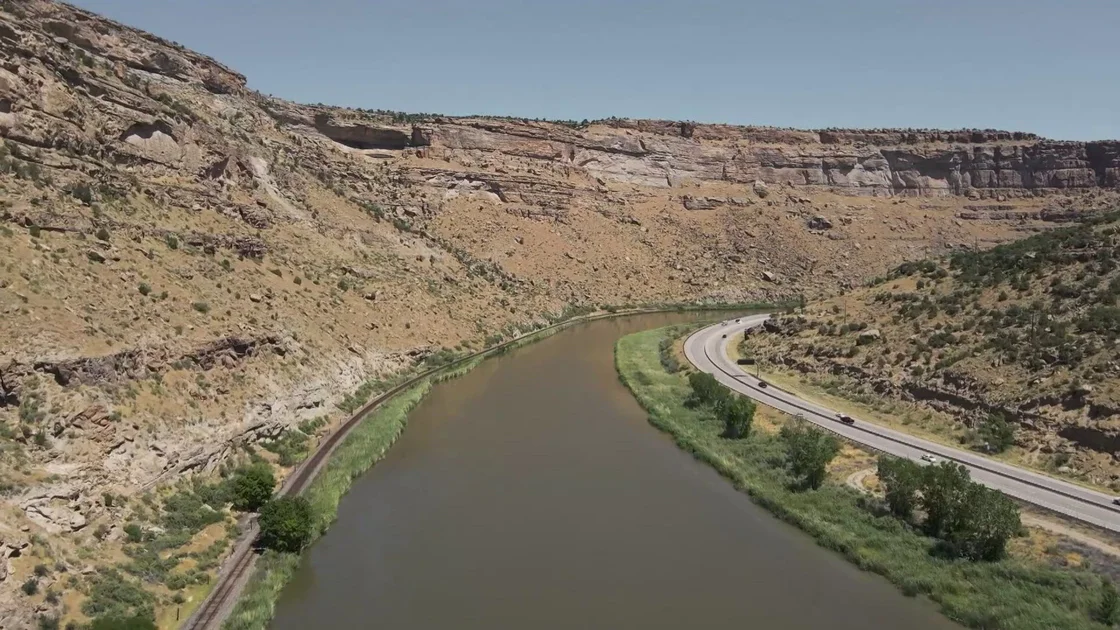
The Trump administration’s top water official is set to appear before a Senate committee this week as the Interior Department prepares to impose unilateral cuts on the drought-stricken Colorado River, intensifying a conflict that pits states, tribes, and agricultural interests against one another amid record-low flows.
Andrea Travnicek, assistant Interior secretary for water and science, will testify Wednesday before the Senate Energy and Natural Resources Committee. She will be joined by David Palumbo, the Bureau of Reclamation’s top career official, as lawmakers press for details on how the federal government plans to manage the river after existing water-sharing rules expire in October.
The hearing comes just weeks after the Interior Department invoked emergency authorities in April, when it became clear that the river would see its lowest flows on record this summer. That emergency declaration allowed the Bureau of Reclamation to release roughly one-third of the water stored at Flaming Gorge Reservoir in Utah and Wyoming—a move that has already hurt the local recreational economy and drawn criticism from lawmakers in both states.
According to the committee’s agenda, the session will focus on the Interior Department’s plan to operate the river system unilaterally, an approach that has sparked fears of litigation and could ultimately land before the Supreme Court. Half of the region’s senators serve on the ENR panel, including Chairman Mike Lee (R-Utah) and ranking member Martin Heinrich (D-N.M.), making the hearing a critical forum for airing state grievances.
Scott Cameron, Interior’s acting Bureau of Reclamation commissioner, announced last week that the department plans to release a draft plan for operating the waterway in “mid-to-late summer.” That timeline adds urgency to Wednesday’s hearing, as lawmakers seek to shape the federal strategy before it is finalized.
Record drought and a divided basin
The Colorado River supplies water to 40 million people, irrigates 5.5 million acres of farmland, and powers hydroelectric turbines at Lake Powell and Lake Mead—the two largest reservoirs in the United States. But a two-decade megadrought, worsened by climate change, has pushed the system to the brink.
Lake Powell, the second-largest human-made reservoir in the country, dropped to historically low levels earlier this spring, threatening its ability to generate hydropower and release sufficient water downstream. The emergency releases from Flaming Gorge, which began in April, were designed to prop up Powell’s elevation and avoid a catastrophic failure of the Glen Canyon Dam’s hydroelectric turbines.
Those releases, however, have drawn sharp rebukes from local officials and business owners. In Utah’s Daggett County, the drawdown of Flaming Gorge has drained marinas, grounded boat tours, and slashed tourism revenue. Chairman Lee has pressed Interior for mitigation funds, though the department has yet to announce compensation.
Across the basin, the situation is no less dire. Arizona, the most junior water user under the 19th-century legal framework known as the Law of the River, faces the deepest cuts. Senator Ruben Gallego (D-Ariz.) has warned that unilateral federal intervention could destabilize the state’s economy, particularly its agricultural sector in Yuma and Pinal counties.
Arizona at the center of the storm
Arizona’s vulnerability stems from its place in the priority hierarchy. Under the Colorado River Compact of 1922, California holds first rights, followed by Nevada and then Arizona. In times of shortage, junior users are required to reduce consumption first.
That structure has already forced Arizona to shoulder the burden of earlier cutbacks. A 2023 agreement among the seven basin states—Arizona, California, Colorado, Nevada, New Mexico, Utah, and Wyoming—brought voluntary reductions, but those measures have proved insufficient. With the 2026 summer flows projected to be the lowest on record, the gap between supply and demand has widened beyond what voluntary conservation can bridge.
Scott Cameron’s announcement that Interior would go it alone effectively signals that the administration has lost faith in the states’ ability to reach a consensus. The seven states have been meeting for months but remain deeply split over who should curtail use—and by how much.
California’s powerful agricultural districts, for instance, are arguing that cuts should follow the priority system, which protects their historic rights. Upstream states like Colorado and Utah, however, are pushing for a more equitable allocation that accounts for evaporation losses and tribal water rights.
The impasse has left Interior with little choice but to impose its own rules, a move that lawyers on both sides acknowledge will almost certainly be challenged in court. Wednesday’s hearing will help build a legal record for those future battles, as senators question federal officials about the scientific basis, economic impact, and timeline of the pending plan.
Global ripples: Water scarcity and geopolitical tension
The Colorado River crisis is not unfolding in isolation. Thousands of miles away, water infrastructure has become a target in the expanding conflict in the Middle East.
On June 9, two drinking water tanks in southern Iran were struck in what reports described as the first wave of a military operation. The attack left one region without water, compounding an already severe humanitarian situation. Subsequent strikes targeted air defenses and radar systems across multiple provinces.
While the incidents are geographically and politically distant from the Colorado River, they underscore a broader global trend: water security is increasingly a flashpoint for conflict, and aging infrastructure—whether dams in the American West or storage tanks in Iran—is becoming more vulnerable to both natural and man-made disruption.
In the United States, the stakes of the Colorado River dispute extend beyond regional politics. A Supreme Court showdown over federal water authority could reshape the legal landscape for water management nationwide, affecting everything from the Mississippi Basin to the Great Lakes.
Markets and migrations: The economic fallout
The economic consequences of prolonged water shortages are already visible. In the tech hubs of Phoenix and Salt Lake City, semiconductor manufacturers and data centers—both heavy water users—are facing stricter conservation mandates. The uncertainty has begun to weigh on investment decisions, with some companies pausing expansion plans.
Agriculture, the region’s largest water consumer, is bearing the brunt of the cuts. In Arizona’s Pinal County, farmers have idled thousands of acres of cotton and alfalfa, while in California’s Imperial Valley, fallowing programs have reduced crop output. The ripple effects are felt in national grocery prices and rural employment.
Population growth in the Southwest, once a driver of economic dynamism, is now colliding with physical limits. Cities such as Las Vegas and Tucson have invested heavily in conservation and recycling, but urban demand alone cannot close the supply gap. The federal intervention plan is expected to mandate significant reductions from municipal users as well.
What Wednesday’s hearing means
Wednesday’s Senate hearing is more than a procedural check on executive action. It is a public reckoning for a water management system that has been strained for years and is now near collapse. The testimony from Travnicek and Palumbo will be scrutinized for clues about the timing, scope, and legal reasoning behind Interior’s upcoming draft plan.
Chairman Lee, whose state suffers from the emergency releases, is expected to push for compensation and a slower timeline. Senator Heinrich, whose state relies heavily on the river, will likely seek assurances that Native American tribes, which hold some of the oldest but often unquantified water rights, receive fair treatment. Senator Gallego will advocate for Arizona’s disproportionate burden to be recognized.
The hearing also carries political weight in an election year. The Colorado River crisis is a litmus test for the Trump administration’s environmental and energy record, with Democratic critics arguing the administration has moved too slowly. The House recently passed a $70 billion immigration bill that ended a shutdown standoff, but the water crisis is seen as an equally urgent issue that demands federal leadership.
Broader implications for Western water policy
Beyond the immediate political drama, the events of June 2026 signal a paradigm shift in Western water governance. The era of voluntary consensus among basin states appears to be ending, replaced by top-down federal mandates and likely litigation.
Legal experts say the Supreme Court could ultimately decide the outcome, setting a precedent for how the federal government exercises its authority over interstate waterways in an era of climate-induced scarcity. The 1922 compact system, designed for a wetter century, may no longer be fit for purpose.
Meanwhile, the conflict in Iran serves as a stark reminder that water scarcity is not solely a domestic concern. As droughts intensify worldwide, from the American West to the Middle East to the Indus Basin, competition for finite resources will increasingly shape both national policy and international relations.
For now, all eyes are on Capitol Hill. The Senate hearing on Wednesday will not resolve the Colorado River crisis, but it will frame the choices ahead: federal control, court battles, deeper cuts, and the hard trade-offs between cities, farms, and tribes. The outcome, as always, flows downhill.
Comments