
Trump Accounts Go Live: A $1,000 Seed for America's Children
Millions of American families can now access a new government-backed investment program for children, officially launched by the Trump administration on July 4, 2026. Coinciding with the nation's 250th birthday, the so-called "Trump Accounts" have begun distributing a one-time $1,000 federal contribution to eligible participants, marking a significant new economic policy experiment.
According to Treasury Department guidance, the $1,000 government seed contribution is available only to children who were born between January 1, 2025, and December 31, 2028, are U.S. citizens, have a valid Social Security number, and have a Trump Account opened on their behalf by a parent or guardian. More than six million accounts have been opened to date, with 1.4 million of those set to receive the federal deposit for babies born during Trump's second term.
The accounts function similarly to traditional IRAs, allowing money to grow tax-deferred and be invested in U.S. stock index funds or exchange-traded funds (ETFs). The default investment is an ETF tracking the S&P 500. Funds generally cannot be accessed until the child's 18th birthday, though exceptions exist for education, starting a business, or making a first home down payment.
Why Trump Accounts Matter
The Trump Accounts represent the administration's most ambitious attempt to create a universal investment-based benefit for children, potentially helping to narrow the wealth gap by giving every eligible child a stake in financial markets from birth. The administration estimates that an account with the initial $1,000 seed at birth could be worth $6,000 by age 18, based on historical S&P 500 returns.
President Donald Trump called the investment accounts "a beautiful thing" in remarks to CNBC this week, adding, "It's a child has had no money, and when that baby becomes a man or a woman, they can have hundreds of thousands of dollars, maybe more."
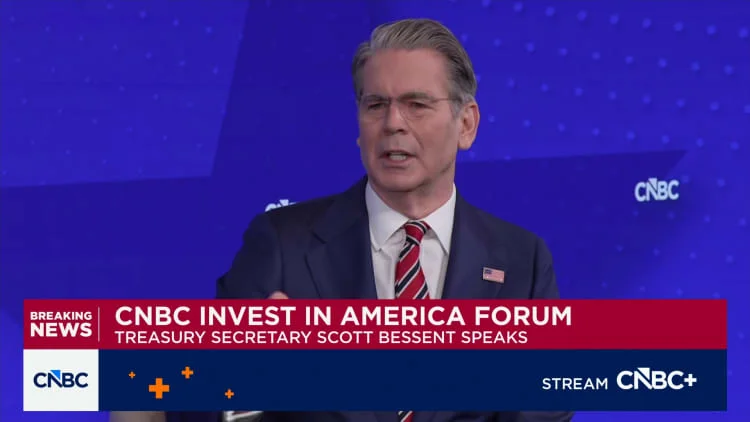
Treasury Secretary Scott Bessent wrote on social platform X: "@TrumpAccounts are now live, giving every child a stake in the American Dream from day one thanks to @POTUS." The Treasury also announced that the Trump Accounts app is now updated with full account capabilities, allowing parents to start funding their child's account and explore financial education modules.
However, some critics worry the accounts primarily benefit families that can afford to make additional contributions, potentially widening rather than narrowing the wealth gap. Tax experts have expressed concern that the program may disproportionately aid wealthier households, even as Trump officials point out that 86 percent of signups so far are from families earning less than $200,000 annually.
Who Gets the $1,000?
The $1,000 federal contribution is reserved for children born during Trump's second term, specifically between January 1, 2025, and December 31, 2028. Children born before 2025 generally do not qualify for the federal contribution, though they can still have Trump Accounts opened in their names and receive contributions from family, employers, or philanthropic donors.
Parents and families can make contributions to the accounts but will not receive tax deductions for their contributions. Employers may also make pre-tax contributions to the accounts of an employee's child, tax-free to the employee. More than 50 companies, including Uber and Intel, have announced plans to contribute to the accounts.
The Political and Economic Stakes
Republicans are banking on the Trump Accounts to help shift economic headwinds that have buffeted the party's favorability ahead of the midterm elections. Cost-of-living frustration has given Democrats an advantage, but rays of optimism are appearing for the GOP, including tumbling oil prices after the Iran war's inflationary jolt faded with a provisional peace deal.
The program, tied to the broader Working Family Tax Cuts signed into law by Trump, is estimated to cost $17 billion through 2028, according to the nonpartisan Committee for a Responsible Federal Budget. While the accounts are available to any children with Social Security numbers, the millions of U.S. citizens born during roughly the four years of Trump's term will get the added benefit of the $1,000 seed.
Treasury officials are working to bolster uptake with billboards, brand partnerships, and work with medical facilities. The Social Security Administration recently unveiled a plan to enroll newborns at the hospital when they get Social Security numbers, which could significantly increase participation. When asked about possible automatic enrollment for eligible children, a senior Treasury official said, "Stay tuned."
Concerns About Equity and Access
Some tax experts worry that Trump Accounts could exacerbate the wealth gap even as they provide benefits to families in need. Because families can make additional contributions to the accounts, wealthier households may be better positioned to take full advantage of the program's tax-deferred growth potential.
However, the administration has emphasized that 86 percent of accounts opened so far belong to families earning less than $200,000 annually, suggesting the program is reaching its intended demographic. A Treasury spokesperson stated, "Trump Accounts level the playing field by allowing every parent to invest in their children's future, not just wealthy families with trust funds."
The accounts are designed to expand stock ownership and create long-term wealth for children, representing a departure from traditional social programs. Instead of direct cash benefits, the government is providing a seed investment that can grow over time through market returns.
The Role of Philanthropy and Corporate Support
Beyond the federal seed money, the program has attracted support from numerous donors and private companies. The administration announced that companies and individuals can give shares of stocks as donations to the accounts, further expanding the potential for wealth accumulation.
More than 50 companies have already committed to contributing to the accounts, including major corporations like Uber and Intel. This corporate involvement has drawn both praise for its private-sector engagement and criticism from those who believe the resources would be better directed toward existing social programs.
Broader Implications: A New Era of Economic Participation?
The launch of Trump Accounts represents a significant experiment in using financial markets to build generational wealth for American children. If successful, the program could fundamentally change how low- and middle-income families approach long-term savings and investment, potentially creating a new generation of stock market participants.
The account structure mirrors that of traditional retirement accounts, with tax-deferred growth and penalties for early withdrawal. However, the program allows for penalty-free withdrawals for specific purposes, including education, business ventures, or first home down payments, providing flexibility that could make the accounts more accessible to families with diverse financial needs.
Trump himself has drawn parallels to his previous economic initiatives, including the stimulus checks that bore his name in 2020. But the branding on this program is significantly more prominent, with the "Trump Accounts" moniker representing a super-charged version of the MAGA branding seen in his second-term financial policies.
As the program rolls out, the administration faces the challenge of ensuring widespread uptake, particularly among the lower-income families the program is designed to help. With the vast majority of eligible children not yet signed up, outreach efforts will be crucial to the program's success.
Looking Ahead: A Political Winner or Policy Puzzle?
The Trump Accounts launch comes at a critical political moment for the administration. Republicans hope the program can help shift economic headwinds that have buffeted the party's favorability, offering a tangible benefit to families that could resonate with voters ahead of the midterms.
However, the program's long-term impact remains uncertain. While the administration estimates that accounts with the initial $1,000 seed could be worth $6,000 at age 18, actual returns will depend on market performance and whether families make additional contributions. Critics point out that $6,000 is a modest sum in the context of rising college costs and housing prices.
The program also faces logistical challenges, including ensuring that families are aware of the accounts and have the resources to manage them. The Treasury Department is exploring automatic enrollment options that could dramatically increase participation rates.
In the meantime, the administration is celebrating the launch as a milestone in expanding economic opportunity. As one Treasury official put it, the goal is to give every child "a stake in the American Dream from day one." Whether the program delivers on that promise will likely be measured not just in account balances, but in the political fortunes of the party that created them.
Comments