
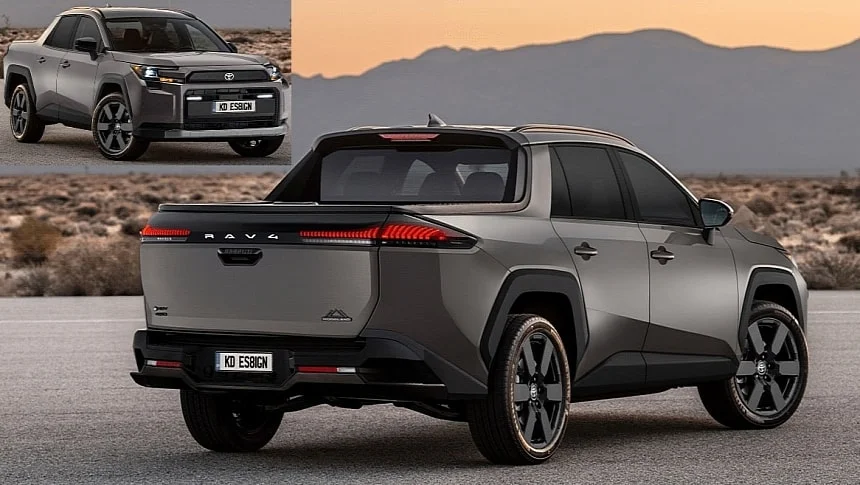
Toyota CEO Confirms RAV4-Based Compact Pickup Is in the Works
Toyota is finally ready to answer the call for a small, affordable truck. In an interview with Automotive News published this week, Toyota Motor North America CEO Tetsuo "Ted" Ogawa confirmed that the company is actively exploring a compact pickup based on the bestselling RAV4 SUV.
"A RAV4-based pickup is an opportunity for us, and the dealers are waiting," Ogawa said. "But it takes time." The executive’s comments mark the first official acknowledgment from Toyota that it is seriously considering a unibody truck to compete directly with the Ford Maverick, which has dominated the compact pickup segment since its 2021 debut.
Ogawa’s remarks come as new evidence emerges that Toyota may be preparing to build such a vehicle in the United States. According to documents obtained by Automotive News from the Texas Comptroller’s office, Toyota has applied for state and local tax incentives for a project codenamed "Project Orca." The initiative would add an estimated 2,000 jobs to Toyota’s existing complex in Bexar County, near San Antonio, and begin output in 2030. Although Toyota has not disclosed what vehicle the new plant would produce, analysts and industry insiders believe a compact pickup is the most likely candidate.
What We Know About the RAV4-Based Pickup
While Toyota has not released official specifications, the pickup would likely share the RAV4’s TNGA-K modular platform, which also underpins the Camry, Highlander, and Lexus NX. The current sixth-generation RAV4 is only available with hybrid powertrains: a standard 2.5-liter four-cylinder hybrid producing up to 236 horsepower, and a 324-horsepower plug-in hybrid. Either powertrain could carry over to the truck, giving it fuel efficiency that would rival the Maverick’s hybrid option.
A RAV4-based pickup would also share the SUV’s unibody construction, which is lighter and more car-like than the body-on-frame Tacoma. That could allow Toyota to price the new truck below the Tacoma’s $32,445 starting price, possibly in the low-$30,000 range. The RAV4 itself starts at $31,900, but a stripped-down pickup variant could undercut that figure.
The Stakes: Why Toyota Needs a Small Truck Now
The compact pickup segment has been one of the fastest-growing in the U.S. auto market, largely thanks to the Ford Maverick, which sold over 155,000 units in model year 2025. The Hyundai Santa Cruz attempted to capture similar interest but failed to gain traction, with critics pointing to its high price and crossover-based design as weaknesses.
Toyota, despite its long history of building rugged trucks like the Tacoma and Tundra, has sat on the sidelines as rivals snatched up buyers looking for something smaller, cheaper, and more efficient. The Tacoma has grown in size and price over the past decade, moving away from its roots as a nimble, affordable workhorse. Meanwhile, the Tundra competes directly with full-size Detroit trucks and can top $60,000.
The Maverick Effect
Ford’s success with the Maverick is hard to overstate. The compact unibody pickup started at under $22,000 when it launched and offered standard hybrid efficiency. It proved there was a massive audience of buyers who wanted a truck bed but didn’t need heavy towing or off-road capability—people who simply wanted an affordable, efficient vehicle for daily driving and occasional hauling.
Toyota, which pioneered hybrid technology with the Prius and now offers hybrid versions of nearly every model in its lineup, was seen by many as a natural fit for the segment. Yet the company hesitated. Now, according to Ogawa, the company is committed to moving forward. Earlier this year, TMNA’s head of planning and strategy, Cooper Ericksen, told MotorTrend: "It's not a matter of 'if' at this point. We're dedicated to it. We're going to figure out how to make it work."
What the Texas Plant Could Mean
Toyota’s existing San Antonio plant builds the full-size Tundra pickup and Sequoia SUV, both body-on-frame vehicles. Adding a new assembly line for a smaller unibody truck would be a significant shift, but it aligns with Toyota’s strategy of building vehicles where they are sold to avoid tariffs and meet local content rules.
The Tacoma has been produced entirely in Mexico since 2022, and the 4Runner is built in Japan. Toyota is at or near capacity at its U.S. plants, making a new facility necessary for any additional production. Project Orca is Toyota’s proposed sixth U.S. assembly plant, and while the company has not confirmed the vehicle, industry observers note that the RAV4-based pickup fits neatly into the gap between the Tacoma and the Tundra.
Building the new truck in Texas would also allow Toyota to avoid the 25% Chicken Tax on imported light trucks, a key factor in Ford’s decision to build the Maverick in Mexico.
A Blow to Hybrid Leadership?
Ironically, Toyota helped develop the hybrid system that Ford adapted for the Maverick’s entry-level powertrain. The two companies collaborated on hybrid technology years ago, and Ford’s ability to launch a hybrid compact truck before Toyota has been a source of frustration for some at the Japanese automaker. A RAV4-based pickup would allow Toyota to reclaim some of that lost ground.
Could Toyota Succeed Where Hyundai Didn’t?
The Hyundai Santa Cruz was the first unibody compact pickup to challenge the Maverick, but it failed to capture significant market share. Santa Cruz sales peaked at around 36,000 units in 2024 before declining. Many analysts attributed the model’s struggles to its high price point, small bed, and relatively low fuel economy compared to the Maverick.
Toyota may have learned from those mistakes. By basing its truck on the popular and proven RAV4—a vehicle that sold 479,000 units in the U.S. last year—Toyota can leverage existing parts, reduce development costs, and offer competitive pricing. The RAV4 name alone carries significant brand recognition and trust, which could help convince crossover buyers to consider a pickup variant.
Price Will Be Key
For a compact pickup to succeed, price must be the priority. The Maverick’s original sub-$22,000 price tag set expectations that have since risen with inflation, but analysts believe a starting price in the $28,000 to $30,000 range could still be attractive if paired with strong hybrid fuel economy. Toyota’s hybrid powertrains are among the most efficient in the industry, and a RAV4-based truck could easily achieve 40 mpg combined or better.
Broader Implications: What a Toyota Compact Pickup Means for the Market
If Toyota moves forward with a RAV4-based pickup, the segment could see a significant realignment. The Maverick has had the compact truck market largely to itself since the Santa Cruz failed to compete. Toyota’s entry would bring a formidable competitor with a loyal customer base, a strong dealer network, and a reputation for reliability that Ford cannot always match.
Pressure on Ford and Others
Ford has already announced an all-electric version of the Maverick, but an electrified Toyota rival could push Ford to accelerate updates to the gasoline and hybrid models. General Motors has also hinted at a possible compact pickup based on the Chevrolet Equinox or GMC Terrain, and Ram is rumored to be considering a small truck as well. If Toyota commits, the segment could quickly become crowded, benefiting consumers through more choices and competitive pricing.
The Death of the Body-on-Frame Truck?
The shift toward unibody trucks marks a broader change in the automotive industry. Body-on-frame construction is heavy, expensive, and less fuel-efficient, but it offers durability and towing capacity. As more buyers use trucks as daily drivers rather than work vehicles, unibody designs are becoming more popular. Toyota’s move would signal that even traditional truck manufacturers see the value in lighter, more efficient platforms.
What Comes Next?
Toyota has not provided a timeline for the RAV4-based pickup, but Ogawa’s comments suggest the company is actively working on the project. The Texas plant, if approved, would begin production in 2030, but a smaller vehicle could be built at Toyota’s Mississippi assembly plant, which currently produces the Corolla and Corolla Cross. That plant was previously rumored to be the site of a Corolla-based pickup, but those plans may have shifted to the RAV4 variant.
In the meantime, Toyota dealers across the country have been advocating for a small truck, and the company’s research and development teams are likely already testing prototypes. As the compact pickup segment continues to grow, Toyota’s entry—powered by RAV4 hybrid technology and built on a proven platform—could be exactly what buyers have been waiting for.
For those closely following the broader economic and political landscape, the news of Toyota’s expansion in Texas comes amid a period of shifting trade policies and interest rates. The 10-Year Treasury Yield Hits 10-Month High as Inflation Data Reshapes Rate Outlook could affect auto loan rates and consumer demand for new vehicles, including compact pickups. Still, if Toyota can deliver the right product at the right price, it may be able to defy broader market headwinds.
Comments