
Tommy Robinson Ignites Nationwide Unrest After Belfast Knife Attack
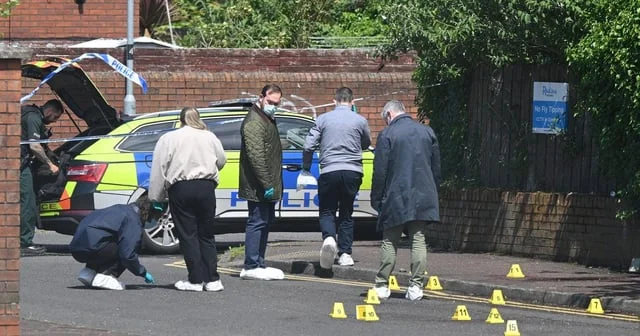
On June 10, 2026, far-right activist Tommy Robinson—real name Stephen Yaxley—triggered a wave of protests across the United Kingdom by sharing a call for gatherings at over 70 locations, including Forbury Gardens in Reading and Parliament Square in London. The posts, made to his 1.9 million followers on X, urged people to hit the streets at 7pm following what he called a "yet another invader attack on our people." The catalyst was a brutal knife attack in Belfast on June 9, where a man in his 40s suffered severe injuries to his eyes, back, and face. A 30-year-old Sudanese man has since been arrested on suspicion of attempted murder.
Within hours, disorder erupted. In Belfast, an anti-immigration mob set fire to a bus, while in London, protesters blocked Parliament Square and set off red smoke flares. The violence has drawn sharp condemnation from Prime Minister Keir Starmer, Northern Ireland’s Justice Minister Naomi Long, and other political leaders. Meanwhile, Robinson has further stoked tensions by posting a video from Moscow alongside Errol Musk, father of billionaire Elon Musk, joking that they were "going to cause some trouble."
The Poster That Sparked a Firestorm
The protests were organized via a digitally-circulated poster, supposedly headed 'Protests tonight,' listing locations from Glasgow to Brighton. Yet its authenticity remains in doubt. Reading Borough Council and Thames Valley Police have not issued official statements, and many locations—such as Glasgow’s George Square, which is closed for redevelopment—appear impractical. Despite this, Robinson amplified the poster, leading to accusations he was "stirring up hate." One user on X called it "a central attempt to stir up riots."
Robinson later claimed he was merely "sharing" information, not organizing the events. But the damage was done. In Reading, the call to gather at Forbury Gardens sparked concern among locals, with the Reading Chronicle reporting widespread criticism. The poster has been linked to a group called 'British Unity,' which posted similar calls on Facebook, urging attendees to "stand together, be heard, create change." The language—urging action after a single, horrific attack—has been widely condemned as reckless and inflammatory.
Stakes Rise: Violence, Racist Abuse, and a Nation on Edge
The protests have not only resulted in property damage—a bus torched in Belfast—but also fueled grotesque scenes of racist abuse. In London, two women, Zahra Ali and Monday Rosenfield, were swarmed by the far-right crowd after leaving a pro-Palestine protest. Metro UK reported that men allegedly threatened to drown and behead them, telling Zahra to "go back to Somalia" despite her being a UK-born citizen. Another woman, Jennifer, who was actually part of the far-right crowd, was also targeted for her race. The Metropolitan Police has not yet confirmed arrests related to these incidents.
This escalation marks a significant challenge for Prime Minister Keir Starmer’s government. Long has pleaded for calm, stating that “the only people who will be harmed if there is unrest on our streets are innocent people.” She warned against allowing a single act of violence—the Belfast stabbing—to tear communities apart. Education Minister Paul Givan echoed this, urging protesters to express views peacefully. However, the rapid spread of the protests across dozens of towns and cities suggests the unrest may be far from contained.
Kremlin Links Cause Concern
Further fueling the controversy is Robinson’s presence in Moscow, where he met Errol Musk at a luxury hotel. The video, posted on June 10, shows them clinking glasses at the Shalyapin Bar of the Hotel Metropol. Robinson claimed he wanted to see how Russia "got itself so well on to the straight and narrow." He added that Russia is "not the enemy of Britain." The trip coincides with the Kremlin-backed St Petersburg International Economic Forum, raising questions about foreign influence on British domestic affairs. Errol Musk, estranged from his son Elon, has his own checkered past, with allegations of abuse that he denies.
Robinson’s growing alignment with Elon Musk is also notable. The Tesla and X owner has frequently reposted Robinson’s content, granting the activist access to an even larger audience. Critics argue this relationship is legitimizing a figure widely associated with far-right extremism.
Broader Implications: The Normalization of Far-Right Mobilization
This week’s events expose a troubling trend: the ability of a single online post to mobilize violent protests across the UK within hours. Despite the lack of organizational infrastructure (e.g., closed venues), the emotional response to the Belfast attack was enough to draw hundreds onto the streets. The rhetoric of "two-tier policing" and "invader attacks" has become a standard trope among activists like Robinson, and it appears to resonate with a segment of the population frustrated by immigration policy.
The Shift in Protest Culture
The protests also highlight a shift in public expression. At Parliament Square, demonstrators chanted "secure our borders, mass deportation" and "stop the boats." They demanded individuals "take a knee" for the victim, Henry Nowak, in a disturbing inversion of the anti-racism gesture. Journalists and passersby were harangued for refusing to participate. This blend of performative patriotism and outright racism suggests a fracturing of social norms. As one woman told Metro, the abuse she heard was "some of the worst" she had ever experienced.
Economic and Political Fallout
The chaos comes at a time when the UK government is already grappling with economic instability and policy gridlock. Earlier this year, the House passed a $70B immigration bill that ended a shutdown standoff, but debates over border security remain unresolved. Meanwhile, tech layoffs continue to make headlines: Salesforce Layoffs Hit Agentforce AI Team as Stock Plunges 30% in 2026. The far-right’s ability to exploit such anxieties—linking immigration to economic hardship and crime—is a recurring pattern seen across Europe and North America.
What This Changes
The aftermath of the Belfast stabbing and Robinson’s calls to action may prompt a reassessment of social media regulation. Current laws allow for the sharing of protest information even if it contains vague or false details. The lack of official affiliation for the poster raises questions about accountability. Moreover, Robinson’s trip to Russia, following his 2020 visit, underscores a potential information operation from Moscow. The Kremlin has systematically sought to amplify Western far-right voices to destabilize its rivals. Robinson’s assertion that he is just "sharing" information may not withstand legal scrutiny if violence continues.
For now, the violence in Belfast and London represents a low point in UK public order. As Long stated, the only winners are "bad faith actors who want to stir trouble." With multiple investigations underway and the injured man still in hospital, the country watches to see if the protests will fade—or set a precedent for future mobilization.
Conclusion
The convergence of a violent crime, a provocative influencer, and the power of social media has created a dangerous cocktail. Tommy Robinson’s actions, amplified by Elon Musk’s platform and a Kremlin-adjacent meeting, illustrate how quickly domestic tragedies can be weaponized. The government must now balance protecting free speech with preventing incitement. As the summer of 2026 begins, the specter of far-right unrest looms larger than it has in years.
Comments