
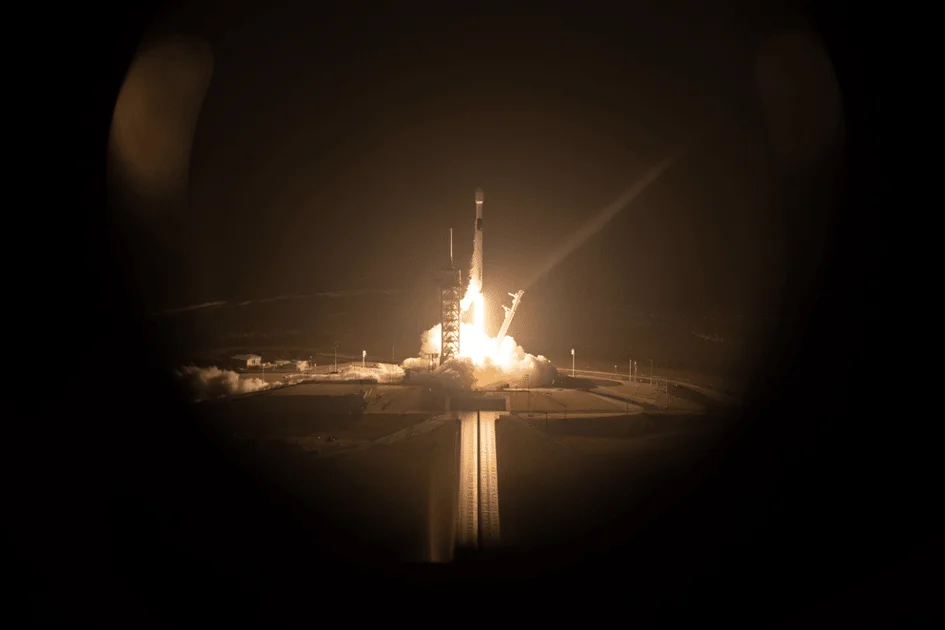
Falcon 9 sends SiriusXM satellite skyward from Florida coast
SpaceX successfully launched a 15,000-pound SiriusXM communications satellite into orbit late Sunday night, continuing the company’s rapid launch pace with another nighttime departure from Cape Canaveral. The Falcon 9 rocket lifted off at 10:25 p.m. EDT on June 28 (2:25 a.m. UTC on June 29), carrying the SXM-11 satellite toward a geosynchronous transfer orbit. The launch window stretched four hours, but SpaceX elected to lift off at the opening of the window.
Spaceflight Now confirmed the mission timeline, which placed satellite deployment roughly half an hour after liftoff. The Falcon 9’s first-stage booster, designated B1085, flew for the 17th time and successfully landed on the drone ship “A Shortfall of Gravitas” stationed in the Atlantic Ocean. The booster had previously flown NASA’s Crew-9 mission, multiple U.S. Space Force payloads, Firefly Aerospace’s Blue Ghost lunar lander, and nine Starlink missions.
The satellite, built by Lanteris Space Systems — a subsidiary of Intuitive Machines — will replace two aging spacecraft: XM-5, launched in 2010, and Sirius FM-5, launched in 2009. Both satellites have operated well beyond their original design lives, making their replacement a priority for SiriusXM’s constellation management.
Why this launch matters for satellite radio and space infrastructure
Replacing aging orbital assets
The SXM-11 satellite represents a key step in SiriusXM’s ongoing constellation refresh. The satellite is based on the IM-1300 bus, stands 230 feet tall with its solar panels extended to 106 feet, and is described by SiriusXM as “the most powerful high-powered satellite in SiriusXM’s fleet.” According to SiriusXM’s official statement reported by Spaceflight Now, SXM-11 will help enhance signal reception, expand coverage into Alaska, and support the delivery of audio entertainment and information services across the United States, Canada, and the Caribbean.
Satellite radio relies on a relatively small number of spacecraft in geosynchronous orbit to beam signals to millions of vehicles and mobile receivers. When one satellite ages, its power output degrades and its ability to hold station weakens, risking coverage gaps. The replacement of XM-5 and Sirius FM-5 — both launched over 16 years ago — ensures that SiriusXM can maintain reliable service without interruption.
Continued commercial payload demand
This launch underscores how commercial satellite operators continue to rely on SpaceX for access to orbit. The Falcon 9 rocket has become the workhorse of the global launch industry, delivering payloads for telecom companies, government agencies, and science missions at a cadence unmatched by any other rocket currently flying. As of mid-June, SpaceX had completed nine launches in June 2026 alone, maintaining a pace that rivals some countries’ entire annual launch activity.
The SXM-10 satellite, the previous model in this generation, launched in June 2025 and is estimated to remain in service until 2040, according to SiriusXM’s financial disclosure to the U.S. Securities and Exchange Commission. The long operational life of these satellites means that investment in new geosynchronous communications spacecraft still makes financial sense, even as low Earth orbit constellations like Starlink and Amazon’s Project Kuiper grow.
Industry shifts and broader implications
Intuitive Machines’ growing space footprint
Intuitive Machines’ acquisition of Lanteris Space Systems (formerly Maxar Space Systems) in January 2026 for approximately $800 million marks a significant consolidation in satellite manufacturing. Intuitive Machines, known primarily for its lunar landers and NASA contracts, has expanded into the commercial satellite bus market. By absorbing Maxar’s legacy satellite production capabilities, the company positions itself to compete with established manufacturers like Northrop Grumman, Airbus, and Boeing for large geosynchronous communications satellites.
The IM-1300 bus used for SXM-11 is a direct descendant of the Maxar 1300 series, which has been the backbone of many high-power geosynchronous communications satellites. Bringing that production in-house under Intuitive Machines’ corporate umbrella allows the company to control supply chains and pricing more directly.
Geosynchronous vs. low Earth orbit: a continued balance
Despite the rapid expansion of low Earth orbit mega-constellations, geosynchronous satellites remain essential for applications requiring continuous coverage over a fixed region. SiriusXM’s business model depends on broadcasting a single signal across a vast area — something a geosynchronous satellite does efficiently. With the SXM-11 launch, the company demonstrates that large, powerful geosynchronous satellites still have a strong commercial future.
At the same time, the Falcon 9’s ability to deliver such a heavy payload — over 7 tons — to geosynchronous transfer orbit speaks to the rocket’s versatility. Originally designed as a medium-lift vehicle, successive upgrades have pushed its performance to the point where it can handle nearly all commercial geosynchronous communications satellites.
This launch also highlights the delicate balance between new space ambitions and legacy infrastructure. NASA races to save Swift telescope with $30M robotic rescue mission illustrates how even well-designed spacecraft eventually need servicing or replacement, a challenge that satellite operators like SiriusXM must constantly manage.
SpaceX’s cadence and the broader launch market
SpaceX’s 17th flight of a single booster is no longer remarkable in itself — the company has reused boosters dozens of times — but it points to the maturation of reusability as a standard operational practice. Each launch of a flight-proven booster saves the cost of building a new first stage, reducing per-launch prices and allowing SpaceX to undercut competitors. For customers like SiriusXM, lower launch costs translate into more affordable satellite replacement programs or the ability to add extra capability without overshooting budgets.
The rapid launch cadence also puts pressure on competitors. United Launch Alliance, Blue Origin, and Arianespace are all working to field reusable rockets or reduce costs, but none has yet matched SpaceX’s combination of price and launch frequency. For now, Falcon 9 remains the default choice for most commercial satellites, from small Starlink batches to massive geosynchronous spacecraft.
What comes next
SXM-11 will spend several weeks maneuvering to its final geosynchronous orbit and undergoing in-orbit testing before entering commercial service. Once operational, it will take over the duties of the two aging satellites it replaces, providing SiriusXM with additional capacity and improved signal quality, especially in northern latitudes where older satellites struggle.
SiriusXM’s constellation refresh is expected to continue with additional launches in the coming years, though no firm schedule for SXM-12 or beyond has been announced. The company’s financial filings suggest that the SXM-10 satellite, launched in 2025, should serve until 2040, providing a long runway before the next major replacement cycle.
For Intuitive Machines, the successful launch validates its acquisition strategy and positions the company to bid for additional commercial and government satellite contracts. The IM-1300 bus is now a proven product, and the company can leverage that track record when competing for future orders.
For SpaceX, every successful launch further cements Falcon 9’s reputation as the most reliable and cost-effective rocket in operation. The company has already moved much of its development focus to the Starship program, but Falcon 9 continues to generate the revenue and flight heritage needed to fund those ambitious long-term goals. The SiriusXM launch is just one more mission in a year that will likely see well over 100 Falcon 9 flights, each contributing to SpaceX’s dominance of the launch market.
The overnight launch from Cape Canaveral was a routine event by contemporary standards — no booster failure, no payload anomaly, no dramatic last-minute scrub. But routine success is exactly what the satellite industry needs. Reliable, frequent, affordable access to space allows companies like SiriusXM to replace aging infrastructure, expand services, and plan for future growth without worrying about whether their launch provider can deliver.
As satellite radio continues to face competition from streaming services and connected car platforms, the quality and reliability of its space-based infrastructure matter more than ever. SXM-11, with its enhanced power and coverage, gives SiriusXM a stronger foundation to retain subscribers and attract new ones in an increasingly crowded audio marketplace.
For now, the satellite is safely on its way to orbit. The Falcon 9 booster is back on its drone ship, ready for another flight. And in a few weeks, SiriusXM will begin using its newest and most powerful satellite to beam music, news, and talk radio to listeners across North America.
Comments