
South East Water Expands Hosepipe Ban — Breaking the Rules Could Cost You £1,000
South East Water has widened its hosepipe restrictions into four more counties, bringing the total area under its ban to cover large parts of Surrey, Hampshire, Berkshire, and Sussex. The move comes just two days after Thames Water imposed its own prohibition on 10 million customers across London, the Thames Valley, and the Home Counties. Breaking either ban is a criminal offence that carries a fine of up to £1,000.
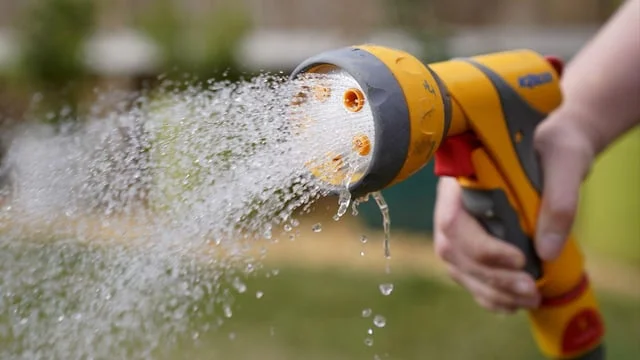
The restrictions target the equipment, not the activity itself. Hosepipes and sprinklers are prohibited for watering gardens, lawns, and allotments, as well as for cleaning cars, patios, paths, driveways, and windows. Pools, hot tubs, and boats may not be filled or topped up from the mains. However, buckets and watering cans remain entirely legal for any purpose. Essential uses such as drinking, cooking, washing, and hygiene are untouched. Exemptions apply where water is needed on health or safety grounds, and for people with severe mobility problems.
For households in Surrey, Hampshire, and Berkshire, this is the first South East Water restriction in 14 years — the last one was in 2012. Sussex, by contrast, is now under its fourth set of restrictions in five years. The unfamiliarity of the rules has already led to confusion, with many households unsure about what exactly is banned.
The Weather and Demand That Broke the Drought Triggers
The bans are the direct result of an exceptionally dry and hot summer. Thames Water’s region received just 40% of its average rainfall during spring, then endured three separate heatwaves. No rain at all fell in the Thames catchment during July before the company announced the ban. Nationally, nine days have now topped 34°C, beating the tallies for the famous drought summers of 1976 and 2020.
Water demand has surged accordingly. Thames Water reports usage running 7% above normal across London and 10% above normal in the Thames Valley and the Home Counties — an extra 100 million litres every day. That volume, the company says, is equivalent to plugging every home in Manchester into its network. South East Water reported just over half its expected rainfall since March, enough to breach the triggers written into its drought plan.
Both companies insist that essential water supplies are not at risk. Nevil Muncaster, Thames Water’s director of strategic water resources, described the step as “necessary to protect water supplies for everyone and the environment.” His counterpart at South East Water, water supply director Douglas Whitfield, said the priority is “enough water for everyone’s essential daily needs.”
Why the Hosepipe Ban Has Become a Flashpoint in the Culture War
While many residents accept the need to conserve water, others are furious — and some are openly planning to flout the ban. The Guardian reports that a 24-year-old man from Essex named Harry told a journalist: “Unless they turn the taps off, I’m still going to use it.” He added: “It’s another thing that makes people say they want to leave the UK, these silly little rules.”
Politicians have seized on the issue. Former Conservative home secretary Suella Braverman called the ban “yet another act of lunacy in Labour’s two-tier Britain.” The Reform UK MP was responding to a Telegraph front page that declared benefit claimants are exempt from the hosepipe ban. Conservative party chair Kevin Hollinrake joined in, labelling it a “kick in the hosepipe.”
The reality is more nuanced. The exemption does not apply to all benefit claimants. It covers households on the water company’s priority services register — meaning those who have either three or more children, or someone with a medical condition that requires significant water use, such as dialysis. Disabled people and blue badge holders are also exempt. Nevertheless, the ban has become a new battlefield in the culture wars, pitting those who perceive unfair advantage against those who see a practical necessity.
Gardeners Bear the Brunt — and Fight Back with Watering Cans
Gardeners are at the centre of the controversy. Many have spent years nurturing their outdoor spaces and now face watching them wither. However, experts say there is no need to give up on plants entirely. The Independent spoke with gardening professionals who shared practical advice for maintaining a healthy garden during the ban.
Mark Dwelly, head gardener at Audley Stanbridge Earls, recommends filling up a watering can. “Using a watering can is the easiest and most effective way to water your plants during a hosepipe ban,” he says. He advises using water from a water butt first, only turning to tap water once that supply is exhausted.
Matt Adams, founder and lead gardener at The Relentless Gardener, suggests collecting grey water. “Some people put a bucket at the bottom of the shower and collect it as they’re showering, and you can collect grey water from the dishwasher and the washing machine, too,” he says.
Timing matters. Dwelly says watering early in the morning or late in the evening is far more effective than doing it at midday, when water evaporates quickly. Watering the soil directly — at the base of the plant rather than over foliage — ensures the water reaches the roots. For plants like hydrangeas, deep watering two or three times a week is better than a light daily sprinkle.
The Broader Drought Picture: Water Companies Under Pressure
The hosepipe ban is not an isolated event. Thames Water and South East Water are two of several companies that have announced restrictions this summer. Anglian Water, Cambridge Water, Affinity Water (serving Bedfordshire, Berkshire, Buckinghamshire, Hertfordshire and Surrey), Southern Water, and Welsh Water have all imposed bans since mid-July. The cumulative effect is that millions of households across southern and eastern England are now subject to some form of outdoor water use restriction.
The situation has reignited long-running debates about the state of the UK’s water infrastructure. Critics argue that the companies have failed to invest adequately in reservoirs, leak repairs, and supply resilience. Thames Water, in particular, has been under scrutiny for persistent leaks and high executive pay. The current drought has exposed how thin the margin is between normal supply and crisis.
At the same time, there is anger about other large water users. Data centres, which consume vast amounts of water for cooling, have been singled out as a symbol of corporate water waste. The Guardian reports that some residents are more angry at “frighteningly thirsty datacentres” than at their own neighbours for using a hose.
Climate Change, Population Growth, and the Future of Water
The 2026 drought fits into a longer-term trend. Climate projections for southern England suggest hotter, drier summers will become more frequent, while population growth continues to drive up demand. The Environment Agency has warned that England could face a water supply deficit of nearly 1.2 billion litres per day by 2050 — roughly a fifth of current production.
For now, the focus is on the immediate restrictions. South East Water and Thames Water have not indicated how long the bans will last. Much depends on whether the expected fourth heatwave of the summer brings more dry weather, or whether periodic rain can replenish reservoirs and rivers.
The political fallout may also linger. The bans have given opposition parties ammunition to attack the government, while Labour — which recently overtook Reform in a new poll as the Burnham reshuffle signals a party pivot — is under pressure to show it can manage the water crisis. The issue cuts across partisan lines: it affects Conservative-voting Home Counties gardeners as much as Labour-voting Londoners.
What This Changes: From Culture War to Everyday Reality
The hosepipe ban is already reshaping daily life for millions. In affluent suburbs and inner-city terraces alike, people are dusting off watering cans, installing water butts, and rethinking the design of their gardens for a drier climate. Some are choosing more drought-tolerant plants. Others are simply learning to live with brown lawns.
The ban has also created a new kind of social tension. Neighbours are watching each other for rule-breaking. As one interviewee told The Guardian: “People are scared their neighbours will call the police on them.” The £1,000 fine is a real deterrent, but it is the threat of social shaming that may prove more powerful.
At the same time, the exemptions for disabled people and those on benefits have sparked a backlash. The narrative of “two-tier Britain” has been weaponised, even if the actual rules are relatively narrow. This suggests that water restrictions, once a purely technical matter, are now part of the broader political culture war.
A Summer of Decisions
For gardeners, the immediate challenge is practical. With no end to the ban in sight, the tips from experts — use a watering can, collect grey water, water early or late, and target the roots — may make the difference between a living garden and a dead one.
For policymakers, the summer of 2026 should be a wake-up call. The question is whether they will invest the billions needed to future-proof the water system, or whether next year will bring yet another round of bans, fines, and culture war battles.
In the meantime, millions of South East Water and Thames Water customers will be checking their hosepipes are in the shed, filling their watering cans, and hoping their plants survive until the rain returns.
Comments