
Smithsonian Director Grilled Over Toolkit Labeling Politeness as White Supremacy
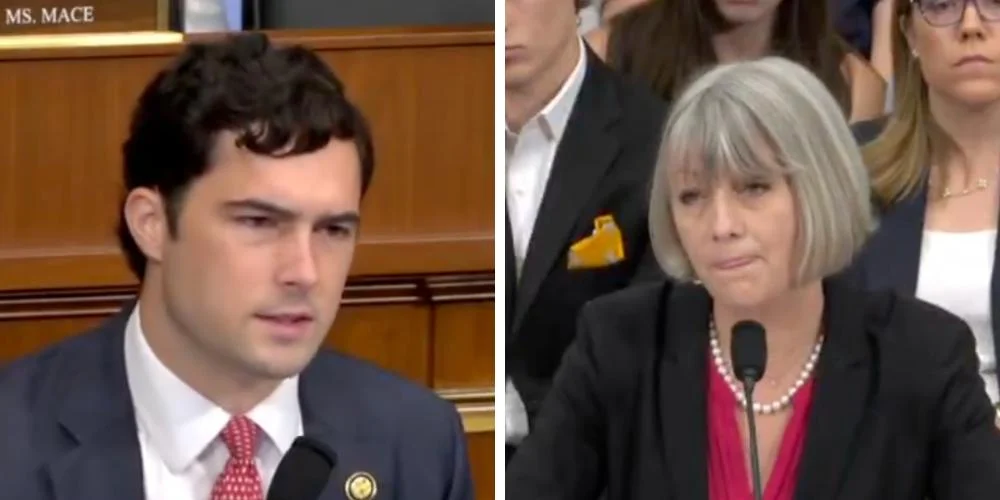
The director of the Smithsonian’s National Museum of American History, Anthea Hartig, endured a tense congressional hearing Tuesday as Republican lawmakers pressed her on museum materials that included a toolkit describing politeness as a characteristic of white supremacy culture. The exchange, during a House Subcommittee on Delivering Government Efficiency hearing titled “Rewriting American History: Examining the Smithsonian’s Efforts to Reshape the Past,” quickly became the focal point of the day.
Representative Brandon Gill (R-Texas) confronted Hartig with specific examples from a “Mass Action Toolkit” promoted by the museum. “Ma’am, are you a white supremacist?” Gill asked after noting the guide listed politeness as a defining feature of white supremacy. Hartig denied being a white supremacist, but struggled to explain the contradiction. “Can you help me square why your organization says that being polite is part of being a white supremacist?” Gill continued. Hartig offered no clear answer.
Gill also pointed to a Smithsonian exhibit that described Mickey Mouse as “representing vestiges of longstanding traditions of blackface minstrelsy.” When asked whether that characterization was racist, Hartig replied, “It’s not for me to determine what’s problematic; it’s determined to me what’s accurate.” The hearing marked the first time a top Smithsonian leader has been publicly grilled by Congress since President Donald Trump’s March 27, 2025 executive order targeting the institution.
Context: The White House Report and the ‘Restoring Truth and Sanity’ Executive Order
The hearing came just weeks after the White House Domestic Policy Council released a scathing 162-page report on July 4, titled “Saving America’s Story: How Ideological Capture at the Smithsonian Institution’s National Museum of American History Erases Our Heritage.” The report accused museum leaders of engaging in “extreme political activism” and presenting “a radical view of American history” that cast the nation in a negative light. It specifically quoted Hartig as saying she views history as a “prime tool of social justice” and that the museum works to “reframe the traditional celebratory narrative of U.S. history for visitors.”
The report was a direct follow-up to Trump’s executive order, “Restoring Truth and Sanity to American History,” which directed Vice President JD Vance, in consultation with the president’s domestic policy advisers, “to remove improper ideology” from Smithsonian institutions. The order argued that materials portraying America in a “negative light” have no place in federal cultural institutions. The White House has since accused the Smithsonian of violating the trust of taxpayers and promoting divisive narratives.
Hartig, in her opening remarks, defended the museum’s work, saying, “Our work is governed by the Smithsonian standards of scholarship, accuracy, independence, and nonpartisanship. The museum does not take sides in America’s political debates. We preserve and document the evidence of American life in all of its breadth, so that the public can encounter the past and draw their own conclusions.” She also pushed back against the White House report, stating, “The Smithsonian takes the concerns raised in the White House Domestic Policy Council’s report seriously, and as we continue to fact-check the report, we unwaveringly attest that it does not fairly or accurately characterize the full body of work at the museum.”
The Mass Action Toolkit and Its Controversial Listings
The “Mass Action Toolkit,” which the museum has promoted since 2020, became the centerpiece of the hearing. The guide lists a number of behaviors it characterizes as aspects of white supremacy culture, including objectivity, perfectionism, and politeness. During the hearing, Gill asked Hartig whether objectivity is a goal of history. She responded, “We strive to be objective and nonpartisan, and not based on any ideology.” Gill then pointed out that the same toolkit labels objectivity as a defining aspect of white supremacy culture. “Doesn’t that seem a little bit concerning?” he asked. “Do you think that it’s the goal of the Smithsonian Institution to promote white supremacy culture?” Hartig tried to distance herself from the guide, insisting, “We didn’t develop it.” Gill countered, “It is your toolkit. You’ve been promoting it for quite some time.”
Political Stakes: A Broader War Over History and Culture
Tuesday’s hearing is part of a wider political battle over how American history is taught and presented in public institutions. The Trump administration has made cultural institutions a key target, arguing that many have been captured by progressive activists intent on undermining national pride. The White House report argued that the Smithsonian had “turned American history into an ideological, activist tale that is meant to divide visitors and misconstrue their vision of the country.”
Democrats and museum advocates, however, see the hearings as an attempt to politicize scholarship and intimidate historians. The American Historical Association issued a statement calling the White House report “an unprecedented assault on professional history” and warning that “the executive order threatens to turn the Smithsonian into a propaganda arm of the administration.”
Hartig’s Future and the Museum’s Path Forward
Hartig is also expected to testify before the Committee on House Administration on Wednesday, facing additional scrutiny. The hearings raise questions about the museum’s funding, leadership, and whether the executive order could lead to structural changes, such as the removal of certain exhibits or the rewriting of historical narratives. The Smithsonian Institution, as a whole, has a $1.5 billion annual budget, much of which comes from federal appropriations. Any moves by Congress to condition funding on compliance with the executive order could have significant repercussions.
Perspective: The Broader Implications for Cultural Institutions
The clash between Hartig and Representative Gill is emblematic of a broader trend across the United States: the intensifying debate over how public institutions should present the nation’s past. This is not just a Washington story — it reflects a national reckoning over the curriculum in schools, the content of museums, and the role of academic freedom in a polarized era. The Smithsonian, as the world’s largest museum and research complex, is often seen as a bellwether for cultural trends. If the administration succeeds in forcing changes there, similar efforts could follow at other federally funded institutions, such as the National Endowment for the Humanities or the National Park Service.
Meanwhile, the silver lining for some investors has been the rally in precious metals amid geopolitical uncertainty. Silver Price Today 2026: Rallies Past $59 Amid Geopolitical Tensions reflects how broader instability — including cultural conflicts — can move markets. Yet the stakes for the Smithsonian go beyond dollars and cents. The museum’s mission, as Hartig described it, is to allow “the public to encounter the past and draw their own conclusions.” Whether that mission can survive the current political climate remains an open question.
A Moment of Reckoning for ‘Neutral’ History
Tuesday’s hearing also laid bare a fundamental philosophical disagreement. Hartig insisted the museum is nonpartisan and simply documents evidence. But the White House report and Republican lawmakers argue that the choice of what to document and how to frame it is inherently political. The toolkit’s inclusion of “objectivity” as a white supremacist trait, they say, reveals a deep ideological bias. Gill’s line of questioning — asking why politeness is considered problematic — resonated with many conservatives who see the toolkit as evidence of a radical agenda. For Hartig, the challenge now is not only to defend her institution but to articulate a coherent vision of history that can bridge a deeply divided country.
Conclusion: What Comes Next?
The hearings are scheduled to continue Wednesday, with Hartig facing questions from the Committee on House Administration. Meanwhile, the White House has signaled it may take further steps if the Smithsonian does not comply with the executive order. Vice President JD Vance is expected to release an implementation plan for the “Restoring Truth and Sanity” order in the coming weeks. For now, the image of a Smithsonian director unable to explain why her institution’s toolkit calls politeness white supremacist is likely to become a rallying cry for those who believe federal cultural agencies have lost their way. As one observer noted, the hearing may mark a turning point in the long-running culture war over American history.
Comments