
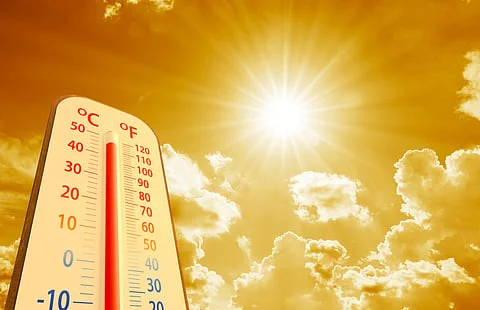
Unprecedented El Niño Now a Near Certainty
Just months after declaring the arrival of El Niño, meteorologists are now sounding alarms that the 2026-27 event is on track to become the most powerful in recorded history. According to the latest data from the National Oceanic and Atmospheric Administration (NOAA), there is a 97% chance that El Niño will be either "strong" or "very strong" over a three-month period ending this December. Even more striking, the agency places an 81% probability on a "very strong" event — colloquially known as a "super" El Niño.
The models are painting a picture unlike anything seen before. Climate scientist Zeke Hausfather, analyzing 667 ensemble members across 14 different seasonal forecast models, has described the outlook as "truly uncharted territory." The consensus forecast suggests the El Niño could peak at around 3.6 degrees Celsius (6.5 degrees Fahrenheit) above average — nearly 1°C above the previous record set over the past 149 years. “The models are forecasting something outside the envelope of anything,” Hausfather noted, pointing to an event that could surpass even the infamous 1997-98 and 2015-16 super El Niños by a "mind-blowing margin."
NOAA’s Climate Prediction Center confirmed Thursday that warming conditions are rapidly taking hold in the Pacific, with a 63% chance of sea surface temperatures exceeding 2°C above normal later this year. This rapid development has caught the attention of weather watchers globally, from California to Vermont, as the implications stretch far beyond the tropics.
How Super El Niño Threatens Global Food Supply
### A Double Shock to Already Strained Markets
Perhaps the most urgent concern is the potential impact on global food prices. The world is already grappling with the highest food price levels in three years, exacerbated by geopolitical tensions, including the ongoing Iran war. Now, the arrival of a super El Niño threatens to add a second, simultaneous shock to supply chains.
Economists at UniCredit have warned that "El Niño puts ‘climateflation’ back on the agenda," with the Italian bank noting that Europe’s recent heatwaves are a stark reminder that the climate baseline is already shifting. A study by the European Central Bank estimated three years ago that a strong El Niño could drive up food commodity prices by up to 9%, with soya beans among those hit hardest. Analysts now fear that shock could persist well into 2028, as crop cycles take years to recover.
### Harvests at Risk Across the Globe
The impact on agriculture is already being felt. Parts of India have received only half of the normal rainfall, threatening supplies of wheat, rice, and sugarcane. Historically, El Niño has triggered catastrophic droughts across China, southern Africa, Brazil, Egypt, and India. The 1876-78 event, which would have likely been the most severe on record, led to famine conditions that killed millions, including more than 6 million in India alone.
While modern infrastructure and global trade networks offer some resilience, the combination of a super El Niño and ongoing geopolitical instability could overwhelm systems. The phenomenon disrupts weather patterns in critical breadbasket regions: drought in Indonesia and parts of South America and Africa; flooding in South America and the southern United States; and unpredictable monsoon seasons in Asia. For crops like wheat, corn, and soybeans, the timing couldn't be worse.
California Braces for a Winter of Floods and Landslides
### A State on High Alert
For California, the arrival of a super El Niño carries both promise and peril. The state is no stranger to the effects of this climate pattern, which is associated with some of its most memorable — and destructive — winter seasons. Southern California, in particular, faces a significantly higher chance of above-average rainfall, which could trigger flash floods, debris flows, and landslides in areas already scarred by recent wildfires.
Authorities are already taking precautions. The state recently experienced a devastating landslide in Baldwin Vista, captured in images of mud piled high in a homeowner’s backyard in 2024. With forecasts now pointing to a very strong El Niño, officials are warning residents to prepare for a winter that could rival the historic 1997-98 season, when storms battered the coast and caused widespread damage.
The risks extend beyond floods. Warmer ocean waters are expected to fuel more intense atmospheric rivers — narrow bands of moisture that can dump enormous amounts of rain in short periods. These events, amplified by global warming, could overwhelm levees and drainage systems, especially in urban areas like Los Angeles and San Francisco.
### A Mixed Picture for the West
Not all of the West will see the same effects. While the southern tier of the United States typically experiences wetter winters during strong El Niños, the Pacific Northwest and northern regions often see warmer and drier conditions. This could exacerbate drought conditions in some areas while offering relief in others. The Red Flag Warnings Sweep West as Wildfire Danger Peaks Across Multiple States highlight the ongoing threat of fire during the summer, but a wet winter could help reduce fire risk for the following year — provided the rain comes steadily and not all at once.
Regional Impacts: Vermont’s Muted but Uncertain Response
### Hard to Predict in the Northeast
While California faces the direct brunt of El Niño’s fury, other regions will experience its effects in more subtle ways. In Vermont, for example, experts say the impact is "tough to tease out." According to Lesley-Ann Dupigny-Giroux, the state climatologist, weather phenomena in the North Atlantic and Arctic have more direct impacts on the Northeast. However, she noted that the state is closely monitoring the developing event, comparing it with past strong El Niños dating back to the 1870s.
NOAA’s three-month outlook for Vermont suggests a 40% to 50% chance of above-normal temperatures this summer, with southern Vermont having a 33% to 40% chance of leaning above normal for seasonal precipitation. The rest of the state is predicted to be largely safe from irregular rainfall, at least for now.
Johnna Infanti, a meteorologist at NOAA’s Climate Prediction Center, described the influence of El Niño on New England’s summertime weather as "difficult to untangle," noting that it can easily be overshadowed by local patterns and long-term trends. The strongest impacts typically emerge during winter, when the jet stream is more responsive to tropical Pacific conditions.
Broader Implications: A Warming Planet Meets Uncharted Waters
### The Role of Climate Change
The 2026-27 El Niño is unfolding against a backdrop of human-driven global heating that is already pushing temperatures into record territory. Scientists warn that this event could propel global temperatures to new highs, potentially making 2027 the hottest year on record — or possibly even 2026. The combination of a super El Niño and long-term warming means that the heat stored in the ocean during the preceding La Niña phase is now being released into the atmosphere at an accelerated rate.
This has profound implications for weather extremes worldwide. El Niño is known to shift hurricane activity away from the Atlantic and toward the Pacific, a shift already observed this year. It also amplifies heatwaves on land and at sea, which can devastate marine ecosystems and disrupt fisheries. Coral reefs, already stressed by warming waters, face another bleaching event.
### Economic and Policy Challenges
Central banks are watching the situation with growing concern. A renewed inflation shock from food prices could keep interest rates elevated for longer, adding to the cost-of-living crisis already squeezing households. Governments may need to consider strategic reserves, trade adjustments, and support for farmers to mitigate the impact.
For consumers, the ripple effects will be felt at the grocery store. Items like coffee, cocoa, sugar, and vegetable oils are particularly vulnerable to El Niño disruptions. As supply chains tighten, prices could spike, echoing the patterns seen during the 2023-24 event. The difference this time is the sheer magnitude of the expected warming and the compounding effect of global instability.
What This Means Going Forward
The emergence of a super El Niño in 2026 is a stark reminder of the power of natural climate variability, amplified by human-caused warming. While forecasts are never certain, the convergence of models and the speed of the current development leave little room for doubt: the world is about to experience an El Niño unlike any in modern history.
For those in the path of its most direct impacts — from California’s flood-prone canyons to India’s drought-stricken farms — preparation is key. For everyone else, it is a signal that the era of "unprecedented" weather is becoming the new normal. As the Pacific continues to warm and the atmosphere responds, the coming months will test the resilience of communities, economies, and ecosystems worldwide.
In the midst of this, it’s worth noting that other events continue to shape the cultural and economic landscape. For instance, M&S Opens Its Biggest Standalone Food Store in Godalming, Surrey underscores how retail is adapting to changing consumer habits, even as global food supply chains face disruption. Meanwhile, entertainment options like Netflix July 2026: New Movies, British Series, and 40-Title Weekly Rollout offer a brief respite from the grim headlines. But the dominant story of the season remains the gathering storm in the Pacific.
Comments