
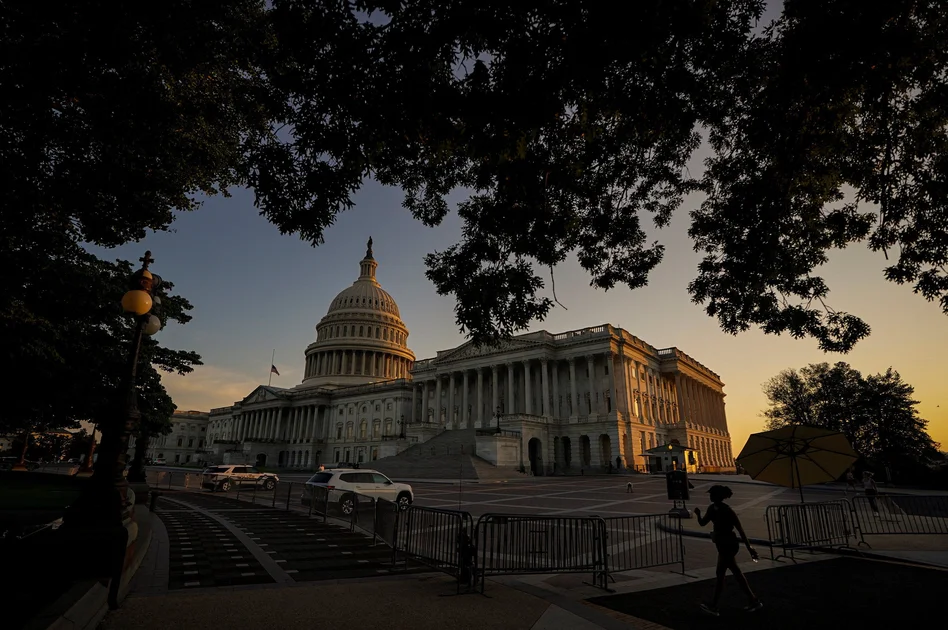
Senate Weighs Historic Vote on Permanent Daylight Saving Time
After months of lobbying, public debate, and a decisive House vote, the Sunshine Protection Act has landed in the Senate, where its fate remains uncertain. The bill, which would make daylight saving time (DST) permanent and end the twice-yearly clock changes, passed the House in late July by a 308-117 margin. Now, senators face mounting pressure from President Trump, who has urged swift passage, and from 19 states that have already passed resolutions supporting the change.
"We should have a bill that gets it done—no more flipping clocks," President Trump said in a statement on August 4, echoing his earlier calls. "The people are tired of it, and so am I." The president's endorsement has injected new momentum into the Senate debate, but opposition remains entrenched, particularly from lawmakers who argue that permanent DST would harm early-morning commuters, schoolchildren, and rural communities.
The Senate has not yet scheduled a floor vote, but leadership sources indicate that discussions are ongoing. A coalition of bipartisan senators, led by Sen. Rick Scott (R-FL) and Sen. Ed Markey (D-MA), has been working to secure the 60 votes needed to overcome a potential filibuster. "This is not a partisan issue—it's a quality-of-life issue," Sen. Markey said. "We have the momentum; we just need to close the deal."
Meanwhile, the bill faces procedural hurdles, including a potential amendment fight over whether to adopt permanent standard time instead. Lawmakers from northern states, where winters bring late sunrises, have warned that permanent DST could leave children waiting for school buses in darkness for months. "We are not going to rush a decision that affects every American's daily schedule," said Sen. Lisa Murkowski (R-AK), a key swing vote. "We need to hear from constituents and experts."
Why Permanent DST Matters: The Stakes Behind the Clock Change
If passed, the Sunshine Protection Act would eliminate the century-old practice of shifting clocks twice a year, a change that would affect virtually every American. Under permanent DST, the sun would set an hour later in winter, meaning longer daylight in the evening but darker mornings from November through February. Proponents argue that this would reduce energy consumption, boost retail and recreation industries, and improve public health by aligning waking hours with daylight.
Opponents, however, point to studies showing that permanent DST would increase morning car crashes, particularly in the Northeast and Midwest, and could disrupt sleep patterns for months. A 2023 report from the American Academy of Sleep Medicine found that standard time better aligns with human circadian rhythms, while DST can lead to chronic sleep deprivation. "The science is clear: permanent DST is the wrong choice," said Dr. Beth Ann Malow, a sleep researcher at Vanderbilt University. "We should either keep standard time year-round or stick with the current system."
The economic stakes are also high. The U.S. Chamber of Commerce has praised the bill, arguing that extra evening daylight would boost consumer spending by billions of dollars annually. Retailers, golf courses, and outdoor recreation companies have lobbied heavily for the change. Conversely, the transportation industry, including airlines and school bus operators, has raised concerns about scheduling complications and worker fatigue in early-morning hours.
The Legislative Journey: From House Victory to Senate Hurdle
The Sunshine Protection Act was introduced in the House in January 2025, quickly gaining bipartisan support. After a series of committee hearings and amendments, it passed the full House on July 28, 2026, with notable support from both parties. The 308-117 vote marked one of the largest margins for a time-related bill in decades. Yet the Senate has historically been a graveyard for such measures; a similar bill passed the Senate in 2022 but died in the House.
This time, supporters believe the dynamics are different. With 19 states having passed their own resolutions endorsing permanent DST, and with President Trump actively lobbying, pressure is mounting. However, the Senate's calendar is crowded with appropriations bills and the midterm elections looming in November. "We have a narrow window," said Sen. Scott. "If we don't act by September, it might slip until after the election."
State-Level Actions: The Patchwork Waiting for Federal Approval
Federal law currently allows states to opt out of DST and remain on standard time year-round—a right exercised by Hawaii, most of Arizona, and U.S. territories. However, states cannot unilaterally adopt permanent DST without congressional approval. That hasn't stopped 19 states from passing laws or resolutions expressing their intent to do so, contingent on federal action. These states include Texas, Florida, Oklahoma, Colorado, Georgia, Alabama, and Minnesota, among others.
The Human Element: One Lawmaker's Stand Against the Bill
The Sunshine Protection Act is not without its personal critics, and few have been as vocal as U.S. Rep. Nikema Williams (D-GA), the only member of Georgia's congressional delegation to vote against the bill. In a statement on August 3, Williams explained her reasoning: "I'm never afraid to stand alone if it means standing up for the people I serve."
Williams's opposition stems from concerns about schoolchildren and working families. She noted that permanent DST would mean darker mornings during winter, when children in Atlanta and across the country would be waiting for school buses or walking to school in the dark. "As a mom, I can't imagine sending my kids out in the pitch black," she said in an interview. "I understand the appeal of longer evenings, but we have to think about the most vulnerable."
Williams also pointed to a 1974 experiment, when the U.S. adopted year-round DST during the energy crisis. The move was widely unpopular, with public approval plummeting after eight children died in traffic accidents in Florida and Virginia during dark morning commutes. Congress repealed the measure within a year. "We've been here before, and it didn't go well," Williams said. "Let's learn from history."
Her stance highlights the broader divide within the Democratic Party, where progressives like Williams prioritize social equity and public safety, while moderates emphasize economic growth and consumer choice. The bill's supporters, however, argue that modern safety measures—such as better street lighting and school bus programs—can mitigate the risks.
Public Opinion and Expert Perspectives: A Nation Split on Time
Public polls show Americans are nearly split on the issue, with a slight majority favoring an end to clock changes but divided on which time to adopt. A 2026 Gallup poll found that 58% of Americans want to eliminate the twice-yearly change, but among them, 43% prefer permanent DST and 31% prefer permanent standard time, with the rest undecided. The discrepancy is largely geographic: residents in northern states like Minnesota and Montana are more likely to oppose permanent DST, while those in southern states like Texas and Florida support it.
Experts in sleep science and chronobiology have weighed in, with many advocating for permanent standard time instead. "Standard time is the closest to the natural light-dark cycle," said Dr. Charles Czeisler, a professor of sleep medicine at Harvard Medical School. "DST is a human-made construct that disrupts our biological clocks, especially in winter." The American Medical Association and the National Sleep Foundation have both issued statements opposing permanent DST.
On the other side, economists and urban planners point to the benefits of evening light for mental health and physical activity. "People are more likely to exercise and shop after work if it's still light," said economist John Miller of the University of Chicago. "That has ripple effects on community well-being." The 2020 election proved the issue's salience, as several states passed referendums in favor of permanent DST, only to see them stall due to federal inaction.
The Road Ahead: What Changes If the Senate Acts—or Doesn't
The Senate's decision will have far-reaching implications, regardless of the outcome. If the bill passes, the U.S. would join a small group of countries—including Argentina and parts of Australia—that have made DST permanent. But the impact would be unique given the country's size and geographic diversity. In practice, states in the far north, like Alaska and North Dakota, would see sunrises as late as 10:30 a.m. in December, potentially disrupting school and work schedules. This prospect has led some lawmakers to consider regional carve-outs, but those would complicate the bill.
If the bill fails, the current system will remain, but the pressure for change won't dissipate. Nineteen states have indicated they would move immediately to implement permanent DST, but without federal approval, they would face legal challenges. Some states might then pursue the opposite route: adopting permanent standard time year-round, as Massachusetts and Maine have considered, creating a patchwork of time zones across the country. A 2023 report by the National Conference of State Legislatures warned that such fragmentation could confuse interstate commerce and air travel.
The political calculus also matters. With midterm elections approaching, senators from battleground states could use the issue to rally voters. President Trump has already made it a talking point, tying it to his broader economic agenda. "We should get an A+ on the economy, and this will be another win," he said. For Democrats, the challenge is to balance the party's progressive base, which favors the move for health and equity reasons, with rural and union constituents who worry about dark mornings.
Ultimately, the bill's future may hinge on whether senators can find a compromise—such as a five-year trial period or a delayed implementation—to address the concerns of skeptical members. A similar approach was used in the 1970s, but it lacked public support. "This is a classic legislative test," said political analyst Sarah Binder of the Brookings Institution. "Can Congress tackle a simple, visible problem that everyone cares about, or will it be bogged down by special interests?"
As the clock ticks, the Senate must decide: change the clocks for good, or keep the status quo. Either way, Americans will be watching closely.
Comments