
Seattle Air Quality Alert Issued as Wildfire Smoke Blankets Region
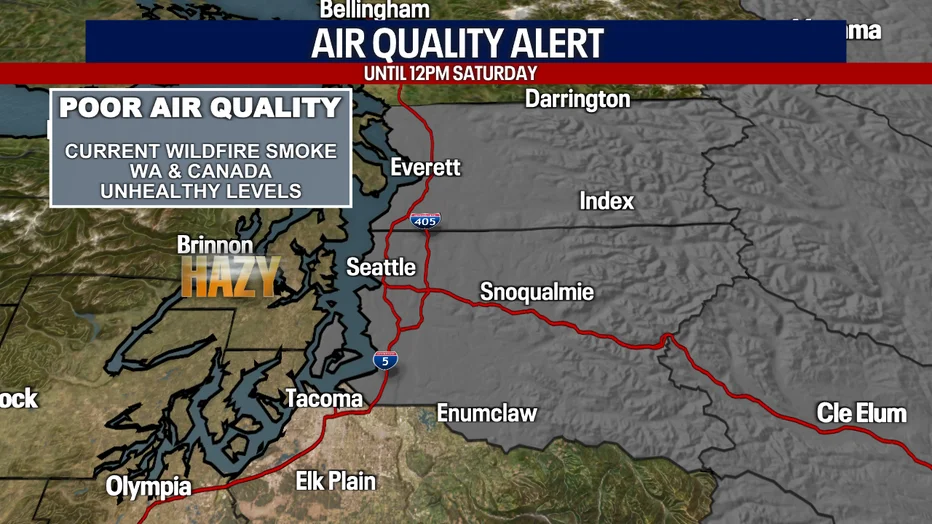
Seattle faces deteriorating air quality as shifting winds push wildfire smoke from eastern Washington into the Puget Sound region. On Monday, August 3, 2026, the city recorded an Air Quality Index (AQI) of 112, a level considered unhealthy for sensitive groups, according to AirNow. The City of Seattle issued an air quality alert and urged residents, especially those with heart or lung disease, older adults, children, and teens, to limit outdoor activities and keep windows and doors closed.
The smoke originates from numerous wildfires burning across eastern Washington and British Columbia, including the massive Old Trails Fire near Spokane, which has destroyed hundreds of structures and forced up to 65,000 evacuations. ‘Hazy skies are already settling in over western Washington—with more to come later this week,’ reported KOMO meteorologist George Waldenberger. Northerly and northeasterly winds are expected to transport additional smoke into Seattle neighborhoods through Tuesday and Wednesday.
Forecast models project the AQI to worsen to 137 on Tuesday, remaining in the ‘unhealthy for sensitive groups’ range, before improving to a moderate 90 on Wednesday. The Washington State Department of Ecology and local health agencies recommend that sensitive individuals choose less strenuous activities or shorten time outdoors. For the general population, air quality at these levels is not immediately harmful, but officials advise staying informed and reducing prolonged exertion if smoke becomes visible or odor is noticeable.
Heat Wave Compounds Smoke Impacts Across the Region
The smoke arrives amid a late-summer heat wave that is pushing temperatures into the 80s, with some areas nearing 90 degrees by Wednesday. The combination of heat and particulate pollution can aggravate respiratory conditions and make the environment particularly uncomfortable for those without air conditioning. Public health experts emphasize that indoor spaces with filtered air can provide relief, but residents are advised to avoid using evaporative coolers that draw in outdoor air.
‘The heat is expected to peak around Wednesday and Thursday before cooler Pacific air returns later this week,’ noted the KOMO forecast. That onshore push should gradually improve air quality across western Washington, although it could also increase winds east of the Cascades and complicate firefighting efforts. Governor Bob Ferguson has declared a statewide emergency, and FEMA has agreed to provide federal resources to battle 17 major wildfires burning more than 260,000 acres—an area roughly the size of 200,000 football fields.
Wildfire Crisis Escalates in Eastern Washington
Eastern Washington remains the epicenter of the wildfire emergency. The Old Trails Fire, ignited Saturday near Spokane, has destroyed 700 structures and forced mass evacuations. A man has been arrested on first-degree arson charges in connection with the fire, according to local reports. The National Weather Service issued a ‘Particularly Dangerous Situation’ red flag warning for the region—the first such designation in Washington state history—as winds gusted up to 50 mph with humidity levels around 11%.
Firefighters are battling blazes across Okanogan, Chelan, and other counties, with level 3 evacuations in multiple areas. The sheer scale of the disaster has displaced tens of thousands and left communities reeling. ‘A lot of terror,’ recounted a local news anchor who helped families evacuate as fire erupted yards from where he stood. The statewide emergency declaration unlocks additional resources and streamlines response efforts.
Broader Implications: A Growing Regional and Global Pattern
This week’s air quality crisis in Seattle underscores a broader trend: wildfire smoke is becoming a more frequent and severe threat in the Pacific Northwest. Climate scientists point to prolonged drought, record heat, and bark beetle infestations as factors that have turned forests into tinderboxes. ‘We’re seeing a new normal where smoke events are no longer rare but a recurring summer feature,’ said a university fire ecologist. This shift has public health implications beyond immediate alerts, as repeated exposure to fine particulate matter (PM2.5) can lead to long-term cardiovascular and respiratory problems.
For cities like Seattle, the challenge is twofold: managing acute episodes while building resilience against a changing climate. Urban planners are exploring ways to create cleaner-air shelters, and health systems are preparing for surges in ER visits during smoke events. The current episode also highlights the interconnectedness of regional ecosystems—fires east of the Cascades affect air quality hundreds of miles away, prompting calls for more coordinated land management and fire prevention strategies.
As the week progresses, Seattleites are advised to monitor air quality readings via AirNow or local news. While cooler ocean breezes should bring relief by Friday, the broader trend of longer, more intense wildfire seasons means that such alerts may become a recurring summer ritual. For now, the immediate priority is protecting vulnerable populations and supporting firefighting efforts in the ravaged eastern parts of the state. Communities there face a long recovery, and the smoke that drifts over Seattle is a stark reminder of the shared fate of the entire region.
Comments