
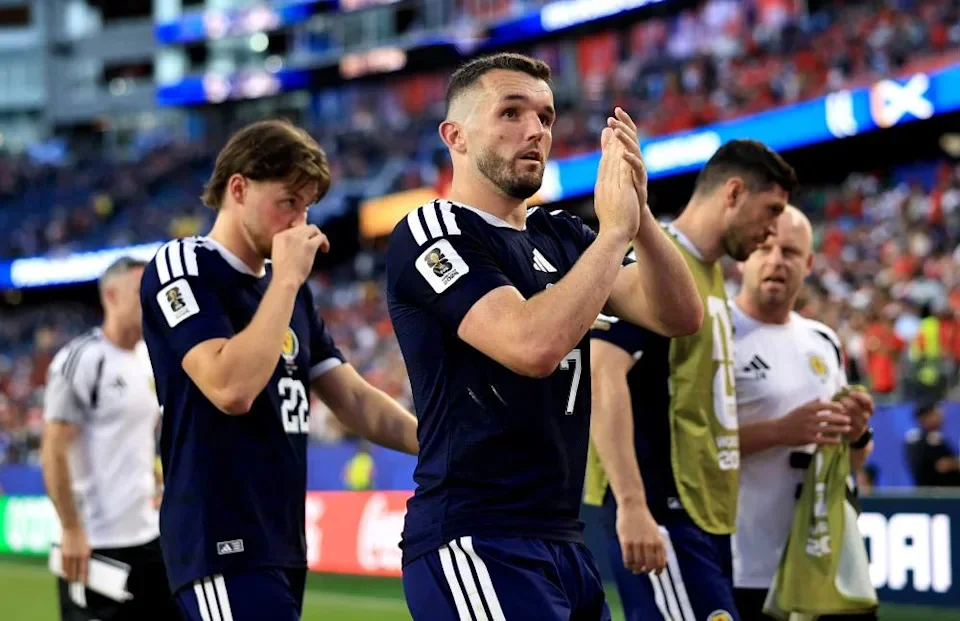
Scotland's World Cup Dream Hangs by a Thread: 0.42% Chance After Brazil Defeat and Favorable Results Fail to Materialize
Just 48 hours after a devastating 3-0 loss to Brazil in their final group-stage match, Scotland's hopes of reaching the World Cup knockout rounds for the first time have dwindled to a near-impossible 0.42%, according to Opta. The Tartan Army, already nursing the wounds of a dismal performance against the Seleção, have watched helplessly as a cascade of results across the tournament has systematically crushed their chances. What once seemed a plausible path to the last 32 has become a mathematical labyrinth requiring four separate miracles.
Steve Clarke's side finished third in Group H with three points and a goal difference of -3, a record that leaves them perilously low in the table of third-placed teams. With only eight of the 12 third-placed finishers advancing to the knockout stage, Scotland currently sit 10th, meaning four of the teams ahead of them must have worse records. However, the results of the past two days have only pushed them further into the mire. South Africa's 1-0 victory over South Korea, Ecuador's shocking 2-1 win against Germany, and Sweden's draw with Japan have all seen third-placed teams leapfrog Scotland in the standings. The final blow came late Friday night when Senegal thrashed Iraq 5-0, vaulting to fifth place with a +2 goal difference and knocking Scotland down to ninth.
The Mathematical Maze: What Scotland Needs to Qualify
The Four-Part Equation
Scotland's qualification now depends on an exacting set of outcomes across three remaining group-stage matches. The scenarios are so specific that even one failure would end the campaign. Here is what must happen:
Group G: Iran vs. Egypt (Saturday, June 27) Scotland need Iran to lose to Egypt. If Egypt wins, Iran will finish third with only two points, placing them below Scotland in the standings. This is the most straightforward of the required results, but Egypt have already been eliminated from the tournament, making their motivation uncertain.
Group L: Croatia vs. Ghana (Saturday, June 27) This is the most critical match for Scotland. They need Ghana to defeat Croatia by at least three goals. Croatia currently sit third in Group L with three points (the same as Scotland), but their goal difference is superior. A heavy defeat for Croatia would drop their goal difference below Scotland's -3, potentially allowing the Scots to leapfrog them. A victory by fewer than three goals, or any draw or Croatia win, would eliminate Scotland.
Group L needs: Austria vs. Algeria (Saturday, June 27) Scotland need Austria to beat Algeria by at least two goals, or for Algeria to win by four goals or more. The loser of this match would likely finish third in Group L, and the margin of victory is crucial to ensure their goal difference is worse than Scotland's.
Group L needs: DR Congo vs. Uzbekistan (Saturday, June 27) Scotland need either a draw between DR Congo and Uzbekistan, or a Uzbekistan win by a maximum of three goals. A victory for DR Congo by any margin, or a Uzbekistan win by four or more, would likely give the third-placed team a better record than Scotland.
The Devastating Sequence: How Scotland's Hopes Collapsed
From 70% to 0.42% in 48 Hours
Before facing Brazil, Scotland had a 70.7% chance of progressing to the knockout rounds. The 3-0 defeat immediately halved those odds to 42.7%. Then came the avalanche of bad news. South Africa's win over South Korea and Mexico's victory against the Czech Republic dropped the probability to 24.4%. Ecuador's upset of Germany and Ivory Coast's win over Curacao pushed it below 10%. Japan's draw with Sweden and the Netherlands' win over Tunisia took it to 6.6%. Finally, Senegal's 5-0 demolition of Iraq sent the odds crashing below 2%, where they have since settled at a microscopic 0.42%.
The Goal Difference Dilemma
The magnitude of the defeat to Brazil has been Scotland's undoing. A 1-0 loss would have left Scotland with a goal difference of -1, placing them in a much stronger position in the third-place standings. Instead, the 3-0 defeat left them at -3, requiring more extreme results in other groups. As BBC Sport notes, the extent of the defeat has made it "trickier for them to finish with a better record than many other third-placed sides."
The Human Cost: Scotland's Longing and the Players' Perspective
A Nation's Hope on the Line
Scotland has never advanced past the group stage of a World Cup. The nation's last appearance in the tournament was in 1998, and the 2026 edition was seen as a genuine opportunity to break that streak. The team's opening victory—a hard-fought win—had ignited belief across the country. But the loss to Brazil and the subsequent results have left fans devastated. As Sky Sports' Roy Keane remarked, "If you're a Scotland fan, you're probably heading to the airport."
Clarke's Squad Faces Heartbreak
For manager Steve Clarke and his players, the wait has been agonizing. The team trained on Saturday morning, knowing their fate relied on events thousands of miles away. Captain Andy Robertson, who missed the World Cup through injury, has been vocal in his support, but the squad must now watch helplessly as other teams decide their destiny. The psychological toll of such a prolonged, uncertain wait cannot be overstated.
The Broader World Cup Picture: Third-Place Drama and New Format's Impact
The 48-Team Tournament's Chaos
The expanded 48-team World Cup—featuring 16 groups of three—was designed to create more drama and increase the number of nations involved. However, it has also introduced a complex third-place qualification system that has left Scotland and other teams in limbo. The randomness of group results across eight groups has made it difficult for teams to control their own fate. Scotland's situation highlights how a single heavy defeat can have cascading consequences beyond the immediate group.
Other Teams' Fortunes: South Africa, Ecuador, Cape Verde
While Scotland's hopes have faded, other nations have seized their opportunities. South Africa stunned South Korea 1-0 to reach the World Cup knockouts for the first time, a historic achievement for the Bafana Bafana. Ecuador's victory over Germany was equally shocking, sending the four-time champions tumbling to third place. Meanwhile, Cape Verde made history by becoming the smallest nation ever to reach the World Cup knockout phases, thanks to Uruguay's loss to Spain and their own goalless draw against Saudi Arabia. These stories of triumph contrast sharply with Scotland's agony.
Uruguay's Fall and Spain's Dominance
Uruguay's loss to Spain in Group H was one of the few results that benefited Scotland, preventing Marcelo Bielsa's side from jumping above them in the standings. However, the defeat was part of a larger narrative of Uruguay in crisis before Spain showdown: Bielsa vs players threatens World Cup performance, with reports of internal discord within the squad. Spain's 1-0 victory, sealed by a scrappy Alex Baena goal, demonstrated the quality of La Roja under Luis de la Fuente. As we covered in Spain vs Uruguay World Cup 2026: Yamal Sparks La Roja's Group H Push, Lamine Yamal's performances have been a highlight of the tournament.
The Final Countdown: What Happens Saturday Evening
The Matches That Will Decide Scotland's Fate
All four matches crucial to Scotland's chances take place on Saturday, June 27. The earliest kicks off at 4 AM (GMT) with Egypt vs. Iran, followed by Austria vs. Algeria and DR Congo vs. Uzbekistan in the afternoon. The final game, Croatia vs. Ghana, starts at 10 PM (GMT). Scotland fans will be glued to their screens, refreshing live scoreboards and calculating goal differences in real time.
The Likelihood of Success
Mathematically, the chance of all four required outcomes occurring simultaneously is 0.42%, according to Opta. Bookmakers have placed the odds at roughly 200/1. Even if the results align, Scotland could still face tiebreakers based on disciplinary records or drawing of lots. In short, Scotland's World Cup is over, barring a miracle of biblical proportions.
Looking Ahead: What This Means for Scottish Football
A Pattern of Near-Misses
Scotland's inability to advance past the group stage of a major tournament continues a painful tradition. The nation has not won a knockout match since 1992, when they reached the European Championship semifinals. The 2026 World Cup was meant to end that drought, but instead it joins a long list of agonizing failures. The team's small squad depth—exposed by the Brazil defeat—and vulnerability to set-piece goals have been cited as key weaknesses.
The Future Under Clarke
Steve Clarke's contract extends through the 2028 European Championship, but the disappointment of this campaign may lead to questions about his future. The manager has overseen a period of stability and occasional success, but the failure to convert a promising group stage into knockout qualification will weigh heavily. The Scottish Football Association must now decide whether to continue with Clarke or seek fresh leadership.
The Silver Lining for Scotland's Youth
Despite the heartbreak, the tournament has showcased Scotland's emerging talents. Midfielder Billy Gilmour impressed against Brazil, and striker Che Adams scored Scotland's only goal of the group stage. The experience gained by these players, even in defeat, could prove valuable for future tournaments. The nation's youth academies have been producing increasingly technical players, and the 2026 adventure, however short, may have laid foundations for future success.
Conclusion: The Long Wait Continues
As the sun sets on Scotland's World Cup campaign, the Tartan Army faces a familiar feeling: heartbreak. The 0.42% chance of qualification is little more than a mathematical curiosity, a cruel tease in a tournament full of drama. For Scotland, the wait for a knockout stage appearance goes on, and the 3-0 defeat to Brazil will be remembered as the moment it all slipped away. The only consolation is that, in a tournament full of shocks, Scotland were at least part of the story. But for the fans heading to the airport, that is cold comfort indeed.
Comments